Published 15/09/2025 15:57 | Edited 15/09/2025 16:03
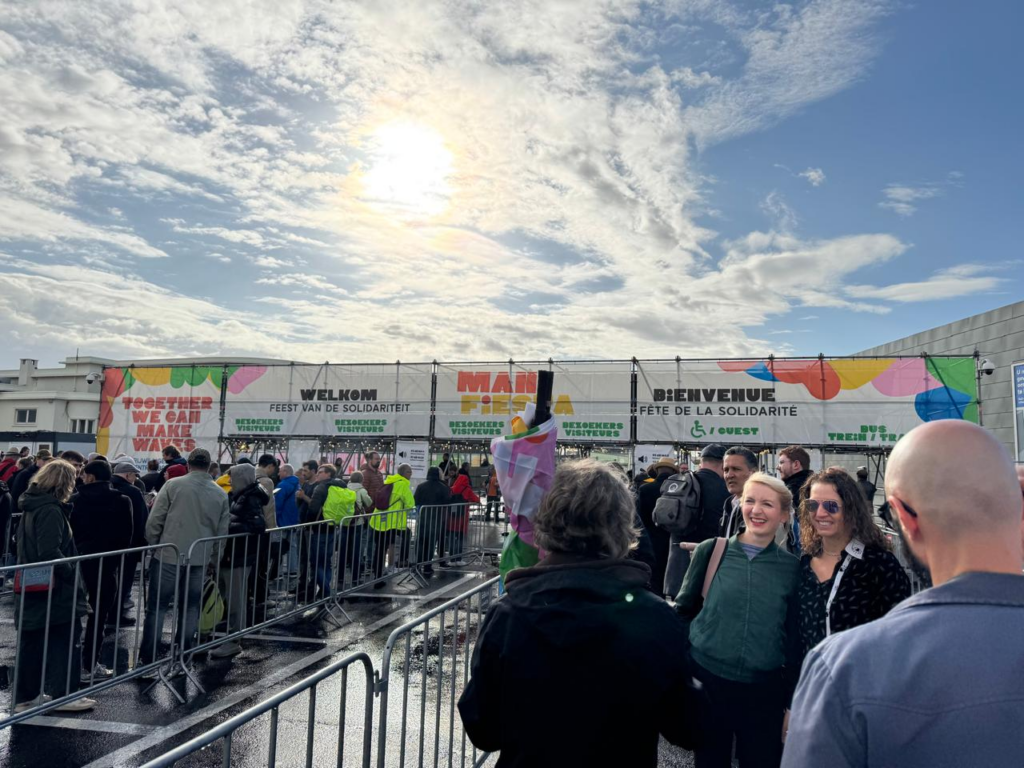
From the early hours of the morning it was noticeable the movement of the public and international delegations, which were organized in queues in front of the Wellington Hippodrome. Punctually at 10am, the gates were opened, marking the official start of the first day of activities. The mood of expectation added to the animation of the gifts, who saw in that meeting a space of celebration, political struggle and cultural exchange.
The morning brought with it persistent rain and cold, which extended to the late afternoon. However, adverse meteorology was not able to shake the participants’ mood. With covers, impermeable coats and a lot of disposition, each remained active, participating in the activities and exploring the spaces. The contrast between the cold ambient and the human warmth of militancy was one of the most striking elements of the day.
Throughout the space, the diversity of tents of the various PTB organizations drew attention. Youth, women, workers and even pioneers, represented by engaged children, occupied their spaces with proposals, materials and activities. This mosaic reinforced the plural character of the event, where each segment found its place and contributed to the set.
International delegations were prominently received in the international space, coordinated by PTB leaders. Each delegation had a stool to present their leaflets, books, stickers and political opinions, promoting exchange of ideas and experiences. The Palestinian flags have stood out for being carried by all delegations. It was in this space that we met two deputies of Latin American origin, one Chilean and one Ecuadorian, who today occupy chairs in the Belgian regional parliaments. Its presence demonstrates the multiplicity of Belgian society, formed by different trajectories and voices that are found in the political life of the country.
Workshops, debates, conversation wheels and cultural performances have multiplied throughout the day, giving dynamism to the space. Due to the rain, the closed places were the most sought after, which resulted in crowded debates and a particularly shatter book fair, transformed into a meeting point for militants and curious. The cold outside was not reproduced in the environment of the meetings, which was heated by collective participation, intense conversations, Belgian beer, and also the cups of Cuba Libre and Mojitos who circulated and warmed the militancy.
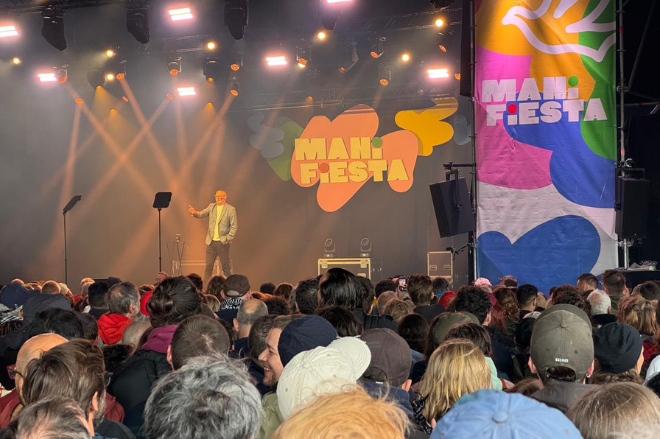
In the middle of the afternoon, the highlight of the day occurred, the long -awaited rally led by the PTB president, Raoul Hedebouw. Unlike formalities commonly seen in political activities, his discourse stood out for his lightness, creativity and direct dialogue with the audience. At various times, the leader interrupts his speech to ask questions to the public, causing collective answers and calling slogans that further inflamed militancy. The public enthusiastically followed the messages of solidarity also transmitted on video, including a member of the Flotilha da Liberdade that goes to Gaza, reinforcing the internationalist dimension of the meeting.
In the rally, Raoul Hedebouw brought out the fight against social security reform in Belgium, emphasizing it as an example of the workers’ struggle in the face of attempts to withdraw rights. Emphatically, he defended socialism as the only possible way to guarantee social justice and dignity. His exquisite driving reinforced the confidence and hope of present militancy.
The moment of greatest emotion occurred at the end of the rally, when those present sang in unison the hymn of International in French. The collective singing, loaded with symbolism and tradition, echoed through space, reaffirming the unity of struggle and the historical dimension of that meeting. Created in 1871, after the commune of Paris, the anthem has lyrics written by the French worker Eugène Pottier and music composed in 1888 by Pierre Degeyter, also a worker. Since then, it has become the universal singing of the socialist and communist movement, crossing generations as a symbol of resistance and hope. His intonation, on that rainy afternoon, linked the struggle of those present to a long tradition of international workers combat.
At night fall, the program went on with a vibrant show by Congolese rapper Youssoupha. The presentation was intense and politically loaded, remembering the tragedies of Belgian colonization in Congo and transforming historical pain into art and resistance. Music, rhythm and memory intertwine in a show that ended the day at a high level, balancing politics and culture. The first day, lived between rain, struggle and celebration, made the certainty that the second day promised sun and fight.
Source: vermelho.org.br