Published 12/09/2025 08:57 | Edited 12/09/2025 11:18
The condemnation of former President Jair Bolsonaro at 27 years and three months in prison for an attempted coup d’état repercussions strongly in the international press. Newspapers of different continents have highlighted the historical character of the decision and the political and diplomatic implications it brings to Brazil.
In Argentina, Diário La Nación stressed that the sentence was decided by four votes to one in the Supreme Court and drew attention to the immediate effects on the electoral scenario.
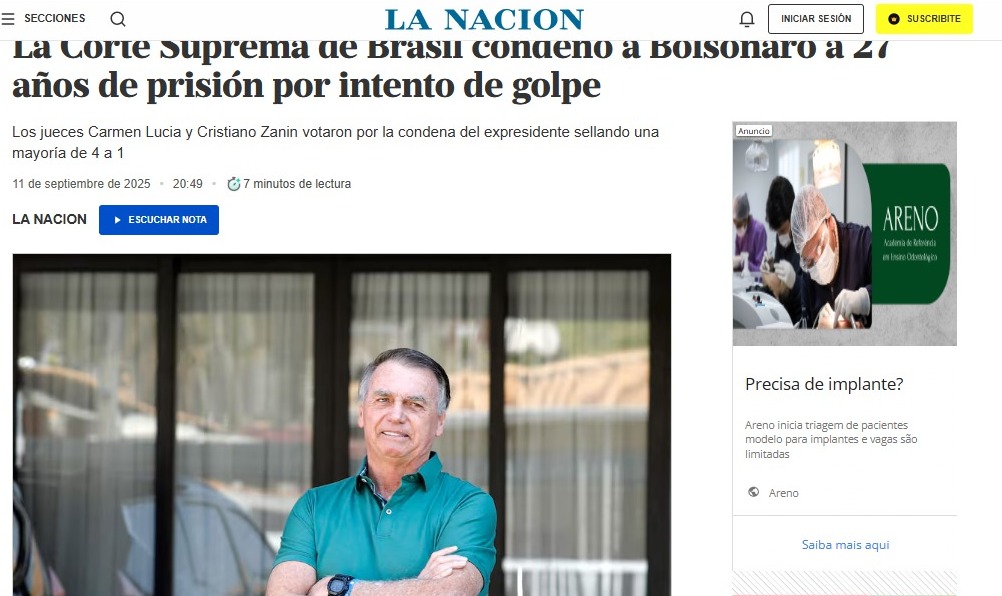
The newspaper evaluates that a definitive conviction of Bolsonaro “an condemnation of Bolsonaro precipitates the race on the right to succeed him” in the 2026 elections.
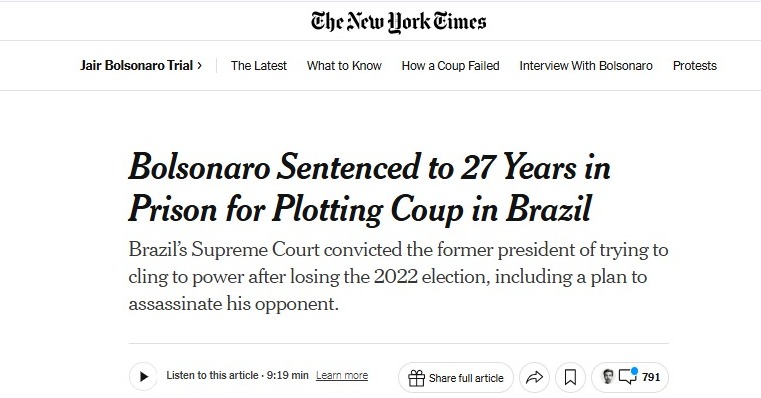
In the United States, the New York Times has classified conviction as a historic decision for “the largest nation in Latin America.”
The newspaper recalled that Brazil has crossed “at least 15 blows and coup attempts linked to the military since the fall of the monarchy in 1889” and that “this was the first time that the leaders of one of these conspiracies were convicted.”
The analysis added that the result can represent a definitive blow against one of the most influential political figures in the region.
“Bolsonaro has galvanized a right -wing movement that turned Brazil into a more polarized country and, in certain, more conservative ways – but its condemnation now leaves the right without a clear leader,” says NYT.
The British newspaper The Guardian highlighted Bolsonaro’s absence in court. “The former president remained in his mansion in Brasilia, under house arrest and watched by police to avoid eventual escape to a foreign embassy.”
The vehicle also described the progressive celebration for the fall of a ruler responsible “for devastating the environment, causing hundreds of thousands of deaths from Covid and attacking minorities.”
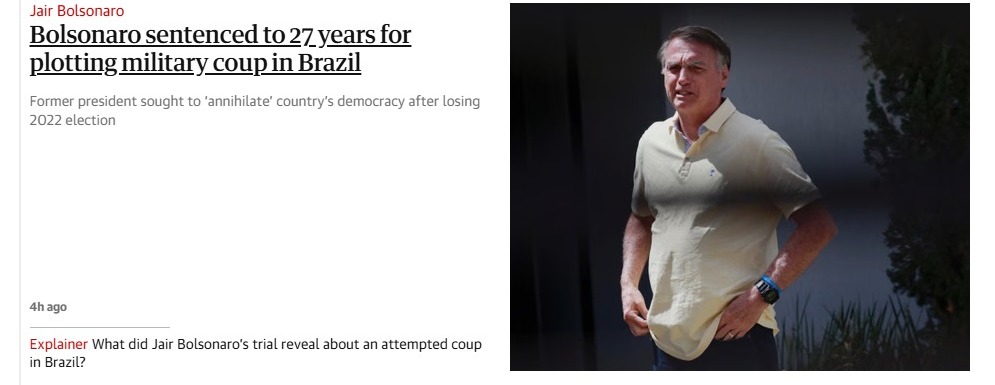
In another text, Guardian stressed that the killer plan that was part of the coup conspiracy was abandoned “just because Bolsonaro got support from only one of the Navy’s three armed commanders, while the Air Force and Army chiefs refused to join”.
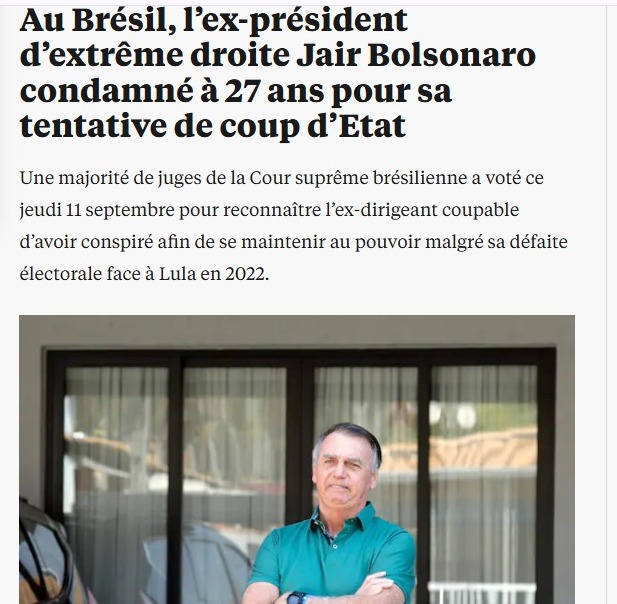
In France, Diário Libération stated that the trial was historic, with live audiences throughout the country. The newspaper noted that this was the first time since the end of the military dictatorship that a former Brazilian chief was tried by a coup project.
The Spanish press also reverberated the decision. The El País said that this was the “most relevant judgment in Brazil in recent years” and recalled that the risk of escape and the violation of precautionary measures led “Minister Alexandre de Moraes to determine house arrest, confiscate Bolsonaro’s passport and force him to wear an electronic anklet in July 2024”.
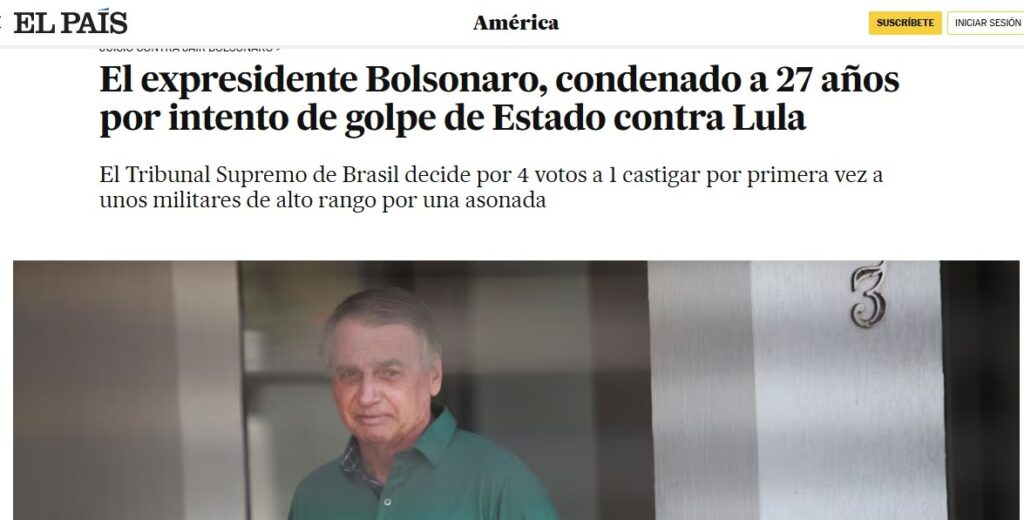
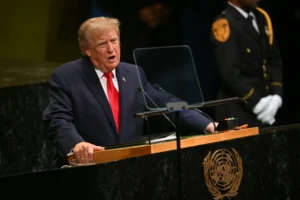
The newspaper also highlighted the pressure of President Donald Trump, who endeavored to neutralize the trial and “punished Brazil with tariffs, sanctioned judges and froze Moraes’ assets in the United States, as well as revoking the visas of almost all Supreme Ministers.”
From Qatar, the broadcaster Al Jazeera recalled Bolsonaro’s trajectory as former army captain and parachutist, noting that he was known for his defense of the military dictatorship.
The vehicle mentioned that the former president never hid his admiration for the regime “which killed hundreds of Brazilians between 1964 and 1985”.
In one of his statements, “Bolsonaro even said that Brazil would only change the day there was a civil war capable of doing the work that the military regime did not, to kill 30,000.”
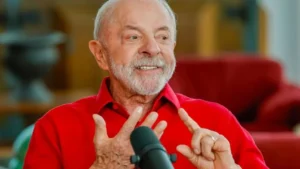
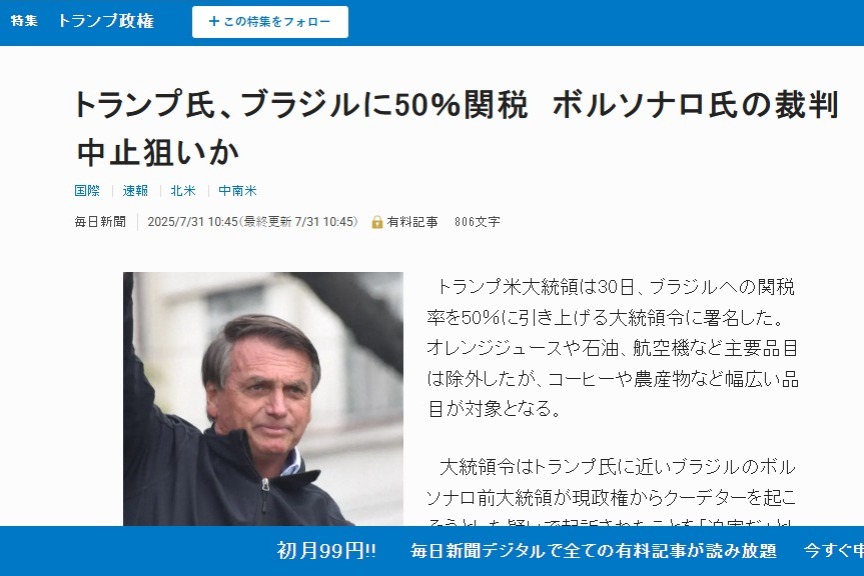
In Japan, Mainichi Shimbun reported that Bolsonaro, “defeated in the 2022 elections, planned with his allies a coup to stay in power, including the murder of President Luiz Inácio Lula da Silva.”
Still in Asia, the repercussion also came from China. South China Morning Post noted that the condemnation of Bolsonaro, former army captain who always showed admiration for the military dictatorship, “occurs the same year when other far-right leaders were punished by the court, such as Marine Le Pen, from France, and Rodrigo Duterte, from the Philippines.”
Source: vermelho.org.br