Published 10/09/2025 19:13 | Edited 10/09/2025 19:22
The impacts of the crisis that shakes Nepal go beyond the resignation, on Tuesday (9), Prime Minister Khadga Prasad (KP) Sharma Oli, member of CPN [Partido Comunista do Nepal – Marxista-Leninista Unificado]. In a letter to President Ram Chandra Poude (from the Nepalese Congress Party), Oli said her gesture aims to “take new steps toward a political solution and problem solving.” The outcome of turbulence, however, is unclear.
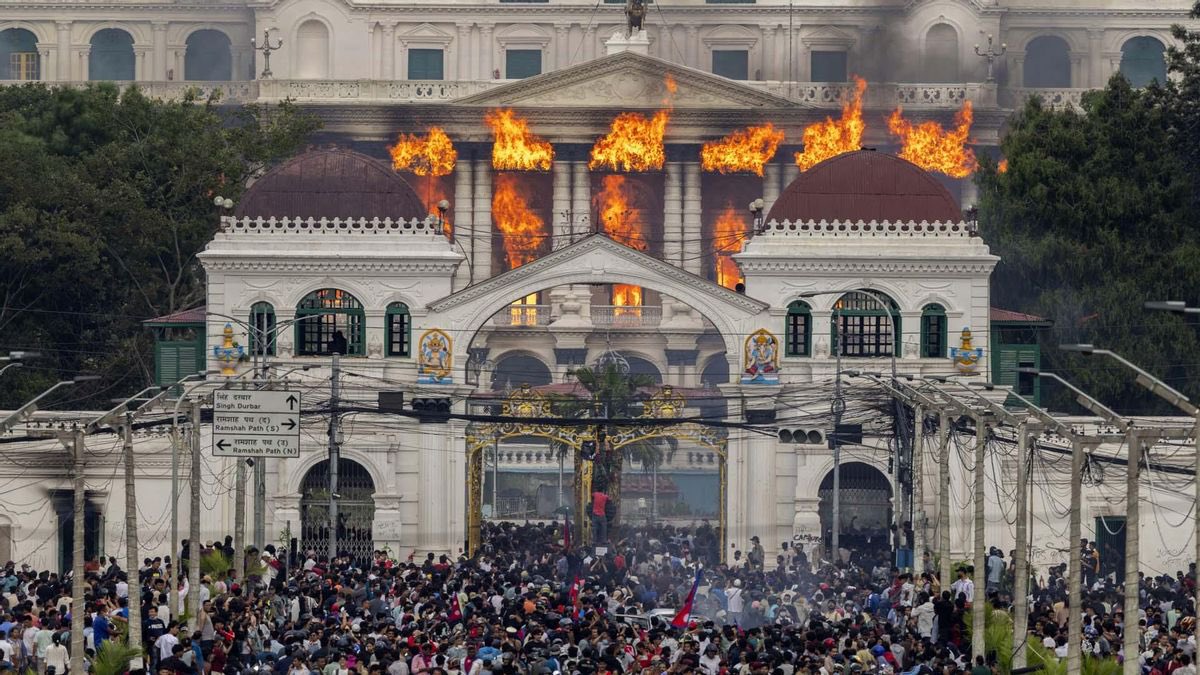
For two days, violent acts ended with more than 20 dead and 600 injured, as well as a scenario of deep political instability. The headquarters of the Executive, Legislative and Judiciary Powers were set on fire. Ahead of the demonstrations is the so -called generation Z, formed by young people born between 1995 and 2010. They would have reacted to block the main digital platforms, which began on September 4.

O Red portal He talked to the union leader and communist Smritee Lama, Secretary of International Relations at GEFONT (General Federation of Nepalenses Unions) and CPN leader. According to Smritee, “generation Z protests shook the nation in its essence, leaving a trail of widespread devastation and political collapse.”
The streets mobilization began when the government, serving a decision by Nepal’s Supreme Court, blocked 26 major platforms, such as WhatsApp, Facebook, Instagram, Youtube and X (former Twitter). Commanded by Big Techs – the giants of technology – these networks refused to collaborate with the court, which required him local registration.
“Although it was a measure of legal compliance, many young people realized it as an attack on freedom of expression and digital rights,” says Smritee. “At the same time, some political and geopolitical interests seem to have partially manipulated and mobilized young people to protests, expanding tensions and turning a legal question into a national crisis.”
With slogans such as “unlock social networks” and “end with corruption, not platforms”, thousands of young people took to the streets starting on Monday (8). “What began as a peaceful protest turned into violent confrontations, with protesters breaking barricades, burning up government buildings and invading political offices. The security forces responded with water, tear gas, rubber bullets and real ammunition,” summarizes the trade unionist.
In his opinion, the picture in Nepal climbed on Tuesday: “Several of the main political leaders were brutally attacked, their burned homes and offices, and the civil government effectively collapsed.” Radhika Shakya, wife of former Primei Oli, was burned alive, could not resist the injuries and died. “Disturbingly, GEFont’s own union office was sabotaged during the stir, further aggravating the crisis.”
The Prime Minister’s resignation was not enough to placate the crisis. “No effective civil authority has taken control. In the vacuum of power, the army took the streets, imposing touches of collecting and patrolling key areas,” says Smritee. “Tribhuvan International Airport was closed, flights were diverted and paralyzed everyday life.”
The blockade on the platforms was suspended, but the Nepal Country continues to seizure. “.” The country is now on the brink of uncertainty, under de facto military control, “explains Smritee Lama.” In addition to domestic frustrations, there are geopolitical interests and a manipulation of youth participation that further fed the agitation, revealing the fragility of Nepal’s democratic institutions and the deep indignation of their youth. “
Source: vermelho.org.br