Published 09/09/2025 08:50 | Edited 09/09/2025 09:08
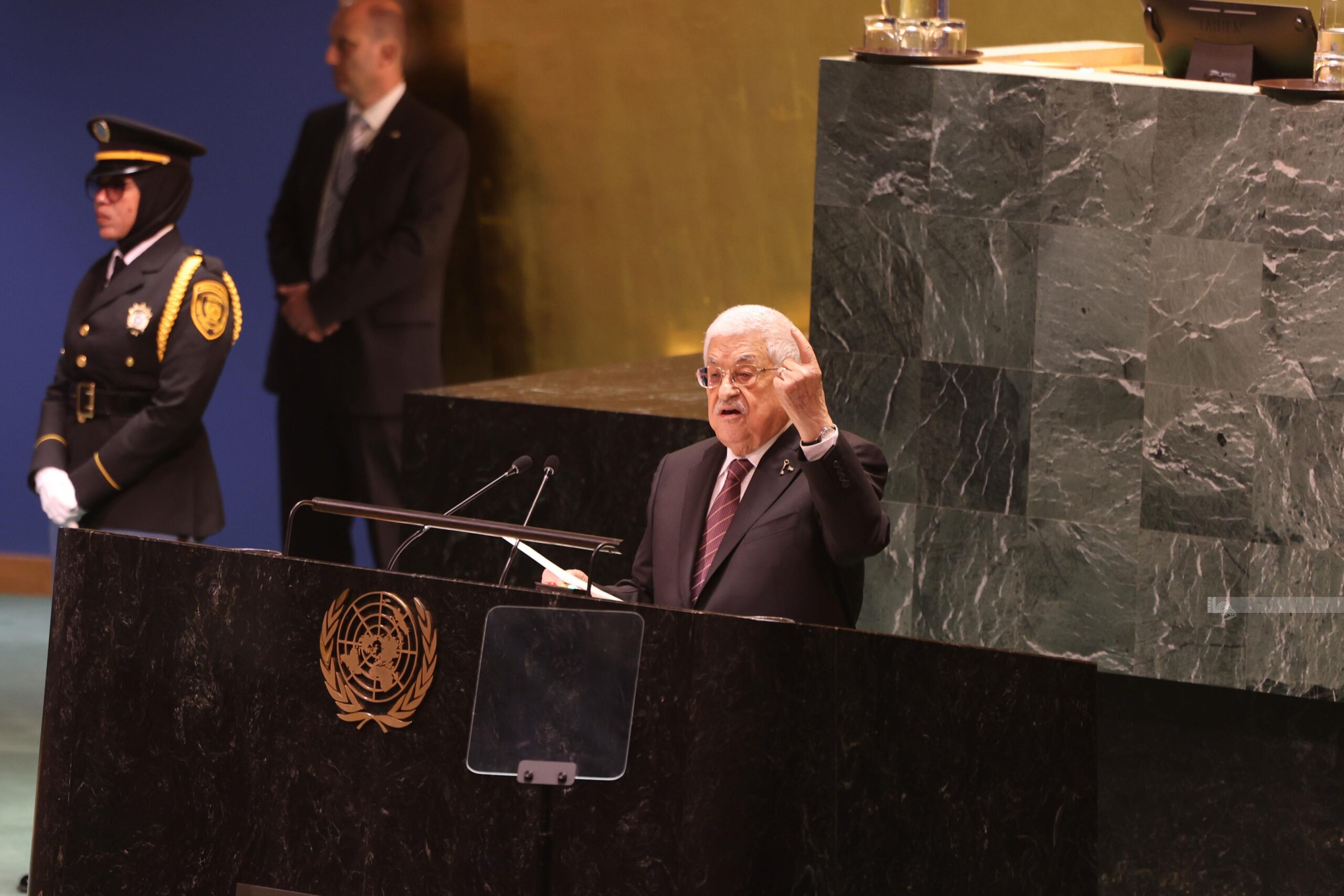
The UN was born under the promise of being the most universal space in international politics. Seventy -nine years later, what you see is the opposite: the host decides who can speak and who should be silenced. By blocking Mahmoud Abbas and the entire Palestinian delegation on the eve of the 80th General Assembly, the United States revealed how much the forum that should give voice to the peoples became an instrument of selective power – open to some, banned for others.
Last Friday (29) of August, the Government Donald Trump announced the revocation of the visas of about 80 Palestinian authorities, including the president of the Palestinian Authority.
The decision was presented as a security measure. “It is in the interest of our National Security to hold PLO and the Palestinian Authority for not complying with their commitments and to undermine the prospects of peace,” the State Department said in a statement.
With the decision, the Palestinian delegation is prevented from traveling to New York to participate in the largest multilateral forum in the world. The measure, unprecedented in the history of the UN, occurs precisely when the expectation of international recognition of Palestine and the pressure on genocide perpetrated by Zionism.
France, United Kingdom, Canada, Australia, Portugal, Malta and Belgium have announced that they will formally recognize the Palestinian state this month. It is a movement to press Israel to end the massacre in Gaza and the West Bank: 63,000 dead, 150,000 wounded, an all-displaced population-and the UN declaring hunger because of the “systematic obstruction” of humanitarian aid by Israel.
Faced with this scenario, the presence of Abbas in New York would have enormous symbolism. The White House, however, acted to stifle this gesture, preventing Palestinians from celebrating European recognition and denouncing Israel loud and clear.
Meanwhile, Benjamin Netanyahu, accused of war crimes and with arrest warrant of the International Criminal Court, will have free access to the UN pulpit.
The US State Department, led by Marco Rubio, justified the veto alleging “national security interests”. For Washington, the PLO and the Palestinian authority do not comply with commitments, undermine perspectives of peace and practice lawfare by appealing to international courts against Israel.
In a statement, the folder led by Rubio listed a series of requirements for measures to be reviewed. The conditions imposed, however, sound as blackmail. Olp and AP would have:
- Permanently repudiate terrorism, including attacks on October 7;
- Review school books and programs to eliminate what they classify as incitement;
- abandon actions in international courts, such as the International Criminal Court and the International Court of Justice;
- and suspend unilateral recognition attempts of the Palestinian state.
The whole of these conditions shows how far the US intends to control the narrative. It is not just about a visa for a diplomatic trip – it is, in practice, a political script that defines how Palestinians should behave to deserve a place in the international community.
It is a requirement of submission that transforms Palestine’s own political existence into Washington concession.
The problem is that the headquarters agreement, signed between USA and UN in 1947, goes in the opposite direction. The document provides that the headquarters must be opened to all invited delegations, including non-member states, such as Palestine, and determines that the United States guarantee unrestricted access to these representatives.
Section 21A is crystal clear: “The United Nations headquarters will be open to representatives of Member States and non-member states invited to participate in United Nations meetings. The United States should guarantee access without restrictions on headquarters facilities for such representatives, as well as for the press and the UN accredited public.”
Even though Washington tries to explore the breach that Palestine is only a non-member observing state, the decision violates the spirit of the treaty, which sought to ensure the universality of the UN.
This is not the first time the US resort to this work. In 1988, the US government barred Yasser Arafat from entering New York. At the time, the General Assembly decided to transfer the session to Geneva, where the Palestinian leader was able to speak.
The historical precedent shows that the UN has already responded to institutionally to the host’s interference. Now, however, the bet is to silence Palestine in block, without allowing breaches for immediate reaction.
There is also the threat that sanctions extend to other countries. Information circulates that the US can also block diplomats from Iran, Sudan, Zimbabwe and even Brazil.
It is not known whether the measure could directly reach President Luiz Inacio Lula da Silva or only members of the Brazilian delegation.
The doubt is sufficient to generate apprehension, as Lula is traditionally the first head of state to speak at the opening of the Assembly. The retaliation against Brazil would fit Trump’s climate of hostility to Lula and the Republican alliance with Jair Bolsonaro, accused of coup attempt on January 8, 2023.
The international reaction against state department measures to Palestinians was immediate. The Abbas Office denounced the violation of the 1947 Treaty. UN spokesman Stéphane Dujaric said it is “important” to ensure the representation of all states and observers.
European parliamentarians suggested transferring the conference on the solution of two states to Geneva, repeating the 1988 gesture.
The Israeli chancellor Gideon Sa’ar thanked Trump for the “bold step” in further evidence of convergence between Washington and Tel Aviv. Belgium, in turn, reinforced the pair’s isolation by adding to the block of countries that will recognize Palestine.
The negative of visas exposes the perverse logic of US foreign policy to the Middle East: when they cannot prevent the recognition of Palestine, they try to silence their representatives.
The paradox is cruel. A Palestinian authority that has long renounced armed struggle, like Mahmoud Abbas, has no right to speak. Netanyahu, symbol of a government that keeps Gaza in ruins and supports the death of tens of thousands of civilians, will have the microphone open in New York.
The result is corrosive for the UN. Created to be universal, the organization is hostage to the arbitrariness of its host. The same country that agreed to host the UN to avoid the failure of the League of Nations now manipulates its headquarters to silence whole people.
By preventing Abbas from speaking, the US not only violates a treaty of almost 80 years. They reinforce the oldest inequality of international politics: that some always have the right to the word – and others ever.
Source: vermelho.org.br