Published 09/09/2025 10:57 | Edited 08/09/2025 11:27
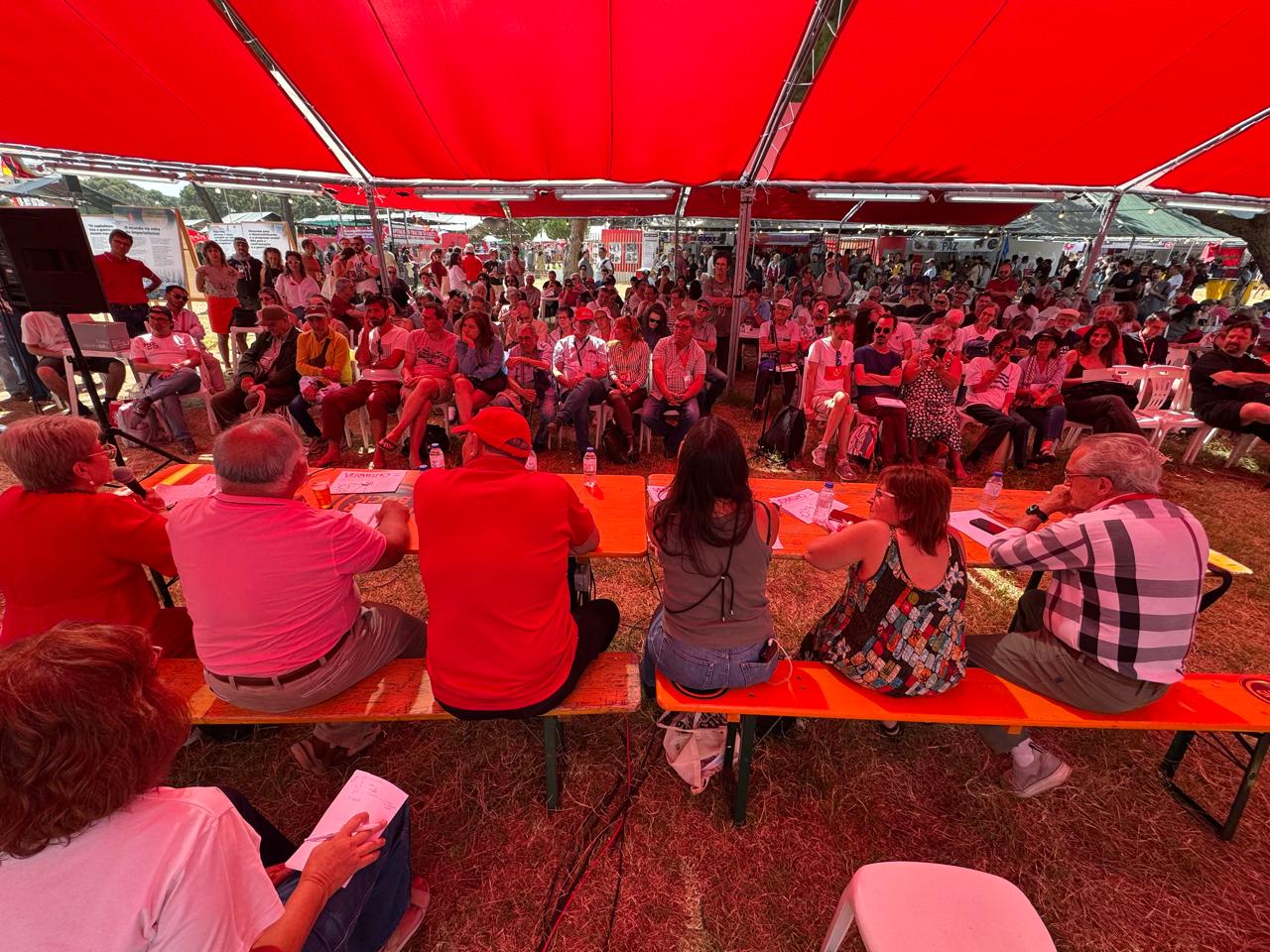
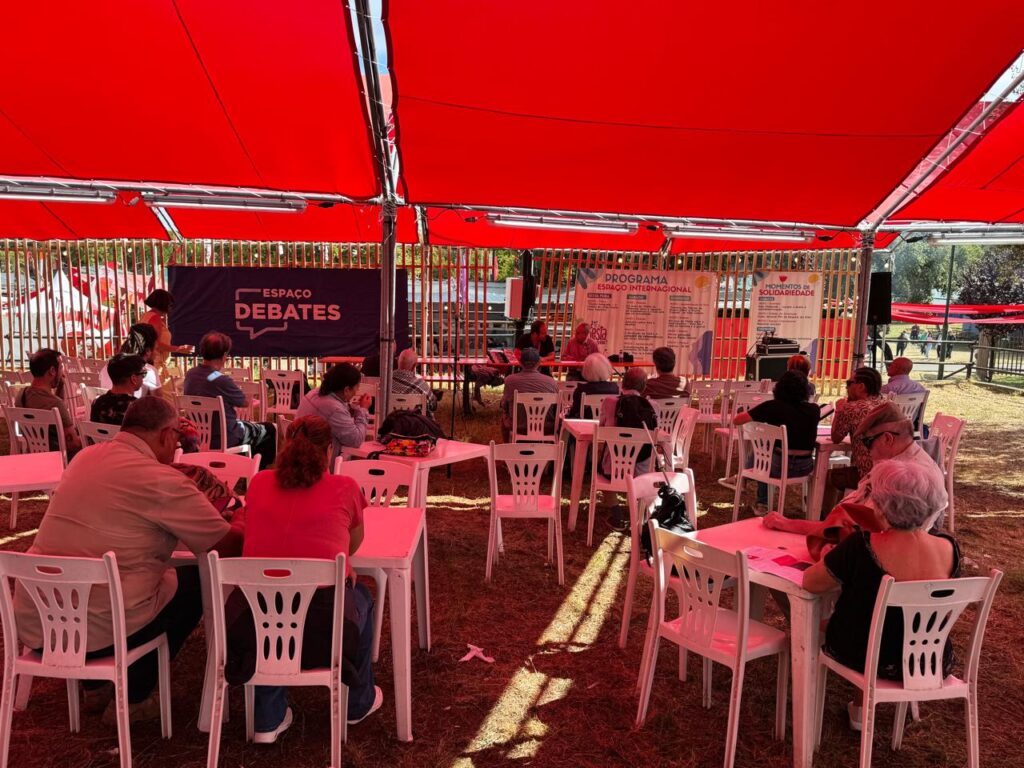
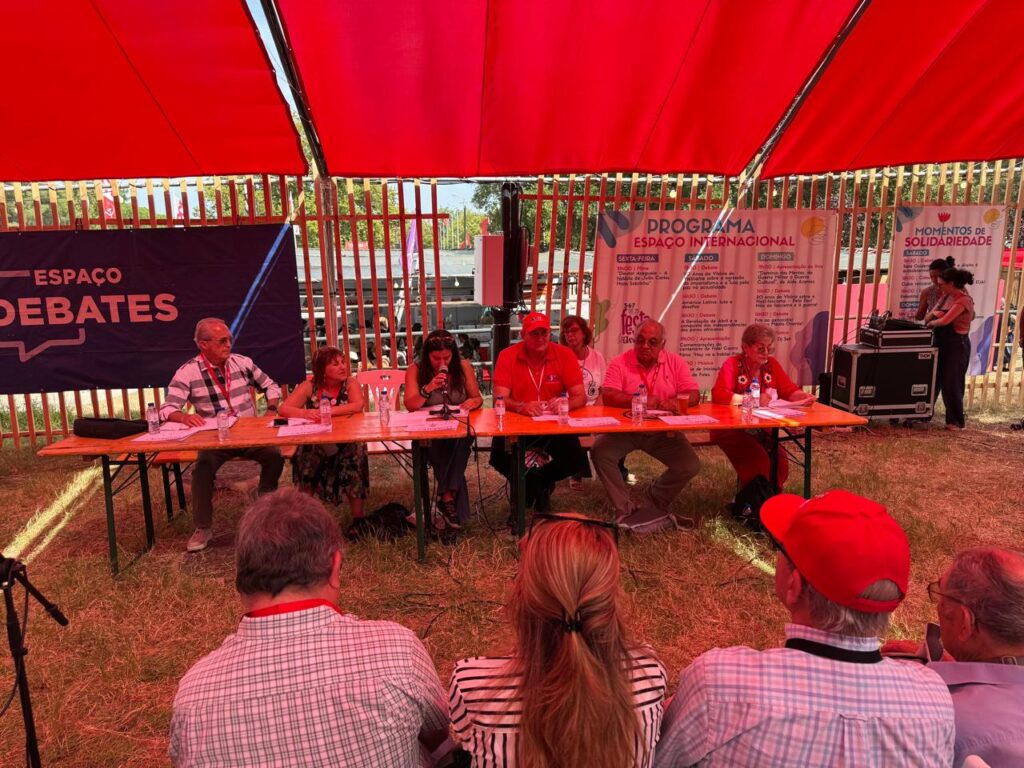
Amid the aromas of varied gastronomy and sounds from around the world, at 2 pm on Saturday, the International Space of the Avante Festival was completely packed for a debate that placed Latin America in the center of attention. Mediated by Cristina Cardoso, from the international section of the PCP, the meeting brought together leaders of communist parties from Brazil, Chile, Colombia, Cuba and Uruguay, in a climate of strong internationalism and political solidarity.
By PCdoB, Aldo Arantes opened the works remembering that his son was born in Uruguay, a period in which he lived in the country during the Brazilian military dictatorship. He also recalled that he was arrested by PIDE in 1962 in Portugal, reinforcing his personal and political connection with the history of international struggles. He then said: “Latin America has been a victim for many years of imperialist aggression, and continues to resist firmly.” From then on, he stressed the US offensive against Venezuela and Cuba, and connected the Latin American picture to the transition to a multipolar world where the Brics gain density.
Also read: Brazilian delegation highlights sovereignty at the party of Avante in Portugal
Arantes also highlighted the ideological dimension of the confrontation: “We are facing a cultural war, a war of values, in which the far-right manipulates feelings of hatred and faith to try to impose its hegemony.” He denounced the action of the Big Techs and announced the 16th PCdoB Congress in October as a moment of organization and political accumulation.
From the Chilean Communist Party, Antonio Valdivia reported the advances of the cycle started with Gabriel Boric, such as reducing the journey to 40 hours and the expansion of university gratuity. “It was an achievement built with dialogue and social mobilization, which shows that the left, even without parliamentary majority, can transform the lives of the people,” he said. He also warned of the far-right offensive and defended the need for internal and regional alliances.
Labor Minister Gloria Inés Ramírez of the Colombian Communist Party emphasized the Gustavo Petro government program, centered on social justice and ecological transition. “We are a region marked by colonialism and inequality, but also a territory of hope and resistance, which has much to offer the world,” he said. He also denounced the militarization of the Caribbean and recalled that Latin America concentrates strategic resources that arouse the appetite of imperialism.
By the Communist Party of Cuba, Juan Miguel García Díaz thanked international solidarity and reaffirmed the resistance to the blockade. “They can squeeze, they can intensify sanctions, but Cuba will not surrender. We maintain health and education as inalienable rights of our people,” he said. He also recalled the centenary of Fidel Castro, to be celebrated in 2026, as a landmark of the continuity of revolutionary thinking.
Also read: Avante Party Coordination receives Red Portal
Representing the Communist Party of Uruguay, Virginie Ros highlighted the experience of the Broad Front as an example of popular unity. “The struggle against imperialism requires that we transform unity into concrete action. It is not enough to declare solidarity: it is necessary to live it every day, in the unions, in the streets and in institutions,” he said. For her, the challenge is to face crisis capitalism that tries to capture the ideological dispute.
Throughout the debate, a common thread emerged: the need for defense of sovereignty, antineoliberal policies, and the fight against disinformation that feeds authoritarian projects. The interventions reinforced the centrality of the dispute of values, science and history, opposed to irrationalism and hate narratives.
As a synthesis, participants have stated that Latin American integration is a condition to protect strategic resources, gain technological and financial scale, expand rights and shield democracy. More than a watchword, integration means political coordination, productive cooperation, energy and scientific complementarity, as well as active solidarity in the face of external aggressions, the path to a future of peace, development and social justice in the region.
Source: vermelho.org.br