Published 03/09/2025 15:48 | Edited 03/09/2025 17:01
The European Commission presented on Wednesday (3) the free trade agreement between the European Union and Mercosur for formal approval in the bloc. The treaty, completed last December after 25 years of negotiations, is considered the largest ever signed by the EU in terms of tariff reduction and will need to go through the sieve of the European Parliament and a qualified majority among governments-at least 15 of the 27 member states, representing 65% of the Union population.
France resists, but opens breach
The main obstacle remains France, Europe’s largest beef producer and the pact’s historical criticism. Paris has already classified the agreement as “unacceptable”, fearing competition from South American meat at lower prices. Poland, another heavy agricultural weight, has also remained opposite.
To soften the opposition, the commission has proposed a safeguarding mechanism: If Mercosur imports increase more than 10% or cause equivalent drop in prices, preferential access may be temporarily suspended. The device would allow you to react within three weeks after a complaint. In addition, Brussels announced an € 6.3 billion agricultural crisis fund to support European producers.
French Minister of Commerce, Laurent Saint-Martin, admitted that the defense clause “is a step in the right direction.” Polish Prime Minister Donald Tusk said his country will continue contrary to the pact, but acknowledged that the lack of allies makes the adoption of protective measures essential.
Trump and the European Repositioning
The commission points out that the agreement with Mercosur is a centerpiece of the EU effort to diversify markets in the face of US President Donald Trump’s fares and China’s strong dependence on strategic minerals. Germany and Spain lead the group of favorable countries, which see in partnership an opportunity to expand exports of car, chemicals and processed foods, as well as ensure access to lithium and other vital inputs to energy transition.
Since Trump’s electoral victory in November 2024, Brussels has accelerated the search for commercial agreements, resuming dealings with India, Indonesia and the United Arab Emirates, and consolidating existing partnerships with the United Kingdom, Canada and Japan. In the same package presented on Wednesday, the commission also submitted the revision of the agreement with Mexico, completed in January.
Pressure of farmers and environmentalists
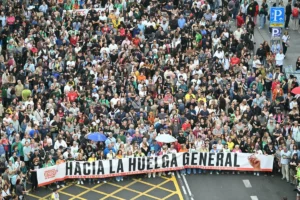
On the contrary, European farmers remain mobilized against ratification, claiming that the treaty will make room for cheap and low quality South American commodities, especially beef, which they say they do not respect EU environmental and sanitary patterns. The commission refuted the accusations.
Environmental groups reinforce resistance. The NGO Friends of the Earth has classified the agreement as a “climate destroyer”, denouncing risk of deforestation and increased emissions. In Parliament, the green and part of the far right promise to vote against.
Chances of approval
Despite the resistance, sources in Brussels evaluate that an alliance of governments will hardly be formed enough to veto the agreement. With agricultural concessions in negotiation, parliament is expected to become the decisive field of the dispute.
If approved, the UE – Mercosul Pact will create a free trade zone with over 700 million consumers, making room for one of the largest economic integrations on the planet.
Source: vermelho.org.br