Published 27/08/2025 09:01 | Edited 27/08/2025 09:43
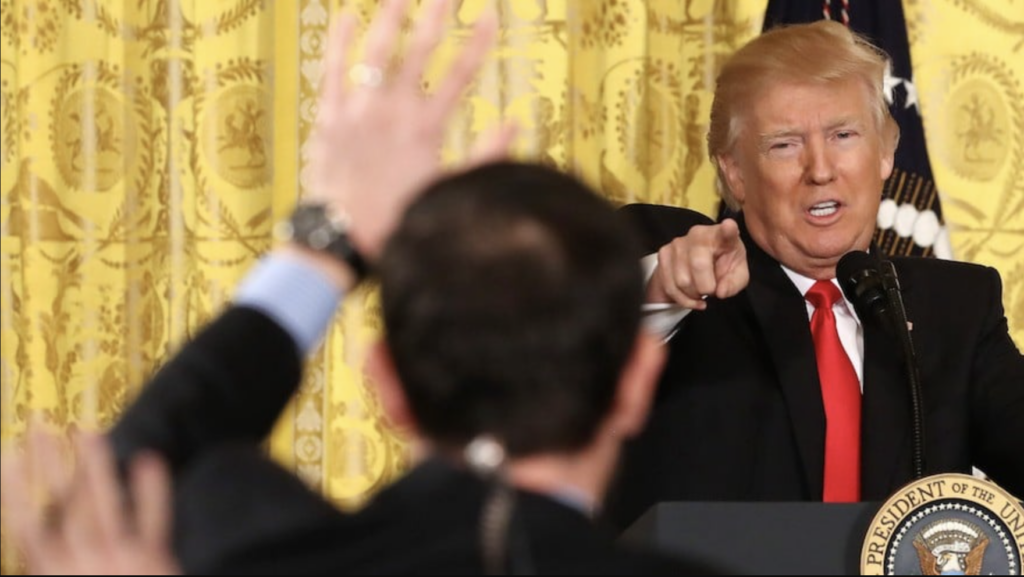
United States President Donald Trump again attacked two of the country’s largest television networks – ABC, belonging to Disney, and NBC, controlled by Comcast. In Posts on the Social Social Network, Trump stated that the broadcasters “give 97% of bad stories” about him, accusing them of acting as “an arm of the Democratic Party.”
He suggested that the Federal Communications Commission (FCC) should revoke networking licenses and even charge millionaire fees for the use of the public spectrum. “I would be totally in favor of this because they are very biased and liars, a real threat to our democracy !!!”, he wrote.
Donald Trump’s statements go beyond a dispute between a president and the press. Communication and Constitutional Law experts warn that the president’s strategy, yes, can open a dangerous precedent for press freedom in the United States.
In insisting that the Federal Communications Commission (FCC) must punish critical vehicles, Trump pressures an independent regulatory agency to become a political instrument. It is a movement that puts one of the pillars of American democracy in check: the editorial autonomy guaranteed by the first amendment.
FCC in Check
The FCC’s recent decision to condition the merger between Paramount Global and Skydance Media to the creation of an ombudsman to monitor “tendencies” is a sign of the organ’s turn under car. For Democratic Commissioner Anna Gomez, the measure represents an unprecedented interference with the editorial content of the broadcasters.
Carr has already reopened filed complaints against CBS interviews, television debates organized by ABC and even participation from the then Vice President Kamala Harris in NBC’s “Saturday Night Live”. “The media industry across the country needs a course correction,” the Republican said last month.
This change contrasts with the stance of former FCC President Ajit Father, who, during the Trump administration, had rejected similar claims, arguing that the legislation did not authorize the revocation of licenses based on content. The current scenario, however, indicates that the boundary between technical regulation and political control of the media has become more fragile.
The “freezing” effect
Even though Trump’s threats do not materialize in licensing cassations, experts highlight the risk of the so -called “Chilling Effect). This is self-censorship: Writing can avoid critical guidelines for fear of regulatory, financial or legal retaliation.
This effect is as harmful as direct censorship, as it undermines the diversity of voices and restricts public debate. The press, which should oversee the powers instituted, becomes protected from power, reversing its social function. Trump’s adviser comprises this effect, so it insists on this type of practice only apparently ineffective.
The test of democracy
Trump’s attacks also test the ability of US institutions to resist attacks against freedom of expression. Although the Supreme Court’s constitution and jurisprudence strongly protect the press, the repeated use of threats and investigations may erode democratic culture and normalize practices of government hostility against journalists.
By transforming journalistic criticism into enemies of “democracy,” Trump mirrors the logic of populist and authoritarian leaders in other parts of the world, for whom the free press is not a pillar but an obstacle.
Source: vermelho.org.br