Published 08/08/2025 11:43 | Edited 08/08/2025 19:17
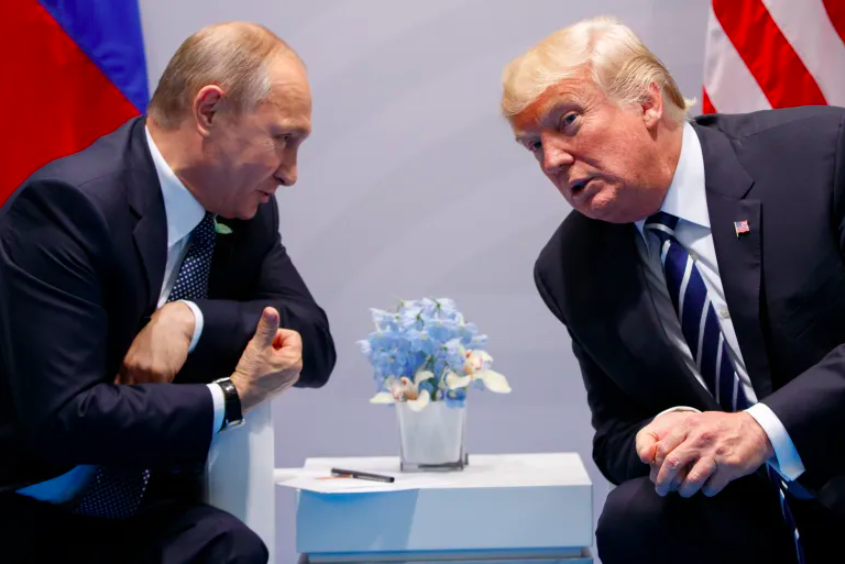
United States President Donald Trump and Russian President Vladimir Putin can meet next week to try to unlock a ceasefire agreement in the Ukraine War.
The initiative arises amid the growing frustration of the US government with the impasse on the battlefield and the pressure that Trump has been suffering for not fulfilling the promise of ending the conflict “in 24 hours” after returning to the White House.
The possible summit, still without confirmed date or place, occurs under the background of new economic sanctions imposed by Washington not only on Russia, but also to countries that continue to buy their energy.
India has already been the target of a 50% tariff as a punishment for Russian oil imports, and other major partners-including China-are in the sights, if Moscow and Kiev do not advance toward a ceasefire until Friday, a deadline unilaterally defined by Trump.
Despite the aggressive rhetoric, Trump himself has given signs of hesitation in recent days. After dispatching his special envoy, Steve Witkoff, for a round of conversations with Putin in Moscow, the US president said the outcome of negotiations will depend on Kremlin’s willingness.
Internally, advisers report that Trump is “furious” for not being able to brake the war and begins to realize that his threats have not had the expected effect.
Frustration adds to the difficulty of obtaining real Putin concessions, which only agrees to interrupt the offensive under its own conditions – especially the international recognition of the annexation of Crimea and Russian control over parts of Donbass.
The US government tries to convince Putin to accept a trilateral meeting with Ukrainian President Volodymyr Zelensky, but Kremlin resists. “We are still far from creating these conditions,” Putin said, who often questions Kiev’s legitimacy.
Risk of diplomatic scam and political use of the agreement
Among European authorities, the fear that the Russian invitation to the summit with Trump is just another Putin’s rolling maneuver, capable of postponing new sanctions without giving military ground.
The proposal that circulates behind the scenes provides that Russia maintains part of the territories occupied in exchange for the removal of troops from other areas of Ukraine – a formula that Kiev and European Union governments reject categorically.
Still, there is a fear that Trump press Zelensky to accept an agreement that guarantees symbolic gains to his image, even if it means rewarding the Russian occupation. Such a scenario could lead the US to withdraw from the diplomatic process or to cut off military and intelligence support to Kiev, as occurred earlier this year.
For analysts, Trump’s obsession with sealing “the greatest peace agreement of all time” can put him at the service of a script traced by Moscow. The US President has already told allies that he wants to “stop the killing” and who is willing to get a historical result-including ignoring the minimum demands of Zelensky and Europeans, who do not accept any legitimation of the Russian occupation.
With the war by dragging on for more than three years and a growing balance of dead civilians, the US seem increasingly willing to push Ukraine to an agreement that stabilizes the front – albeit at the expense of its territorial integrity.
“Putin is trying to throw him against the wall,” said Republican Senator Lindsey Graham. For Russian diplomacy, however, it is just about recognizing what is already a consummate fact. If Trump accepts, you can sell the gesture as an electoral asset. Refusing, Putin will continue to gain time.
Source: vermelho.org.br