Published 06/08/2025 11:34 | Edited 06/08/2025 12:06
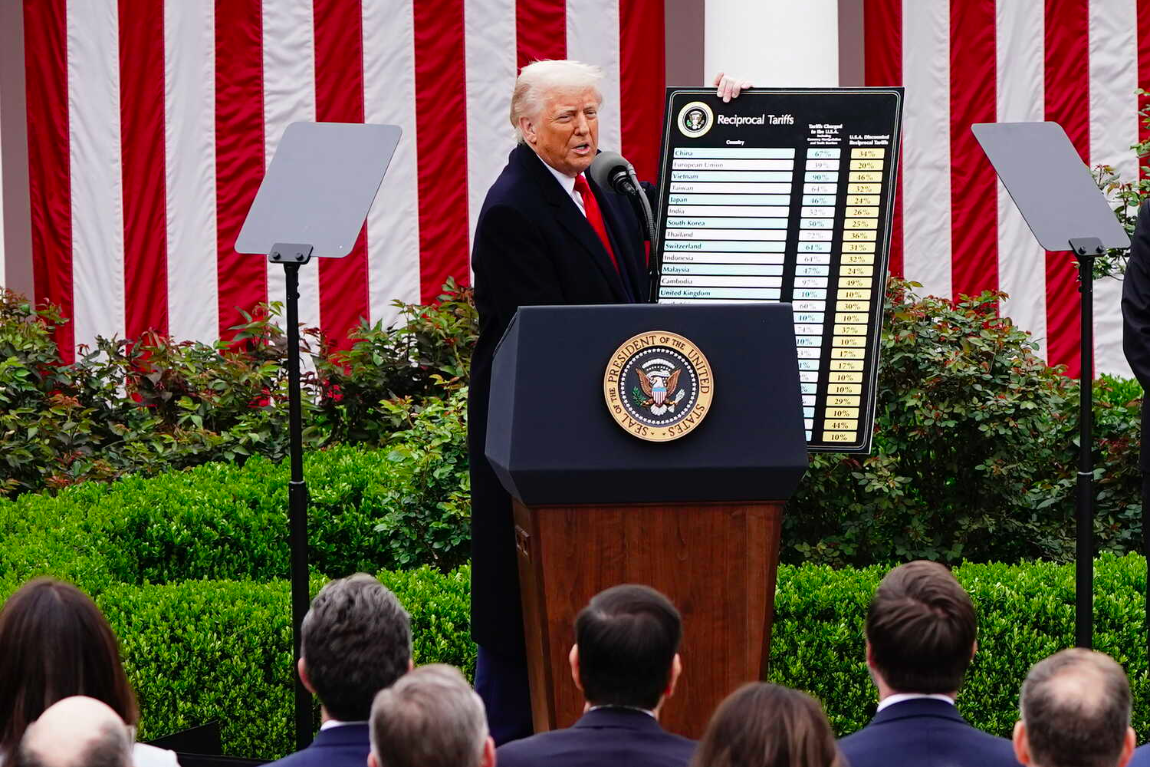
US jurist Ilya Somin, the plaintiff who has temporarily suspended reciprocal tariffs imposed by Donald Trump to dozens of countries, said the new 50% tariffs applied exclusively against Brazil are also “clearly illegal” and have a good chance of falling into court.
In an interview with UOL columnist Mariana Sanches, Somin estimated that Trump’s signed measure in late July is supported by the same fragile legal basis, the 1977 International Emergency Economic Powers Law, which has been successfully contested in another case.
According to the jurist, IEEPA does not authorize the president to distribute rates indiscriminately, as the Trump government has been doing since the beginning of its second term.
The law requires the existence of a national emergency that represents a “unusual and extraordinary” threat to the economy or security of the United States – which, in Somin’s view, is absent both in the case of reciprocal tariffs and in the imposition of surcharge to Brazil.
“In the case of Brazil, regardless of what you think about the process against former president (Jair) Bolsonaro, it is very difficult to argue that this is somehow an emergency or a threat to the US. If this man goes to prison, which may even happen, it will not cause anything to the United States, right?
The decision that temporarily overthrew previous fares was unanimously issued by the US International Court.
At the time, Judge Jane A. Restani argued that the presidential powers are not unlimited and criticized the White House legal reasoning, which, if accepted, would allow the president to justify rates based on any “crazy” reason, as a shortage of peanut butter.
The case is now being processed at the Washington Circuit Appeal Court, which is expected to issue a new verdict between the end of August and the beginning of September.
According to Somin, a possible confirmation of the illegality of reciprocal tariffs will automatically imply the fall in the 50% surcharge imposed on Brazil. “It’s not 100% right, but there is 95% sure that this will also dictate the result of the case of Brazil,” he said.
At the same time, an American company that imports orange juice-one of about 700 affected Brazilian products-opened a specific action against Brazil-oriented tariffs, but the process is still awaiting first instance analysis.
Trump justified the new taxation claiming that the Lula government represents a threat to US security, citing alleged violations of freedom of expression and political persecution to former President Jair Bolsonaro.
For Somin, these allegations are not legal and hurt the constitutional principle of separation of powers. “As in Brazil, the Executive, Legislative and Judiciary Powers are independent,” said the jurist.
The US Constitution states that the power to impose tariffs is up to Congress. The president can only exercise this power under very specific conditions and with solid legal basis. What is at stake, according to Somin, is a dangerous precedent for abuse of authority:
“The government is saying that the president can impose rates on any nation he wants, for whatever reason he wants, anytime he wants, and there is no limit to that power that he is claiming,” he said.
Somin’s statements reinforce the position of the Brazilian government that tariffs are an attack on national sovereignty.
Since the White House has conditioned commercial negotiations to the suspension of the court case against Bolsonaro, Itamaraty and the Planalto Palace have been reiterating that they will not accept any form of foreign interference over the judiciary.
By pointing out the illegality of the measure and predicting its overthrow in the US courts, the US jurist provides another legal and political argument for Trump’s tariff contestation.
Source: vermelho.org.br