Published 7/24/2025 15:49 | Edited 24/07/2025 16:42
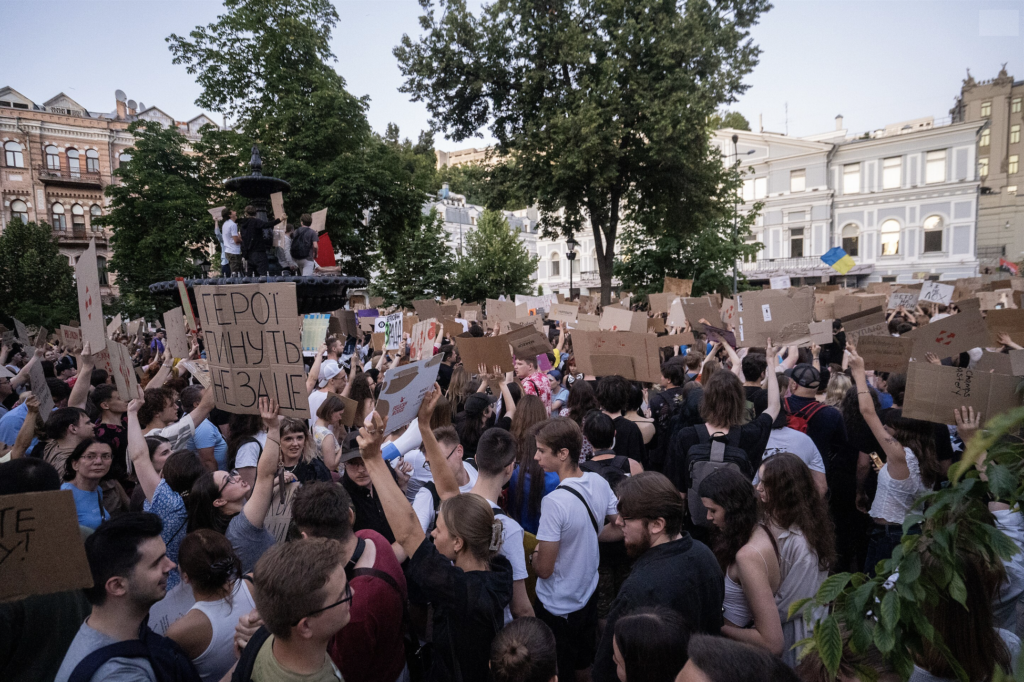
In the middle of War against Russia, Ukrainian President Volodymyr Zelensky faces a new and unexpected front: the streets of Kiev and the clamor of a civil society that is beginning to feel betrayed. The presidential sanction to a controversial law that removes independence from key organs in the fight against corruption-Nabu and the Frog-caused the first popular protests against his government since 2022.
War veterans, activists, students and even allied politicians thickened the acts. What unites them is a feeling of disappointment with a president who, elected under the flag of fighting corruption, now seems to repeat old patterns he has vowed to bury.
Also read: 78% of Ukrainians say Zelensky are responsible for corruption
West attacks Putin, but it is Zelensky who suspends elections
Zelensky coexists with corruption in Ukrainian defense purchases
The Retroges Law: Concentration of Power
The new legislation gives the Attorney General-nominated by the president himself-broad powers on anti-corruption investigations, disfiguring the system created after the so-called Dignity Revolution (2014), the coup that toppled President Viktor Yanukovych, who intended to move away from the European Union and ally with Russia. The risk of direct political interference with investigations has raised alerts not only among Ukrainian citizens, but also between European authorities and international partners.
International transparency described the measure as “institutional destruction”, while the agency for legislative initiatives stated that it represents a “180 degree turn” into European integration. The EU has already signaled that the weakening of anti -corruption institutions may seriously compromise Ukraine’s adhesion negotiations to the bloc.
Zelensky repeats old practices?
Zelensky came to power as a political outsider – a TV comedian who promised to rid Ukraine of systemic corruption. However, critics indicate that the sanction of the new law represents a break with its main electoral flag.
“Nothing is more demoralizing than knowing that while you are in a trench, someone is stealing the country for which their brothers die,” wrote chief sergeant Yegor Firsov.
For many, Zelensky’s gesture resembles the times of untouchable oligarchs and fragile institutions – exactly what Ukraine sought to leave behind when approaching the West.
Diplomatic insulation in sight
International reactions were not long before. The EU claimed to be “seriously concerned,” while the American Chamber of Commerce has classified the measure as “a blow to anti -corruption infrastructure.”
Even historically pro-kiev voices, such as former US-Basker in Russia, Mike McFaul, and former Estonia President, Ilves Toomas, expressed frustration with the authoritarian turn.
Diplomatic tension comes at a delicate moment: Ukraine seeks to maintain billions flow in the military and humanitarian aid of its allies, as well as advancing in the procedures for adherence to the European Union. The new law undermines the country’s credibility on the international scene.
A President in Contradiction
Justifying the measure, Zelensky said he wanted to deliver the “Russian influence” agencies, citing the recent arrest of two NABU members. But the argument sounded more as a pretext than a solution to critics who see an attempt to political control over sensitive investigations – possibly even involving members of the government itself.
Zelensky announced, in response to public outrage, that he will present a new bill to preserve the independence of the organs. The movement, however, seems more like an attempt to contain damage than genuine repentance.
The episode opened an important crack in Zelensky’s incorruptible leader. His government flirts with internal authoritarian practices – such as the siege of supervisory bodies, the marginalization of critical voices and the political use of war as a shield for institutional setbacks.
Source: vermelho.org.br