Posted 24/07/2025 14:42 | Edited 24/07/2025 16:03
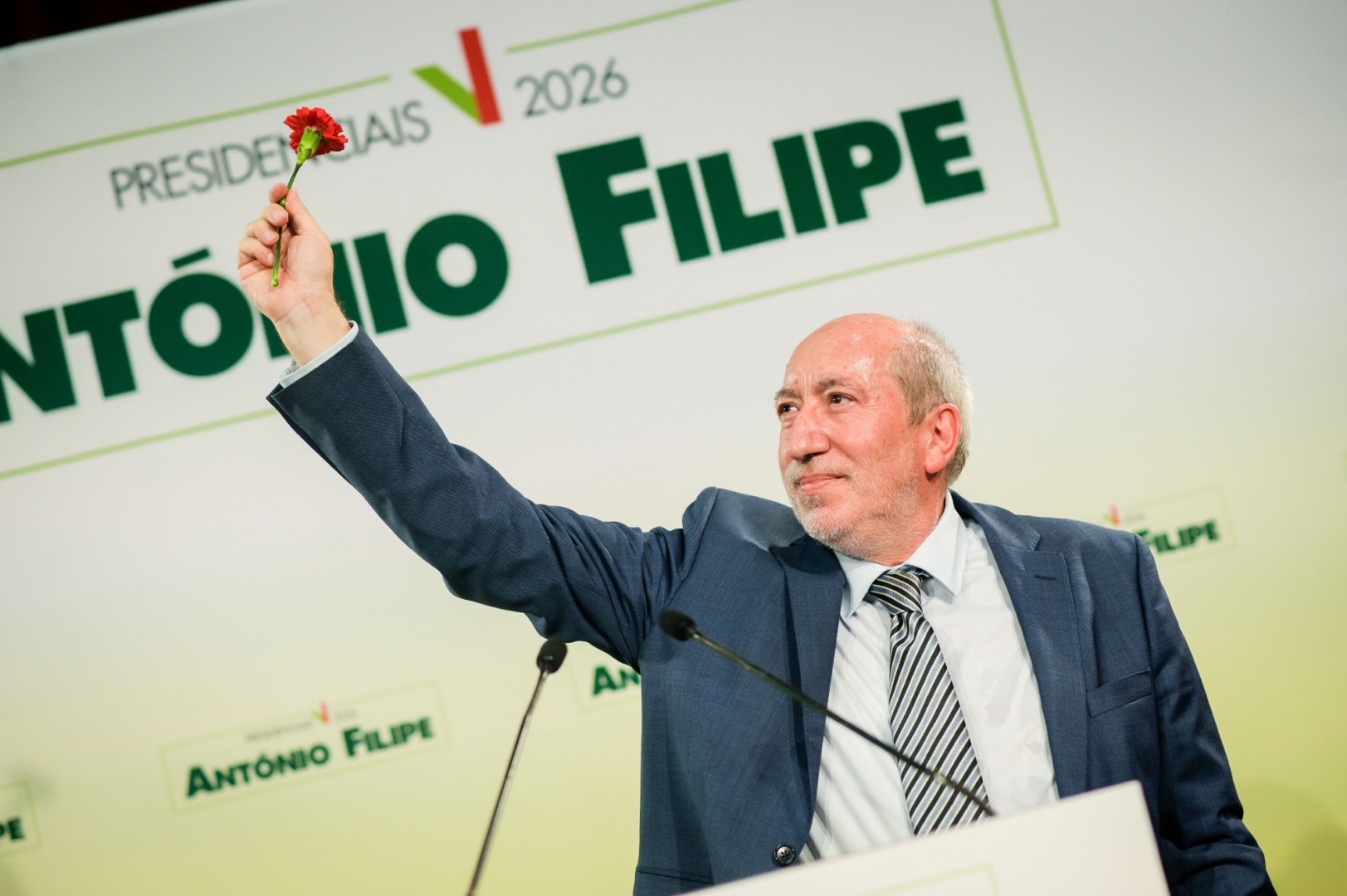
The Portuguese Communist Party (PCP) officialized, on July 14, the candidacy of Deputy António Filipe to the Presidency of the Republic, in the elections scheduled for 2026. In a public act held in the historic voice of the worker, in Lisbon, Filipe presented himself as a left alternative to “unite the democrats” and face the rise of the far right, the advance of authoritarianism and the connivance of liberal forces and the liberal forces with liberal forces The Great Capital.
Jurist, university professor and communist militant since his youth, António Filipe has been deputy for more than three decades, as well as one of the most respected figures of the PCP bench. In his launch speech, he defended an active and vigilant presidency, committed to the values of the April Revolution and the letter of the 1976 Constitution.
“Given the candidacies already announced, many democrats were rightly lamented the lack of a candidacy that would identify without reservation with the values of April consecrated in the Constitution, an application capable of uniting democrats who do not conform to the fact that the right controls all the sovereignty bodies, an application capable of uniting the Portuguese in the struggle for an alternative to the state that we arrived, an application that rescued the hope that And open horizons of the future, ”said Filipe.
“This candidacy was missing, but it is no longer lacking. Here we are. Here is this candidacy. Here we are, here, to say that the defense of democracy and the Constitution does not admit discretions or dropouts,” he said.
According to Filipe, the current Portuguese political regime undergoes “growing degradation”, with systematic attacks on public services, social rights and the democratic regime by the right -wing forces and economic power.
The deputy accused the government of the PSD/CDS coalition of using the growth of arrival, the far -right party that reached the second largest bench in the legislature, as a pretext to advance with a reactionary agenda that was already underway.
For the PCP, the 2026 presidential election will be decisive to face this process. By launching its own candidacy, the party intends to reinforce criticism of the “normalization” of the far right and the accommodation of traditional parties to its rhetoric and program.
Filipe spared no criticism of the current president, Marcelo Rebelo de Sousa, whom he accused of having had an “active role, even determining”, in the democratic crisis that the country is going through.
The communist candidacy also differs from others who, according to Philip, present themselves with “appeals to consensus and moderation”, but “converge essentially with the interests of great economic power”.
For him, it is necessary to dispute the meaning of the Presidency of the Republic, which cannot be reduced to a protocol function. The position, says Filipe, must be exercised with political courage and fidelity to the Constitution, in defense of workers and national sovereignty.
The launch of the candidacy marks the reaffirmation of the role of the PCP in the Portuguese political scenario, at a time when the progressive field suffers setbacks and dispersal. Unlike 2016 and 2021, when it also launched presidential, the party now faces a much more consolidated and articulated right.
For Filipe, the answer is to mobilize broad popular sectors in defense of democracy, social justice and April values.
Far right growth and progressive field crisis
Portugal has been experiencing one of the most delicate phases of its democracy since the blackhead revolution, which ended the Salazar dictatorship in 1974 and paved the way for the 1976 democratic constitution. In just three years, the country carried out three legislative elections, the result of political instability caused by the erosion of traditional parties and the growing influence of the far right in public debate.
In the May 2025 elections, the center-right coalition led by Luis Montenegro (PSD) remained in power, although without absolute majority and under strong public questions-including allegations of conflict of interest involving companies in the Prime Minister’s family.
At the same time, the far -right party arrives, led by André Ventura, jumped to second position in Parliament, drawing in number of chairs with the Socialist Party (PS), which suffered its worst defeat in decades.
With an aggressive and xenophobic discourse, the arrival has capitalized on social discontent, propagating attacks against immigrants, gypsies, trade unionists and beneficiaries of public policies. Its rise has pushed the political spectrum to the right, also contaminating the PSD’s stance, which adopted a more authoritarian and liberalizing tone under pressure from the new ally.
The recent approval of an anti-immigration package is emblematic of this turn, with measures that restrict rights and create a new police force focused exclusively on foreigners.
This conjuncture has reconfigured the role of institutions. In Portugal, the political system is semi-presentialist: the prime minister rules, but the President of the Republic performs relevant duties, such as appointing the head of government, dissolving Parliament, vetoing laws, declaring states of exception and overseeing compliance with the Constitution. Although presidential function is often treated as a moderator, António Filipe insists that she can and should be exercised actively, especially in the face of risks to the democratic regime.
While the far right strengthens, the progressive field gives signs of emptying. The PS has lost political strength and prestige, and parties as a left block, free and Pan follow represented in Parliament, but without national mobilization capacity.
The PCP, in turn, maintains a solid militant structure and institutional representation through the Unit Democratic Coalition (CDU), which also includes the Ecologist Party “The Green”. By launching their own candidacy, the communists reaffirm their political and ideological independence, refusing alliances that consider submissive to great capital.
In this scenario, António Filipe’s candidacy seeks to offer a clear counterpoint to emerging authoritarianism and institutional apathy. For the PCP, it is about disputing the content of Portuguese democracy itself-not just in institutions, but on the streets, in factories, schools and popular neighborhoods.
Filipe denounces institutional connivance and role of capital
Justifying his candidacy, António Filipe points out what he considers to be a deliberate process of degradation of Portuguese democracy, conducted by the interests of the great capital and sustained by the connivance of fundamental institutions of the regime.
In his speech, the communist deputy states that economic decision -making centers “began early to prepare the next presidential elections”, promoting candidates with an authoritarian profile, under the pretext of stability.
For him, the rise of the far right serves as an alibi so that the PSD/CDS coalition implements a reactionary agenda that already dates back to the Troika period – when Portugal was under the intervention of the European Union and the IMF, between 2011 and 2014.
Filipe also harshly criticized President Marcelo Rebelo de Sousa, whom he accuses of playing an “active, even determining” role in the normalization of this institutional setback process.
Although formally detached from parties, Rebelo de Sousa is historically linked to the PSD and has adopted, according to the PCP, ambiguous postures in the face of the far right and the Montenegro government itself.
For the communists, the government cannot be neutral in the face of the advance of authoritarianism and social exclusion.
In this context, António Filipe’s candidacy defends an active presidency, rooted in the values of the April Revolution and committed to the letter and spirit of the 1976 Constitution.
He claims that the president must use all his legal instruments to prevent abuses of power, veto measures that violate social rights and defend national sovereignty against external or privatist interests. “The exercise of the Presidency of the Republic cannot be neutral, nor resigned nor complicit,” said Filipe, by committing to the fight against all forms of democratic setback.
Although he reaffirms his affiliation with the communist field, António Filipe presents himself as a “democratic amplitude” candidacy, focused on the union of sectors that oppose neofascism and the domination of financial capital.
His discourse denounces attempts to reduce politics to moderate consensus and institutional formalisms, and proposes a militant action in defense of workers, public services and popular sovereignty. For the PCP, more than an electoral dispute, António Filipe’s campaign is a call to resistance.
Source: vermelho.org.br