PUBLISHED 23/07/2025 09:04 | Edited 23/07/2025 09:20
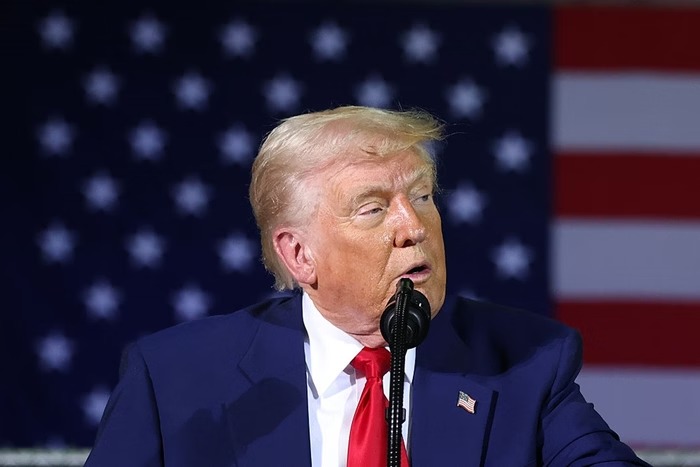
Donald Trump’s government announced on Tuesday (22) the official withdrawal from the United States of UNESCO, the United Nations Agency aimed at Education, Culture and Science.
The decision, which will have an effect from December 2026, was justified by the White House as a response to the supposed “globalist agenda and Woke” promoted by the Paris -based organization.
This is the third time Washington leaves UNESCO, in a gesture that reinforces the isolationist and ultra -conservative turn of Trump’s second term.
According to the US State Department, UNESCO would be promoting “divisive social and cultural” causes, with emphasis on Sustainable Development Objectives (SDGs), described as “incompatible with America First foreign policy”.
The government also accused the entity of maintaining an anti-Israel bias, citing as “problematic reason” the admission of Palestine as a Member State in 2011.
With the departure, the US will no longer contribute about 8% of the UN agency’s budget – an impact considered managed by UNESCO leaders, who claim to have been prepared for the announcement with structural reforms and diversification of funders. Director-General Audrey Azoulay lamented the decision and said she contradicts the principles of multilateralism.
Tension Retrospect: From the recognition of Palestine around Trump
This is the third time the United States have retired from UNESCO. The first occurred in 1984, during the Reagan government, on the grounds that the agency promoted an anto -western bias.
The return came only in 2003, under George W. Bush. In 2011, the UNESCO vote that approved the admission of Palestine resulted in the suspension of financial transfers by the US, due to a federal law. This generated an accumulation of debt that exceeded $ 600 million.
During Trump’s first term, in 2017, the White House again removed the country from the agency, claiming “financial losses”, “lack of reforms” and “anti-Israel bias”.
Already in 2023, under the government of Joe Biden, the US returned to UNESCO as a way to contain the growing influence of China, which had become the greatest financier of the organization.
As a condition for re -entry, Washington has agreed to pay off and support the memory programs of the Holocaust, safety of journalists and access to education in Africa.
The new withdrawal announced now resumes the arguments of the previous government, but with emphasis enlarged in the ideological crusade against the so -called “Woke” values, a term used by the far right to attack diversity, human rights and social justice policies.
Practical and symbolic effects of the American departure
Although the US financial contribution represents an important portion of the UNESCO budget, the impact of this new exit will be mitigated by measures adopted after 2017, such as the diversification of resource sources. According to Audrey Azoulay, there will be no staff cuts or suspension of programs.
What is at stake, however, is more than the budget. The withdrawal weakens the legitimacy of multilateral actions in the areas of peace education, combating anti -Semitism, protection of historical heritage and promoting intercultural dialogue. UNESCO is responsible, for example, for the designation of World Heritage Sites – such as Grand Canyon (USA), Palmyra (Syria) and Machu Picchu (Peru) – and by stimulating historical memory, including the preservation of files on the Holocaust.
By attacking this agenda, the Trump government contributes to the emptying of one of the UN -dedicated UN agencies dedicated to cooperation between cultures and the defense of fundamental rights.
In addition, it reinforces the trend of selective withdrawal of international organizations – which includes WHO, the Human Rights Council and the Palestinian Refugee Assistance Agency (Unrwa).
Alliance with Israel and veto to Palestine as a background
The decision to abandon UNESCO again should also be read in the light of US foreign policy in relation to the Middle East. In 2011, Palestine’s adhesion as a UNESCO Member State generated strong reactions in Washington and Tel Aviv.
Since then, the agency has been the target of boycott, delays in financing, and campaigns of delegitimation by the US government and Israeli allies.
This time, the withdrawal was celebrated by Israeli chancellor Gideon Saar, who classified the decision as “a necessary step to guarantee justice and equal treatment to Israel within the UN system.”
UNESCO, however, rejects the accusations of political bias and reinforces its role in initiatives against anti -Semitism and educational programs aimed at peace and pluralism.
For international diplomacy analysts, Trump’s offensive against UNESCO is another example of US unconditional alignment to Israeli policy to block Palestinian representation in multilateral institutions. This reinforces the selective character of the America First doctrine, which removes the US from forums where there is criticism of Israel, but expands its presence in military and commercial spaces.
Defense of international sovereignty and global resistance
Faced with the announcement, Audrey Azoulay stated that “the decision of the United States is unfortunate and contradicts the foundations of multilateralism,” but reiterated that UNESCO will continue to act as a space for consensus and concrete action.
She recalled that Trump’s accusations do not match the agency’s recent advances, especially in areas such as peace education, confrontation of misinformation and combating racism.
Civil society organizations, educators and diplomats from various countries expressed support for UNESCO’s continuity and denounced Trump’s attempt to transform US foreign policy into a reactionary ideological platform.
“This is the third time that the US leave UNESCO. But it is also the third time the world reaffirms that culture, knowledge and solidarity cannot be guided by threats and blackmail,” said a joint note of NGOs linked to international education.
Source: vermelho.org.br