Published 18/07/2025 16:40 | Edited 18/07/2025 18:38
Cuba faces one of the most challenging phases of his economy in recent decades. The accumulated retraction of 11% of GDP since 2020 has exposed structural vulnerabilities that add to the already chronic difficulties imposed by the economic blockade of the United States. The Minister of Economy, Joaquin Alonso Vázquez, has reiterated that the Cuban challenge is not only to resist the crisis but also innovate – with creativity, fiscal discipline and social justice.
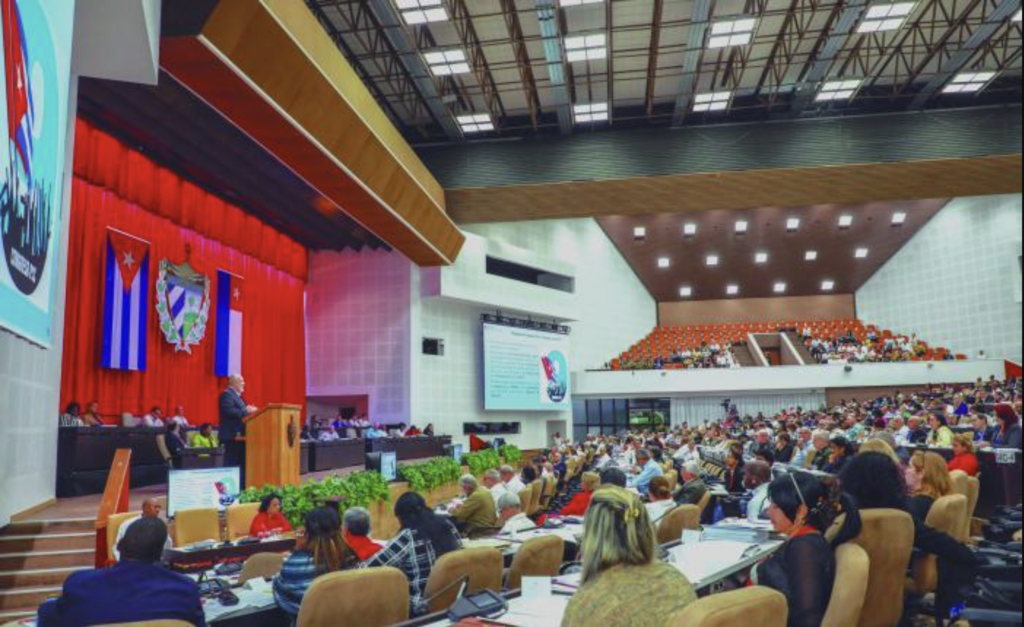
This strategy of “socialist resilience” guides the new Government programpresented by Prime Minister Manuel Marrero Cruz in the National Assembly. The plan consolidates guidelines for correcting macroeconomic distortions, attracting investments and recovering growth without dismantling the social pact that supports the regime since the revolution.
The program advances in a pragmatic and coherent line: balances debt and inflation with controlled opening, combat privileges, reactive the peasant economy and seek foreign partnerships – while preserving a strong state role. The next test will be its firm execution and the ability to maintain political cohesion amid structural adjustments.
Structural reforms: growth with social justice
Despite the recession, Cuba reaffirms his bet on a model of equity development. The economic stabilization policy began in 2023 had visible effects: the country reversed the projected fiscal deficit and recorded a surplus of 27.9 billion weights in the first quarter of 2025. The collection grew 6%, the result of higher formalization and the fight against default.
However, inflation still pressures the Cuban homes. The estimated rate of 14.8% remains high, although below the most alarming projections. To protect vulnerable groups from the impacts of adjustments, the government preserves essential subsidies and expands the scope of social protection, with readjustment of pensions and policies of income transfer.
Partial dollarization and dual exchange: the node of productivity
One of the most sensitive points is the coexistence of multiple exchange rates – a rigid official market and a highly speculative parallel. Partial dolarization, implemented to attract borders and avoid capital escape, generated distortions and inequality between the state and non -state sectors. To reverse this picture, the creation of a regulated currency market accessible to productive companies was announced.
Although inevitable, this transition requires care. Experts warn that a free -of -safe currency liberalization can disrupt relative prices and compromise food safety – in a country where 60,000 family farmers are responsible for much of food production.
Renewable Energy: Strategic bet against scarcity
The energy matrix also undergoes structural reforms. Faced with the scarcity of fossil fuels and the obsolescence of thermal plants, Cuba accelerates the investment in solar energy. By 2025, the goal is to reach 2,000 MW of installed capacity – with 590 MW already operational.
In addition to relieving pressure on imports, investment in renewables opens fiscal space, reduces the external deficit and contributes to environmental sustainability. However, the American blockade makes it difficult to acquire basic technologies and inputs, delaying schedules and raising costs.
Foreign investment under new logic: diversifying with sovereignty
Cuban economic reorientation also includes a new approach to foreign investment. Instead of prioritizing tourism – sector affected by sanctions and decline in the issuance of visas to Europeans – the focus now falls on strategic areas such as infrastructure, telecommunications and agribusiness.
With different incentives, the government seeks capital to diversify the productive matrix and expand exports. The creation of mixed companies, the formalization of partnerships between state and non -states and the strengthening of digital connectivity reflects this new phase.
Territorial development: produce on site, grow in the collective
The resumption of growth also passes through the territories. More than 2,200 local projects were approved with the support of the Territorial Contribution for Local Development (CTDL), strengthening the municipalities’ response capacity. The goal is to expand regional autonomy and prevent solutions to local problems depend exclusively on the central bureaucracy.
The articulation between local governments, state -owned companies, cooperatives and MPME (micro, small and medium enterprises) is seen as a key to unlocking productive chains and generating employment with community impact.
Inequality and efficiency: the reform dilemma with redistribution
At the same time as it promotes tax and monetary adjustments, the government maintains a commitment to collective well-being. Official data indicate that nearly 1.3 million Cubans benefited from social security reviews, and new anti -discriminatory policies seek to ensure social equity and respect for diversity.
Salary review in the public sector and performance evaluation are attempts to modernize the state machine without resorting to the precariousness of labor bonds. Still, the risk of discouragement and qualified migration remains high.
The challenge of modernizing without giving in to market paradigms
The new Cuba reform cycle represents a complex attempt to recover growth with sovereignty, in an adverse international environment and under the historical weight of economic blockade. The combination of fiscal adjustment, productive innovation and social protection points to a path of renewal of socialism – more pragmatic but no less committed to equity.
The effectiveness of these measures will depend on three central factors:
- The ability to maintain political cohesion in the face of difficulties.
- The speed of implementation and regulatory unlocking.
- The success in connecting macroeconomic goals with concrete transformations in everyday life.
As synthesized the Prime Minister Marrero: “The challenge is not just to resist, but resist creating”. In this sense, Cuba once again tests the limits of adversity with resilience that shaped its history – betting that development and social justice can walk together, even in times of scarcity.
The advertised measures have a schedule and clear goals: flexible gearbox and teleprocesses to the strengthening of state and non -state companies, undergoing social transformations and energy consolidation. If implemented consistently, they can guarantee economic growth, structural reforms and social advances – even under the weight of budget restrictions and external blocks. Effectiveness will depend on the degree of political commitment and its local traction, as well as the ability to combine modernization and social justice in a hybrid development model.
Source: vermelho.org.br