Published 26/09/2025 12:25
Since May, China has not buys soy from the United States. This was one of President Xi Jinping’s answers to Donald Trump’s tariff. As a result, US farmers are desperate, as the Asian country was responsible for the purchase of almost half of all production, valued at more than $ 12 billion in 2024.
Last Thursday (25), He Yadong, spokesman for the Chinese Ministry of Commerce, placed the letters on the table when referring to US tariffs as “irrational.” As indicated, the return of bilateral soybean trade is conditional on negotiations and removal of tariffs against your country.
Read more: Decision on the WTO shows China’s responsibility with world trade
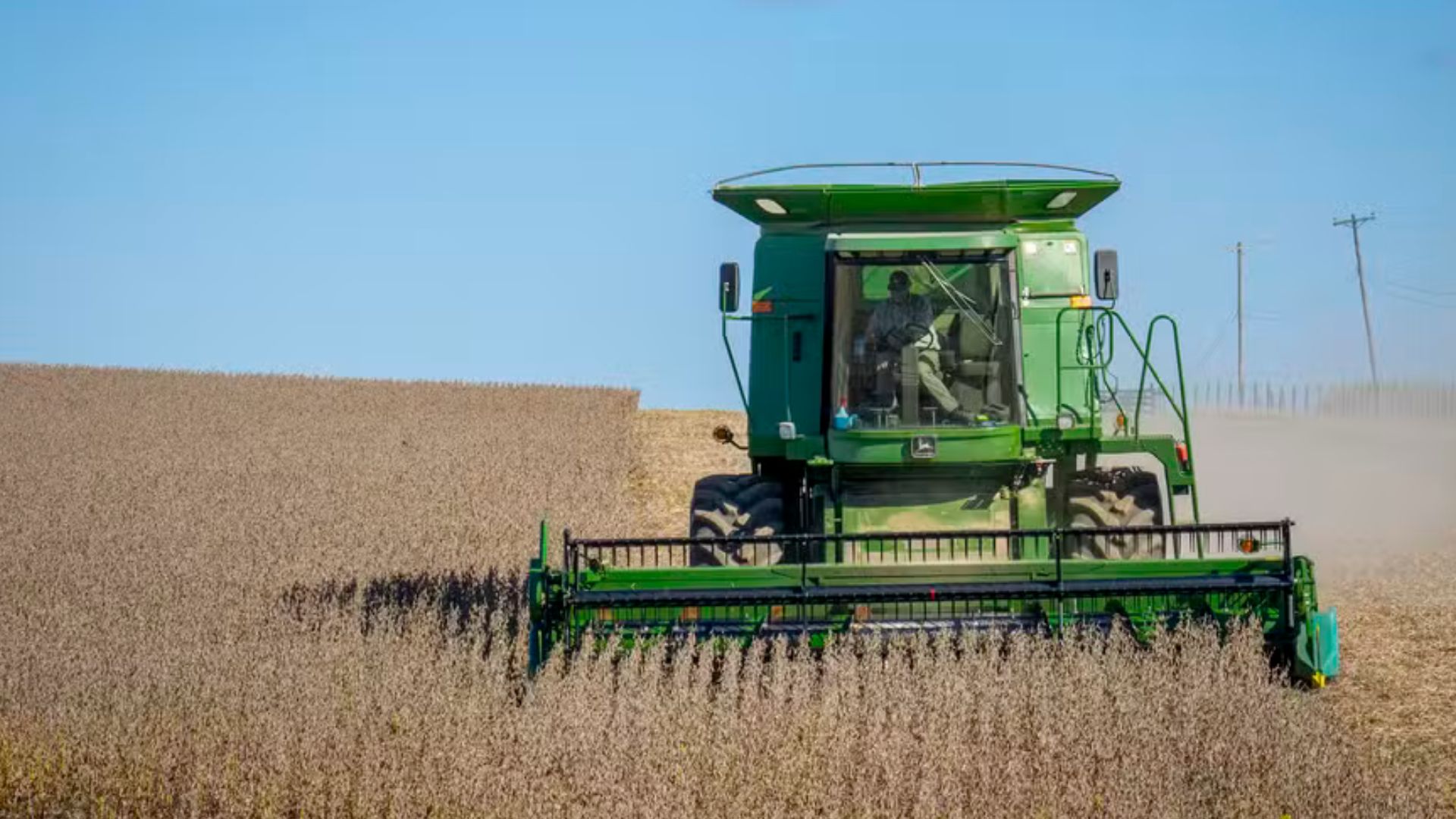
The situation is already seen as calamitous by US exporters, as the fall crop has already begun to be harvested without any destination horizon.
In July, China increased the volume of Commodity purchases from Argentina, taking advantage of the temporary withdrawal of export taxes, and Brazil, with a volume of purchases that increased more than 10% that month.
Tariffs
After increasing Chinese products by 145%, Trump had to retreat when faced with the firm Beijing posture that offered 125% response to US products.
In order not to make trade between countries unfeasible, White House negotiators have retreated and the tariff truce, which has been maintained, set the amounts charged to Chinese products by 30% and 10% for those of the United States.
Military
The damage to soy without a destination can be fatal to many farmers, who charge the Trump administration a quick solution.
With the beginning of the harvest, still without a defined perspective, the product should be packed in silos for moisture control. However, storage capacity varies in each region, which should cause inconvenience.
Because US commodity sales are concentrated between October and December, the drop in trade will cause warehouses that stock the product to be overcrowded. In this way, product accumulation can dramatically reduce the price and lead many farmers to bankruptcy, which generates immediate concern and already leads the Trump government to analyze some kind of help to those who have losses. The indication is that this financial rescue can be made with the profits that ‘tariff’ has in other areas.
According to the US Department of Agriculture (USDA), at least 9% of the fall soybean crop has been harvested, which gives the size of what can still happen, and most production is still on foot. Also according to USDA, total exports, considering all business partners, have already fallen 23% by 2025.
To further complicate, the country expects a supersafra of corn, which would reduce the space of silos to stranded soy.
Source: vermelho.org.br