Published 25/08/2025 15:01 | Edited 25/08/2025 15:40
The mainstream media can no longer hide the prowess achieved by China under the government of the Communist Party. If the Asian country was once treated above all by the key to the supposedly closed and late political regime, it is now recognized as synonymous with modernity and technology.
O Fantasticfrom TV Globo, is symptomatic of this change. The program has shown the series “The Chinese Code” in which it deals with the advances made in the country in recent decades. In this Sunday’s chapter (24), the report treated – in just over 16 minutes, a very considerable time for open TV standards – technology applied to car manufacturing, which not only raised vehicle quality but also expanded its access to the population.
The series has shown how the Asian country has failed to be a nation marked by poverty for many years to be a giant on the most diverse fronts, including in the one that represents one of the biggest dreams in the capitalist system: the acquisition of a car.
Also read: The true history of World War II and the moral bankruptcy of the West, by Elias Jabbour
In this area, the United States have always been at the front. But, for a long time has been eating the dust left by the Chinese. According to the report, there are more than 100 car brands in the country, against 13 in the Terrinha do Uncle Sam.
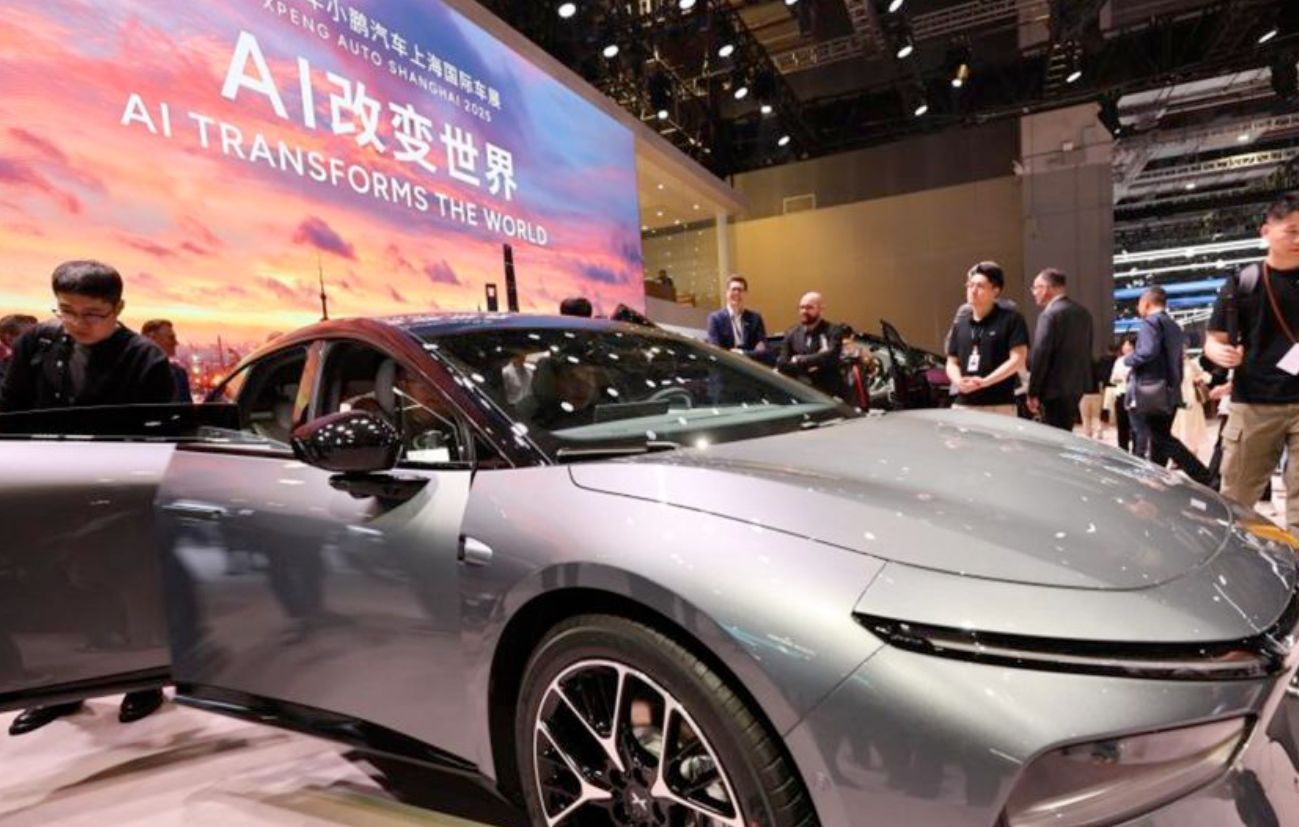
In Wuhan, 600 autonomous taxis are already in circulation, each at the cost of production of $ 27,000, while the similar Americans cost around $ 200,000. There are also flying cars being tested and, for sale, others that change the angle without leaving the place, parking alone or jumping when they identify a hole in the track. These are just some of the examples of innovation shown.
“Chinese cars have been seen as cheap copies, but today they have state -of -the -art technology and are very cheap,” says reporter Felipe Santana in Shanghai, where there is a fair that seem to come from the future.
One of the turning points for this transformation is in the closed agreement in the 1990s between the Chinese and the US General Motors (GM). With a fundamental difference: half of the company became the property of the Chinese government.
This change of paradigm, by the way, is at the heart of what has become the Asian nation: there, the government establishes the guidelines and takes action that aims not to profit for profit, as happens in capitalist countries, but to serve the nation and its population, which makes all the difference and explains the leap given by the country from the economic to the social aspect, also to the environmental.
Another jump came when China decided to change the combustion engines for the electric, putting the Chinese at the forefront of clean energy cars. Today, the report says, there are over 2 million public electric chargers in the country – reaching 11 million when added to those owned by each consumer. In the US, there are 196 thousand and in Brazil, 12 thousand.
“Chinese cars have become a problem because they are very cheap, which is leaving other hair countries standing,” says the reporter. Among the reasons pointed out are the cheaper labor – which should take into account something not approached, which are the services provided by the state, unlike the US, for example – and the fact that many of these industries are government properties.
Therefore, and in view of national interests, these plants have been planned to manufacture many of the components necessary for car production, unlike automakers from other countries that need to buy or even import most of the pieces.
Thus, China’s cheapest car comes out for $ 30,000 – in Brazil, the most affordable is around $ 75,000, and in the US, it costs $ 115,000. Such difference explains the 250% tariff imposed on the country’s cars by Donald Trump since its first term.
It is also important to remember that in the battle of Trump tariffs more recently, the US lost losing. In response to the increase, China has played to block magnet exports – one of China’s main natural riches, exported to the US and fundamental to manufacture, among other technological products, the engine of electric cars. And, in view of the despair of the US automakers, the increase in tariffs was paused…
In this new geopolitical chess, China has been emerging for putting into practice a policy of valuing multilateralism. And in this tuning fork, Brazil, under the command of the Lula administration, has been gaining space in the business of the Asian country, closing a series of strategic partnerships and bringing billions in investments.
Without wars or interventions in other countries, China was discreetly developing, based on a lot of investment in science, technology and innovation and a good dose of patience and persistence typical of oriental peoples, giving the tone that the age of US imperialism has its days.
Source: vermelho.org.br