Published 05/03/2026 15:12 | Edited 03/05/2026 15:45
As the world watches the evolution of “Operation Epic Fury”, which transforms the horizon of the Middle East into flashes of explosions and kills civilians under the command of Donald Trump, in coordination with Israel, North American rhetoric becomes increasingly fragile in the face of facts.
The military offensive against Iran is presented to the public by Western media under the justification of “peace through strength”, with the promise of annihilating an alleged Iranian nuclear military capability. However, beyond the geopolitical rhetoric of eliminating threats to the West, an economic dynamic is unfolding in terminal crisis. Military aggression is the last gasp of a system suffocated by the unsustainable debt of the United States and by a global liquidity bubble that urgently requires new flow channels and control over energy prices.
Read more: Western media acts as Trump mouthpiece in attack on Iran
The North American economy consumes US$8 billion per day more than it produces
Sustaining North American hegemony today faces an unprecedented fiscal cliff. By the end of 2025, the total US federal public debt (including intragovernmental obligations) reached the mark of US$38.5 trillion, of which US$30.2 trillion, around 100% of GDP, is the debt held by the public; Projections from the Congressional Budget Office (CBO) point to $56 trillion in debt held by the public in 2036, about 120% of GDP.
With a budget deficit estimated at US$1.9 trillion for 2026, worsened by tax cuts and high military spending, the North American economy currently consumes around US$8 billion per day more than it produces — a structural imbalance that turns war into a necessity for monetary survival. This crisis is fueled by deep financialization, a process in which the logic of finance and speculative gain dominate real production. Economic analysts identify in this dynamic a contradiction of contemporary capitalism: financial hypertrophy generates recurring bubbles and erosion of the productive base, leading to stagnation and a systemic crisis.
War is the drain of speculative capital
To manage the stresses of this system, the Federal Reserve (Fed) has become dependent on massive injections of liquidity. Just at the end of 2025, the Fed carried out repurchase operations (REPO) — short-term loans to maintain banks’ cash flow — that exceeded the US$70 billionthe highest levels since the 2020 crisis.
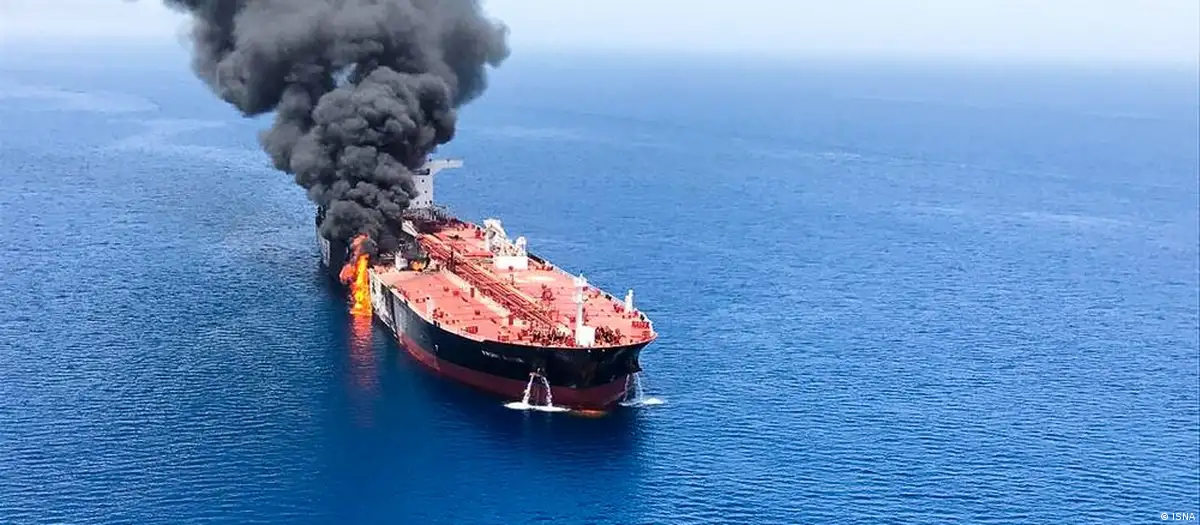
In this scenario of saturation, speculative capital, unable to be absorbed by the real economy, finds its drainage channel in the military conflict. The war against Iran boosts defense spending and reactivates the military-industrial complex as a tool for economic management. At the same time, the deliberate destabilization of the Persian Gulf and the patrolling of the Strait of Hormuz raised the price of oil by 13% in a few weeks. Although Energy Secretary Doug Burgum downplays the impact as ‘temporary’, this forced rise strengthens the dollar via global risk aversion: the world seeks refuge in US assets, allowing Washington to continue financing its deficits without facing immediate hyperinflation.
Read more: UN condemns US and Israeli attacks on Iran and calls for ceasefire
Trump’s war gives petrodollars survival
The offensive is part of what is known as the “New Cold War”, an effort to preserve the petrodollar system established in 1974. This arrangement, which requires the global sale of energy in dollars in exchange for military protection, gives the US the “exorbitant privilege” of printing currency to acquire real resources from other nations, reaping trillions in benefits from foreign reserves.
Historically, any challenge to this system has been forcefully suppressed, as seen in Iraq in 2003. Today, Iran — alongside the BRICS bloc — represents the tipping point of this rupture by challenging the dollar-based financial architecture through alternative payment systems in local currencies. Trump’s response to the advance of de-dollarization led by the bloc, which includes Brazil, Russia, India, China, South Africa and now Iran itself, was the explicit threat of tariffs on 100% against nations that create rival currencies. However, the BRICS identify in the hegemony of the dollar a tool of imperialist coercion that is no longer supported by economic efficiency, but by the power of weapons. By seeking to destroy these centers of sovereignty, “Operation Epic Fury” reveals itself not as a show of imperial force, but as a desperate response to an insoluble liquidity crisis. By banking on military chaos to save a financial system in decline, Washington may be, paradoxically, accelerating the global collapse it seeks to avoid.
Source: vermelho.org.br