Published 01/08/2026 11:46 | Edited 09/01/2026 10:53
The White House announced this Wednesday (7) a three-phase plan for Venezuela after the kidnapping of President Nicolás Maduro, which includes the seizure of up to 50 million barrels of oil, US control over the resources of the Venezuelan state-owned company and a political transition conducted under Washington’s supervision, revealing the economic nature of the US offensive against the country.
“The money [do petróleo venezuelano] will be controlled by me to ensure that it is used for the benefit of the people of Venezuela and the United States,” Trump posted on his social media.
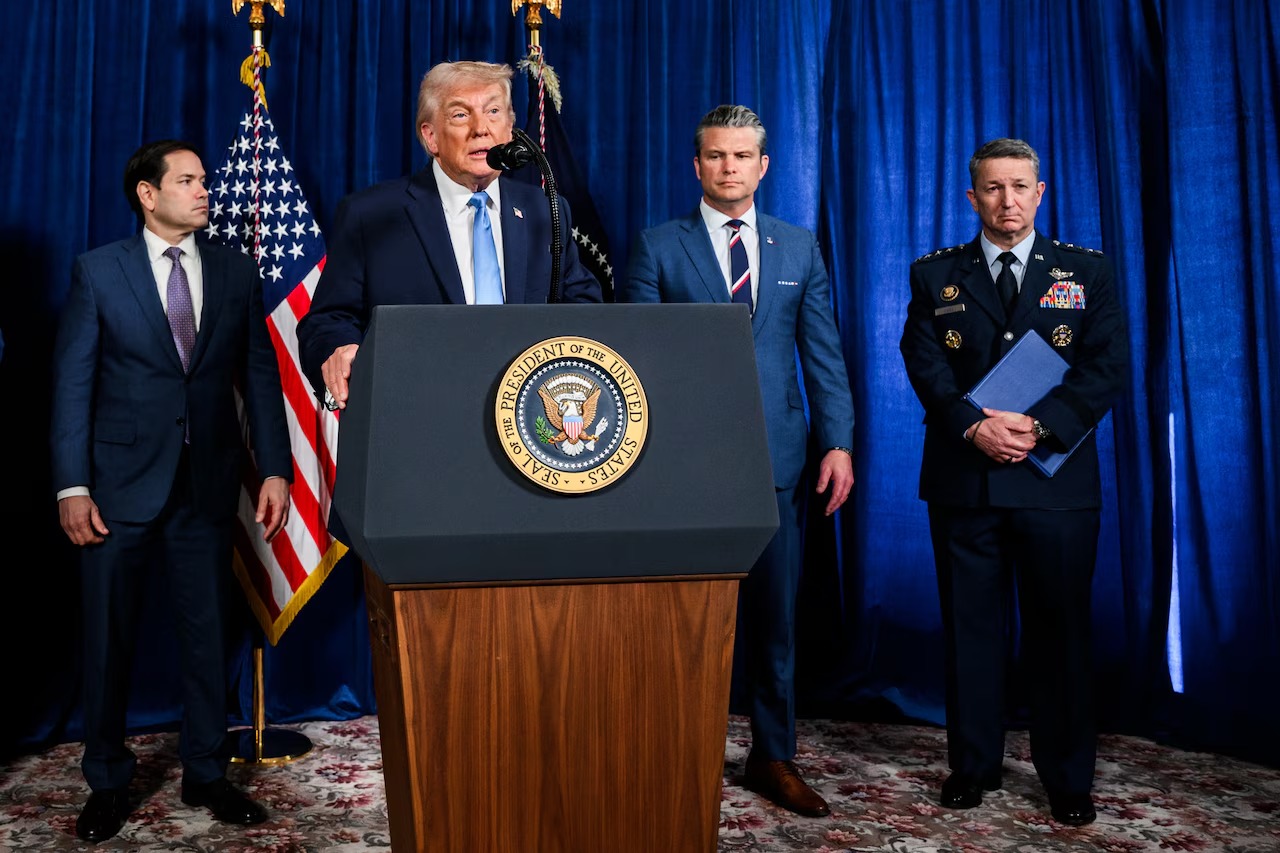
The plan to appropriate Venezuelan wealth was presented by Rubio and Defense Secretary Pete Hegseth in closed-door meetings with senators and representatives.
“There is now a plan in progress in which we have an enormous degree of control and leverage over the actions and possibilities of the interim authorities,” Rubio said in a press conference with journalists at the Capitol.
According to Rubio, the first phase of the plan, called “stabilization”, has as its central axis the direct control, by the United States, of Venezuelan oil.
“We are going to take between 30 and 50 million barrels of oil. We are going to sell them on the market at market prices, not with the discounts that Venezuela was using,” he added.
The secretary was the first to explain that the Trump administration will take over the administration of the resources obtained from the sale of oil, establishing a North American guardianship regime over Venezuelan oil income.
“This money will then be managed in such a way that we will control how it is distributed, in a way that benefits the Venezuelan people,” Rubio said.
The second phase of the plan, defined by the White House as “recovery”, foresees the opening of the Venezuelan market to foreign companies, with priority given to North American companies and companies from allied countries.
“In other words, Venezuela is committing to do business with the United States of America as its primary partner,” Trump wrote.
In practice, the South American country will have to buy products from the United States with resources obtained from the sale of its own oil, including agricultural items, medicines, medical equipment and components for the electrical grid infrastructure.
According to Rubio, the third phase of the plan will be “transition”, a stage in which the United States intends to lead the political rearrangement of the country.
The secretary stated that this process would take place without a defined deadline and that, in the end, it would be up to the “Venezuelan people” to decide the country’s direction.
Rubio, however, made it clear that this transition would take place under the strong influence of Washington, supported by the economic leverage built in previous phases.
“There is now a process in place in which we have enormous control and leverage over what these interim authorities do and what they can do,” he said.
The plan provoked critical reactions in the United States Congress. Democratic parliamentarians questioned the legality of the strategy announced by the White House, stating that the Executive has no legal basis to control revenues from another country and criticizing the fact that the proposal was presented in classified meetings, without debate in public hearings.
Democratic Senator Chris Murphy classified the plan as a form of economic coercion supported by the use of military force.
“They are talking about stealing Venezuelan oil at gunpoint, for an indefinite period, as a form of leverage to micromanage the country. The scale and insanity of this plan is absolutely impressive,” he said.
Murphy also questioned the Trump administration’s lack of transparency in the conduct of policy. “There is no explanation why this could not be debated in public hearings,” said the senator.
Shortly after the White House’s announcement, the president in charge of Venezuela, Delcy Rodríguez, once again criticized the United States’ action last Saturday, which she classified as an unprecedented “stain” on bilateral relations.
“We have not surrendered in the face of economic aggression and we will not surrender in the face of any type of aggression,” declared Rodríguez.
According to her, the North American offensive breaks a historic level and will not be accepted by Caracas.
The president also stated that Venezuela remains open to economic, commercial and energy relations with all countries, as long as they are based on mutual benefits. “Our hands are extended to all countries in the world, for economic, commercial and energy cooperation,” he said.
The North American offensive also generated a reaction from Russia, following the seizure, by the United States Navy, of an oil tanker sailing under the country’s flag in international waters in the North Atlantic.
Russian Foreign Ministry spokeswoman Maria Zakharova called the action “illegal and violent” and rejected what she called Washington’s “neocolonialist pretensions.”
The looting of the vessel is a strong indication that the first phase of Trump’s plan, on oil control, is already underway.
“The approach of a peaceful vessel on the high seas cannot be interpreted in any other way than as a serious violation of international maritime law,” he said.
China also condemned the seizure of the oil tanker sailing under the Russian flag. Foreign Ministry spokeswoman Mao Ning stated that the detention of countries’ vessels on the high seas violates the principles of the United Nations Charter and the UN Convention on the Law of the Sea.
In a meeting with the ambassador of the Venezuelan mission to the UN, Samuel Moncada, Secretary General António Guterres reiterated the principle of Venezuela’s permanent sovereignty over its natural resources.
Guterres stated that Venezuelan oil belongs to the people of the country and assessed that the United States military incursion represents a “flagrant violation of the UN Charter and the norms of international law”.
Source: vermelho.org.br