Published 03/16/2026 14:12 | Edited 03/16/2026 14:29
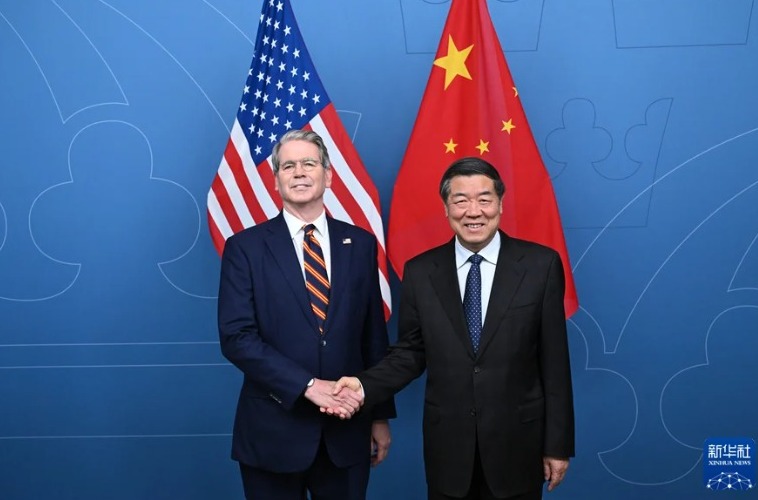
Delegations from the United States and China began this Sunday (15), in Paris, a new round of trade negotiations amid tensions caused by the unilateral tariff policy adopted by the Donald Trump administration throughout 2025.
The talks, held at the headquarters of the Organization for Economic Cooperation and Development (OECD) and led by Chinese Vice Premier He Lifeng and US Treasury Secretary Scott Bessent, precede Trump’s visit to Beijing at the end of March, when he is scheduled to meet with President Xi Jinping.
The first day of meetings ended without relevant public announcements. The delegations left the site without speaking to the press, and authorities from both countries avoided commenting on details of the discussions.
According to reports from international agencies and sources familiar with the meeting, the climate of the talks was described as “stable”, although no concrete progress was announced.
Despite the reserved nature of the negotiations, some areas of possible understanding were mentioned by sources. Among the topics discussed are the expansion of reciprocal investments between the two economies, trade in agricultural products and the supply of minerals considered strategic for global industry.
According to these sources, Chinese authorities have signaled openness to expanding purchases of agricultural products from the United States, including chicken meat, beef and other agricultural crops.
The previously made commitment to import around 25 million tons of North American soybeans per year over the next three years was also reiterated.
Another topic discussed at the meetings was access by North American companies to critical minerals produced in China. Among them is yttrium, used in the manufacture of jet engine turbines and other industrial equipment.
Representatives from the United States reported concerns about the supply of these materials, considered essential for high-technology production chains.
Sources close to the negotiations also said the two sides discussed institutional mechanisms to manage trade and investment disputes between the world’s two largest economies.
Among the proposals under debate would be the creation of a “Trade Council” and an “Investment Council”, structures designed to deal with specific issues and facilitate the management of divergences between countries.
Discussions are expected to continue in the coming days in Paris, before a possible meeting between Trump and Xi in Beijing.
Analysts point out that the meeting between the leaders can serve to evaluate possible commitments negotiated in the technical rounds and discuss the next steps in the economic relationship between the two countries.
Source: vermelho.org.br