Published 03/25/2026 11:15 | Edited 03/25/2026 12:09
The global geopolitical scenario has undergone a drastic change since February 28, with the beginning of joint military operations led by Donald Trump and Benjamin Netanyahu against Iranian territory. The conflict transcends the regional sphere and establishes what the International Energy Agency (IEA) classifies as the largest interruption in oil supply in contemporary history. In the month of March alone, the estimated loss was 8 million barrels per day (mb/d) — a unit of measurement that quantifies the volume of daily extraction —, directly impacting production chains and transportation costs on a global scale.
The global energy market and the risk of stagflation
Data Oil Market Report of March 2026 detail that the blockage of the Strait of Hormuz, through which 20% of global supply flows, reduced the flow of refined products from the Gulf to levels close to zero. The stoppage affected strategic producers such as Saudi Arabia and Iraq, resulting in a 10 mb/d retraction in production and a 3 mb/d freeze in refining capacity. As a result, Brent oil, which maintained stability at around US$70, registered peaks above US$119, consolidating a level of volatility above US$100.
Read more at: Oil, energy sovereignty and inflation return to the center of the war
Multilateral institutions such as the International Monetary Fund (IMF) and the World Bank project that maintaining these prices for an extended period could increase global inflation by 2 percentage points, reducing global GDP growth by 1 percentage point. Although the IEA released 400 million barrels of emergency reserves, global supply in 2026 should be supported mainly by producers outside OPEC+, with emphasis on Brazil, Guyana and Canada, while global demand was revised downwards due to the industrial and air services downturn.
Food insecurity and the fertilizer shock
The military escalation also threatens global agricultural production by compromising the supply of natural gas, an essential input for the synthesis of nitrogen fertilizers. Iran, an important urea export hub, sees its production and logistics capacity stifled by the war, while Russia, in a strategic response, restricted exports to secure the domestic market. This double shock in the supply of fertilizers, added to the rise in diesel prices, which makes international shipping more expensive, puts the supply of grains and proteins at risk. 45 million people could go hungry, according to an estimate by the UN World Food Program.
The warning from the financial sector and the domestic impacts
The severity of the oil shock was reinforced in a recent analysis by Larry Fink, CEO of BlackRock, the largest asset and risk manager in the world, with US$11 trillion. The executive highlighted that an oil scenario at US$150 would trigger a sharp global recession, characterizing the rise in energy prices as a regressive tax that severely penalizes lower-income populations. In Brazil, the reflection is observed in the Focus Bulletin of March 23, which raised the IPCA projection to 4.17%, above the target ceiling, and readjusted the Selic rate to 12.5%, highlighting the pressure of diesel on logistics and food costs.
Read more at: Oil reserves are a shield of sovereignty amid the war against Iran
The Lula government’s response and energy sovereignty
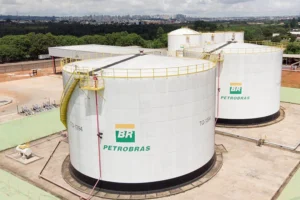
Despite the record in national oil production, which reached 3,953 mb/d in January 2026 with the advance of the pre-salt, Brazil still faces vulnerabilities in the refining sector, importing around 25% to 30% of the diesel consumed. To mitigate the transmission of the external shock to domestic prices, the Lula government implemented a package of emergency measures on March 12. The actions include the exemption of PIS/Cofins on diesel and the creation of an economic subsidy of R$0.32 per liter, financed by excess royalties from the appreciation of crude oil.
Additionally, export rates of 12% were established on crude oil and 50% on exported diesel, aiming to guarantee domestic supply and encourage national refining, which currently operates close to 97% of its capacity. The sector’s strategic planning now points to the need to accelerate the energy transition and expand autonomy in refining. Measures such as the increase in biodiesel and investment in modes of transport that are less dependent on fossil fuels are seen as fundamental to consolidating popular sovereignty in the face of crises caused by foreign policies of a warmongering nature.
Source: vermelho.org.br