Published 03/05/2026 09:12 | Edited 03/05/2026 19:15
The Chinese challenge that began in the late 1970s, with economic reforms, is not restricted to the accelerated development of productive forces. This is just one, central aspect, of the challenge of the country’s governance in providing the country with the capacity to face the great tasks that history and the situation constantly impose. An aspect little discussed outside of China is the unprecedented formation of a Rule of Law whose mission is to mirror the level of development of the country’s productive forces and deliver legal guarantees for maintaining economic development.
At the same time, this Rule of Law must also be a reflection of an economy where different forms of property coexist under the command of public ownership, as well as being able to respond to the rapid changes that Chinese society has undergone over the decades. In short: the construction of a socialist-type State of Law is something as new in the history of socialism as it is challenging. The processes involving the holding of the “two sessions” are the culmination of this process, with popular representation being a great symbol of this Rule of Law that grows, develops and delivers – unlike the West where justice only serves the interests of the rich and millionaires and the people no longer believe in justice and in the State itself – increasing trust of the Chinese people in the institutions that govern the country.
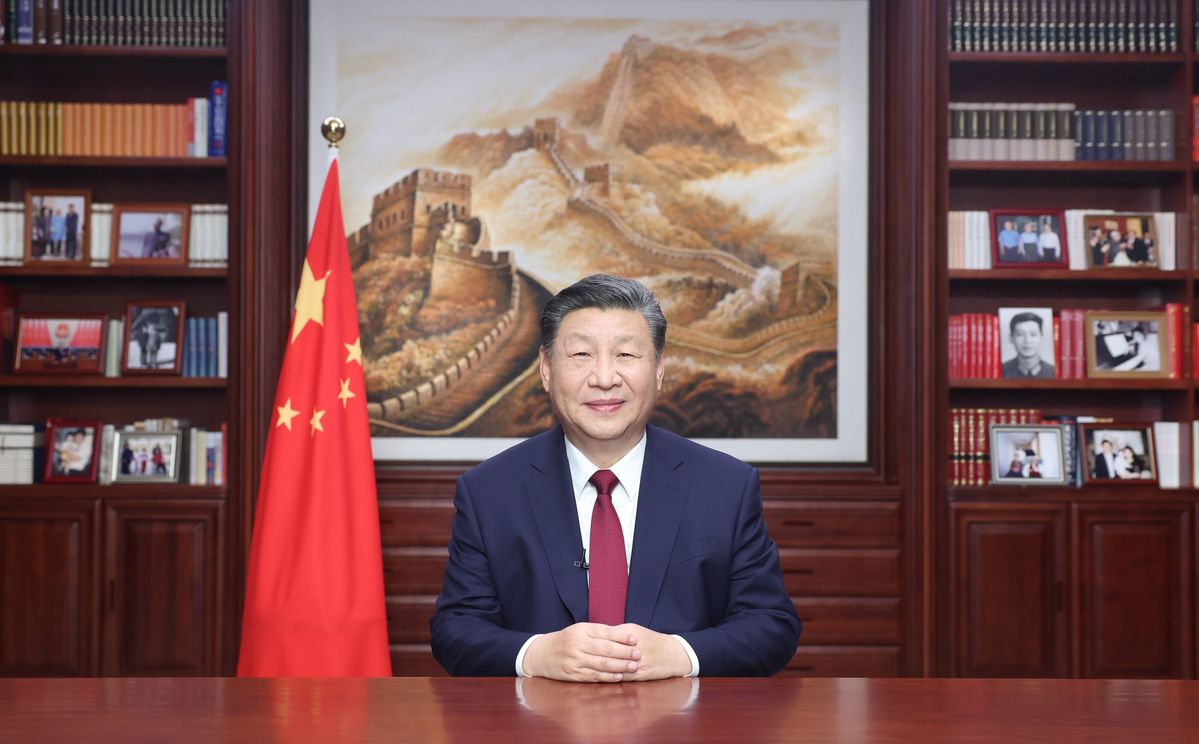
Chinese President Xi Jinping has been a great developer of the great ideas and notions that must permeate the process of continuous construction of this Rule of Law that guarantees solidity in China’s governance as well as legal guarantees for the country’s free development. The leadership of the Communist Party of China is the basic principle of this process. According to Xi Jinping, who is also general secretary of the Central Committee of the Communist Party of China:
“We have introduced into the Constitution that the leadership of the CPC is the defining characteristic of Chinese socialism, and we have improved systems to ensure that the Party provides guidance to legislation, ensures the implementation of the law, supports justice, sets an example in observing the law, strengthening the Party’s leadership over the comprehensive administration of the country in accordance with the law…… All Party comrades must be clearly aware that promoting the comprehensive administration of the country in accordance with the law is not aimed at weakening the Party’s leadership, but rather strengthening it and We must improve the systems and working mechanisms through which our Party exercises its leadership over the comprehensive administration of the country in accordance with the law and promote its institutionalization and its exercise based on the law, so as to ensure the effective implementation of the Party’s lines, guidelines and policies. internal regulations.” (1)
Now, for communists since the first socialist experience in the history of the Soviet Union, the question of political power has always been central. The laws and regulations of a socialist country must ensure that this power is not subverted. On the contrary, it must be strengthened. On the other hand, as a new social system, building the legal bases for the functioning of a society no longer governed by the centrality of private property has been a challenging exercise. In the Chinese case, for example, this process has culminated in the elaboration and execution of plans with this objective.
It is important to note that alongside legally guaranteeing the political power of the Communist Party of China as a fundamental prerequisite for guaranteeing law and order in the country, China has innovated in matters of the Rule of Law. Compared to capitalist countries where law and order must serve to justify the sacredness of private property and keep the people under strict control, in China the center of the rule of law must be precisely the people and their interests. Xi Jinpng makes this very clear:
“The people constitute the broadest and most solid basis for the comprehensive administration of the country in accordance with the law, therefore, we must work for the people and rely on them. In all sectors and in the entire process of our law-based administration, we must represent the interests and will of the people, safeguard their rights and interests and improve their well-being. Furthermore, we must ensure that the people, under the leadership of the Party, administer, in various forms and by various means, state affairs, including economic, cultural and social affairs, and that he, in accordance with the law, enjoys broad rights and freedoms and fulfills his duties.”(2)
Here, in this case, it is not just about ensuring that the people have access to rights and duties in the construction of society. It is about ensuring that the people have access to the country’s own decision-making power. For example, the “two sessions” is the most explicit moment of this process. Unlike capitalist countries where the force of money and economic influence by a handful of privileged people contaminates power and directs it towards particular objectives, in China the legislative process has reflected the development of a socialist democracy that guarantees the people decision-making power over major issues. An example of this was the broad public consultation for the preparation of the 15th Five-Year Plan that will begin in 2026.
Therefore, and in summary, building a rule of law in China is a constant challenge in view of the rapid change in the country’s material base and the increasing level of complexity in society. We must recognize that the People’s Republic of China has successfully managed to develop legal forms of a new type of State, not commanded by a minority of rich people who guide the country to contain the desires of the people, violently repressing spontaneous popular demonstrations and guaranteeing a legal basis for violating the national sovereignty of other countries and waging war.
China led by the Communist Party of China is a great laboratory for the constant exercise of popular power. Xi Jinping, in turn, personifies a unique process of human evolution based on a rule of law oriented to serving the interests of the people, not the rich.
(This article was written in partnership with China Media Group)
NOTES
(1) Xi Jinping, ˜Provide solid legal guarantees for socialist modernization˜. November 16, 2020. In, The Governance of China. Volume 4.
(2) Idem.
Source: vermelho.org.br