Published 11/28/2025 12:23 | Edited 11/28/2025 1:02 pm
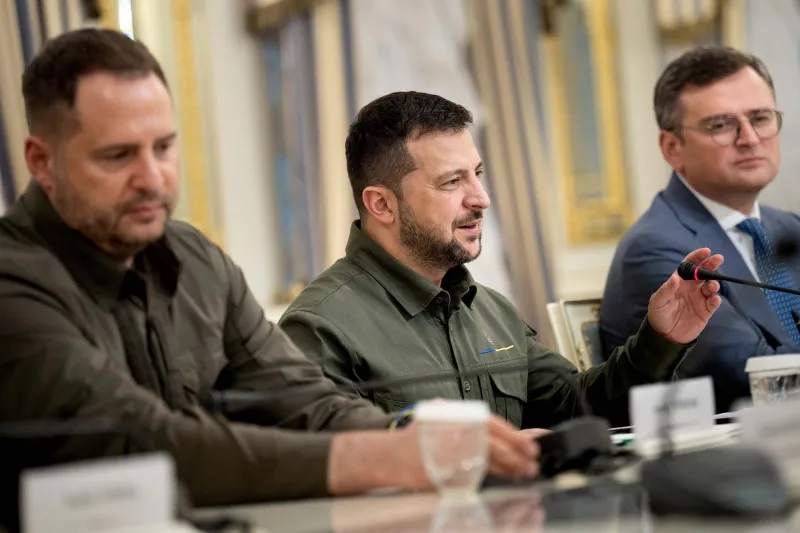
Ukraine’s anti-corruption agencies carried out an operation on Friday at the home of Andriy Yermak, Volodymyr Zelensky’s chief of staff and central figure in negotiations with the United States on a possible peace agreement.
The action, led by the National Anti-Corruption Office (NABU) and the Specialized Anti-Corruption Prosecutor’s Office (SAPO), deepens the political crisis in the country and affects for the first time the president’s closest collaborator in the midst of war.
Yermak confirmed that the operation was ongoing and said he was “fully cooperating” with authorities. The case reignites tension at the core of the Ukrainian government and weakens the country amid peace negotiations with Russia, as Yermak is considered the second most powerful man in the presidential structure.
Journalists recorded the entry of around ten agents into Kiev’s government district.
NABU and SAPO have not officially disclosed the reason for the search, but the action comes two weeks after the agencies announced a broad investigation into a bribery scheme linked to energy infrastructure.
The search represents a new stage in a scandal that has become political, administrative and diplomatic.
Yermak commands the presidential office, filters strategic decisions and is responsible for coordinating communication with European and North American allies. In recent weeks, he led talks with Washington representatives in Geneva, amid the effort to review the peace plan presented by Donald Trump.
The internal crisis therefore arrives exactly when its presence is most decisive for the negotiations. The repercussion increases even more in light of surveys cited by the foreign press, according to which 70% of Ukrainians support his departure from office.
Parliamentary pressure is also growing. Deputies from different parties — including those from the government base — began calling for his resignation, arguing that Yermak had accumulated excessive duties for an advisor without an elective mandate.
The operation adds an element of instability to a government already under pressure from the effects of war, the energy crisis and growing distrust in strategic sectors. The combination of popular wear and tear and institutional fragility hits directly at Ukraine’s political command center.
US$100 million scheme intensifies popular outrage and ousts ministers
The search against Yermak is part of the same corruption scandal that has already led to the downfall of two Zelensky ministers and hit the president’s former allies. NABU claims to have identified a bribery scheme of between 10% and 15% in contracts linked to Energoatom, the state-owned company responsible for generating nuclear energy.
More than a thousand hours of secret recordings support the accusations, and some of this material — released to the press — shows suspects openly discussing the possibility of diverting resources intended to protect plants attacked by Russia.
One of the accused, businessman Timur Mindich, was Zelensky’s partner in the production company Kvartal 95, of which the president was part before entering politics. Mindich fled the country hours before being detained by authorities.
Another person being investigated is Oleksiy Chernyshov, former deputy prime minister, mentioned in different reports about the case. The succession of names linked to the presidential environment increases the questioning about the degree of knowledge that high-ranking figures had of the scheme.
The revelation that resources intended to defend energy infrastructure may have been diverted has heightened national outrage and could destabilize the alliance between the Zelensky government and its main European allies.
Ukraine has been facing a severe energy supply crisis since October, with millions of people having access to just a few hours of electricity a day. The perception that funds intended to protect plants were being drained by authorities accentuates the feeling of helplessness and administrative incompetence.
The crisis also reignites debates about Ukrainian governance and the scope of anti-corruption reforms promised by Zelensky since 2019.
International organizations had been praising Kiev’s efforts in the area, but the current scandal reignites doubts about the authorities’ effective commitment. Tensions increased further after Zelensky promoted — and then reversed — a legal change that placed NABU and SAPO under the direct supervision of the attorney general, a politically appointed figure.
US pressure and impasse with Russia paralyze peace talks
The scandal involving Yermak comes at the most delicate moment in negotiations with the United States.
Last week, the Trump administration presented a 28-point peace plan broadly aligned with the list of demands presented by Russia, including the handover of territories, the reduction of the Ukrainian Armed Forces and a ban on joining NATO.
The proposal was rejected by Ukrainian and European authorities, and the delegation led by Yermak managed to convince Washington to review it.
CNN states that new rounds of conversations are planned for the next few days. Putin has stated that he expects a US delegation to arrive in Moscow early next week, while Zelensky confirmed that the Ukrainian team will also meet with US representatives. Negotiations, however, remain stalled. Part of Trump’s team has publicly spoken of “major advances”, but Putin himself has stated that he does not intend to back down from his demands, signaling that the Russian military offensive “is practically impossible to contain”.
In an interview given before the searches, Yermak told The Atlantic that “as long as Zelensky is president, no one should count on the idea that we are going to give up territory.”
He added that the president “will not sign anything that hands over territory,” reinforcing Ukraine’s position of rejecting territorial concessions imposed by Russia. The combination of simultaneous pressures — internal politics, judicial investigations and external demands — further complicates the conduct of negotiations.
Yermak’s wear and tear creates an additional problem for Kiev. His role as the main coordinator of negotiations with Washington makes the crisis politically sensitive.
The credibility of the chief negotiator is a central element in any attempt at a ceasefire. The fact that he became the target of an anti-corruption operation at the height of the talks puts the Ukrainian government in a vulnerable position vis-à-vis the United States and Russia.
Internal risks and impact on the relationship with the European Union
The internal crisis also directly affects Ukraine’s relationship with the European Union. European Commission spokeswoman Paula Pinho declared that the investigations “show that Ukraine’s anti-corruption bodies are doing their job.” Still, Brussels remains cautious. A recent report already highlighted doubts about the “commitment to the anti-corruption agenda”, and the involvement of figures close to the president reinforces the concern of different Member States.
Internal political weariness increases as more names linked to the government appear in investigations. Ukrainian deputies, including those from the ruling coalition, began to demand Yermak’s resignation, citing excessive concentration of power and influence. The case rekindles old criticisms about the centralization of the presidential office and the difficulty of implementing effective control mechanisms.
Public opinion also plays a decisive role. The high number of Ukrainians who support Yermak’s departure demonstrates the scope of dissatisfaction. The energy crisis, worsened by Russian attacks, has made the management of state resources even more sensitive. The suspicion that essential works may have been compromised by irregularities deepened discontent and generated an environment conducive to new protests.
The scenario projects a period of prolonged instability for the Zelensky government. The combination of anti-corruption investigations, diplomatic pressure and internal wear and tear places the president facing one of the most critical moments since the start of the war.
The impact of the ongoing negotiations, added to the scope of the scandal, will define not only Kiev’s next steps, but also the political future of the government and Western support.
Source: vermelho.org.br