Published 01/29/2026 13:04 | Edited 01/29/2026 14:22
The global economy is navigating turbulent waters with the worsening level of debt among the nations that make up the G7. Developed countries face public debts that reach record levels and indicate a future scenario of systemic risk not only for economic growth, but also for international financial stability itself.
Currently, the ratio between debt and Gross Domestic Product (GDP) already exceeds the 100% mark in six of the group’s seven nations, with Germany being the only exception. This scenario confirms the exhaustion of a model that signals the end of fiscal comfort in central economies, the increase in interest rates and economic recession.
Recent reports from vehicles such as The New York Times and the Wall Street Journal highlight that liabilities previously associated only with developing nations now consume the budgets of developed countries. Japan leads this worrying ranking with a debt of 236.66% of its GDP, followed by Italy with 135.33% and the United States with 120.79%. France, Canada and the United Kingdom also surpass the 100% barrier, demonstrating a trajectory that, according to the International Monetary Fund (IMF), paralyzes growth and sows uncertainty on a global scale.
The crisis of capitalism threatens public services
The weight of interest on these debts is devastating for public policies and social well-being. The United States alone spends more than $1 trillion annually on interest payments, an amount that already exceeds the country’s military budget.
In Japan, debt service consumes 25% of the national budget. These resources, which should be allocated to infrastructure, health and education, are drained to support a financial system in crisis, revealing the contradictions of the phase of extreme financialization that prevails in the world. Dependence on fiscal and monetary stimuli has created an economy addicted to deficits, incapable of generating lasting development without compromising future generations. At the same time, there has never been such a concentration of resources in the hands of so few people, with 3,000 inhabitants holding around US$18 trillion.
The global impacts of this dynamic are profound and inevitable. The World Bank projects that global public debt will exceed 100% of global GDP by 2029, surpassing the US$100 trillion mark. The IMF predicts that for every 10 percentage points of debt above the 100% limit, economic growth is reduced by between 0.5% and 1% per year, due to the drop in productivity and investments. For countries like Brazil and the rest of Latin America, contagion translates into greater volatility, high global interest rates and lower demand for exports, increasing external vulnerability.
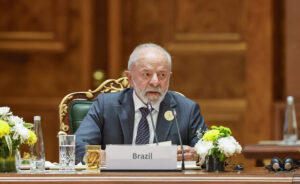
Given this structural scenario, the solution for developing economies does not lie in reproducing the neoliberal prescription that led the central powers to this impasse. The strengthening of economic sovereignty and the expansion of strategic public investment emerge as fundamental alternatives to protect social well-being against the consequences of the G7 crisis. By way of comparison, Brazil’s debt in relation to GDP is 79%. Well below the debt level of the richest countries in the world.
Source: vermelho.org.br