Published 06/02/2026 16:28 | Edited 02/06/2026 17:15
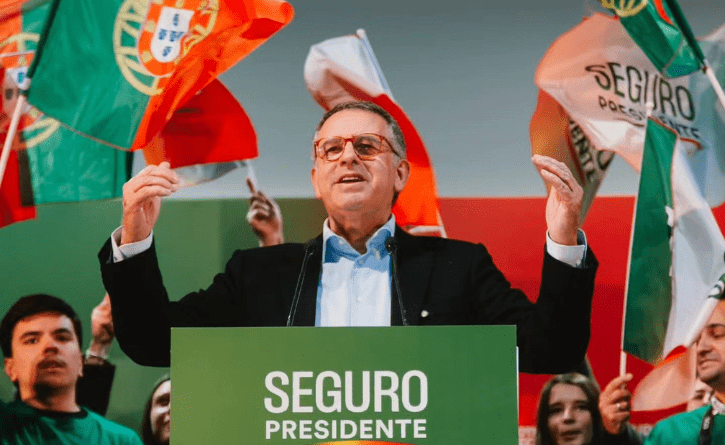
The second round of the presidential elections in Portugal, scheduled for this Sunday (8), tends to impose a crushing defeat on the extreme right. All polls released in the final stretch of the campaign indicate that António José Seguro, candidate of the Socialist Party (PS), is expected to win between 50% and 60% of the votes — in some scenarios, more than 65% — around double the support given to André Ventura, leader of the ultra-right party Chega.
Recent surveys also show a high degree of rejection of the far-right candidate: approximately two-thirds of voters say they would never vote for Ventura. This factor has been decisive in consolidating Seguro’s advantage, especially in the second round, when the useful vote and the transfer of support gain central weight.
Cross-cutting support forms an unprecedented democratic front
One of the most relevant elements of this second round is the formation of a broad democratic front that is unusual in the European context. Influential conservatives, former presidents of the Republic, center-right leaders and the majority of candidates eliminated in the first round declared explicit support for Seguro, with the declared objective of preventing the arrival of the extreme right at the Belém Palace.
Among the supporters are names such as former president Aníbal Cavaco Silva, former ministers from center-right governments and historical figures from the PSD, CDS and Liberal Initiative. For analyst Javier Carbonell, from the Center for European Politics, this is a rare movement: “It is quite unusual in Europe to see the center-right supporting a socialist. There is an element of preservation and defense of a democratic front.”
The rise of Ventura and the limits of growth
Despite the expectation of defeat, André Ventura reaches the second round politically strengthened. A former sports commentator and central figure of Chega, he transformed the party — described by analysts as a “one-man show” — into the country’s second largest parliamentary force in last year’s legislative elections.
His campaign, marked by anti-immigration speech, attacks on minorities and anti-system rhetoric, reflects a trend observed in several parts of Europe, where the far right has influenced government agendas, especially on migration and security issues.
Ventura obtained 23.5% of the votes in the first round, against 31.1% for Seguro, and failed in his attempt to unify the traditional right around his candidacy. Even so, analysts estimate that any percentage growth in the second round — especially if it surpasses the recent performance of the current governing alliance — will be presented by him as a political victory and symbolic capital for future disputes.
“Without illusions, but with clarity”
The Portuguese Communist Party (PCP) took a clear position in the face of the second round of the presidential elections: it is necessary to defeat the extreme right. At a rally held in Almada, secretary general Paulo Raimundo stated that voting for António José Seguro is, “with more or less enthusiasm”, the only viable option to prevent the election of André Ventura, leader of Chega.
In the PCP’s assessment, André Ventura represents “an instrument in the hands of the most reactionary forces of national and international capital”. For Paulo Raimundo, a possible victory for Chega’s leader would worsen existing problems and accelerate social, labor and democratic setbacks. The communist general secretary also warned of practices of manipulation, pressure and political blackmail that, according to him, marked the first round of the election.
The communist leadership recognizes deep differences with António José Seguro and the PS, but argues that, in the current context, voting for the socialist candidate is an instrument to combat the extreme right. “We have no illusions”, reiterated Raimundo, stressing that the fight against right-wing politics will continue the day after the elections, regardless of the result.
For the PCP, Sunday’s vote is decisive, but it must be understood as part of a broader fight: stopping the extreme right now and, at the same time, building a left-wing alternative with the workers and the people.
Storms, requests for postponement and institutional response
The campaign ended amid strong storms that hit several regions of Portugal, causing floods, transport interruptions and the occasional postponement of voting in some municipalities. Ventura even defended the national postponement of the elections, an argument rejected by the National Elections Commission (CNE), which stated that there was no legal basis for a general suspension of the election.
Seguro, in turn, defended the maintenance of the electoral calendar, only admitting postponements located where there were no material conditions for voting, a position in line with the decision of the electoral authorities.
Change in the political system and isolation of the far right
The 2026 presidential elections symbolize a relevant inflection in the Portuguese political system. The Social Democratic Party (PSD), which governed the country for two decades, only came in fifth place in the first round, opening space for polarization between the PS and the radical right. The scenario points to the return of a socialist to the Presidency after twenty years — or, in a scenario considered highly unlikely, to the rise of the extreme right.
For political scientist Adelino Maltez, the likely outcome reflects a structural choice by the electorate: “Society seems to want to preserve the democratic and constitutional order, while Ventura is seen as a threat to the balance between center-left and center-right”.
Probable victory does not end substantive dispute
Even with the prospect of a landslide victory for António José Seguro, the result should not mean the disappearance of the extreme right from the Portuguese political scene. On the contrary, Chega’s consolidation as a relevant electoral force indicates that the challenge to liberal democracy remains active, albeit isolated in this presidential election.
This Sunday’s second round, therefore, tends less to definitively resolve this conflict and more to mark a clear limit: the Portuguese electorate seems willing to contain, for now, the extreme right at the polls — even if the political debate remains tense in the post-election period.
Source: vermelho.org.br