Published 01/24/2026 15:42
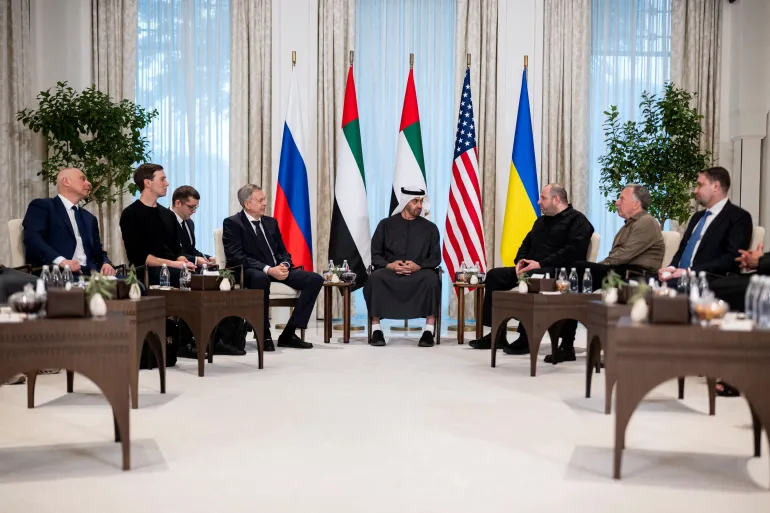
The trilateral negotiations between Russia, Ukraine and the United States, which ended this Saturday in Abu Dhabi, ended without formalized results, but left relevant clues about the current stage of the conflict and the limits of the diplomatic process. Although neither party has made concrete progress, authorities involved classified the environment as “constructive” and confirmed a new round of talks for next week.
The declared focus was the discussion of “parameters for ending the war”, according to the Ukrainian chief negotiator, Rustem Umerov. In practice, however, public statements indicate that the parties are still testing red lines, especially around territory, security guarantees and energy infrastructure.
Attacks during negotiations expose Russian strategy
While diplomats met in the United Arab Emirates, Russia launched a new wave of drone and missile attacks against Kiev, Kharkiv and other cities, particularly hitting the Ukrainian energy system. At least 1.2 million people will be left without electricity in the middle of winter.
For Ukrainian authorities, the timing of the attacks is not accidental. Kiev interprets the offensive as a way for Moscow to reinforce its negotiating position, demonstrating the ability to impose high costs even in the midst of dialogue. “The missiles hit not only our cities, but also the negotiating table,” said Foreign Minister Andrii Sybiha.
Indirect results: direct dialogue and reinforced mediation
Despite the absence of announcements, one of the most relevant results was the confirmation of direct interaction between Russian and Ukrainian representatives, something rare since the collapse of negotiations in 2022. The UAE government highlighted that the talks addressed “essential elements” of a peace proposal supported by the United States.
The active presence of high-level American envoys, such as Steve Witkoff and Jared Kushner — who met for four hours with Vladimir Putin before the trilateral meeting — reinforces Washington’s role as a political guarantor of the process, even if there is no guarantee of success.
Territory and energy remain as central nodes
Analysts point out that, even without official confirmation, topics such as prisoner exchanges, buffer zones and a possible ceasefire limited to energy infrastructure were at the center of discussions. Moscow insists on Ukrainian withdrawal from the Donbas as a key condition, while Kiev rejects any agreement that legitimizes permanent territorial losses.
At the same time, the recurring collapse of the Ukrainian energy system adds urgency to the negotiations. Parliamentarians in Kiev warn that the infrastructure is “hanging by a thread”, which increases internal pressure on the Zelenskyy government to seek some kind of truce, even if partial.
Diplomacy advances, war remains in command
The most recent balance of the negotiations reveals a central paradox: the diplomatic process is still alive, but subordinated to military logic. Moscow signals a willingness to talk, while betting on Ukraine’s prolonged wear and tear. Kiev, for its part, maintains openness to dialogue, but insists on robust security guarantees and international supervision — especially from the US.
Without a ceasefire, without a territorial agreement and under constant attacks, Abu Dhabi’s main result was to confirm that diplomacy has advanced a procedural step, but that the outcome of the war still depends, to a large extent, on what happens outside the negotiation rooms.
Source: vermelho.org.br