Published 01/12/2025 11:13 | Edited 12/01/2025 11:20
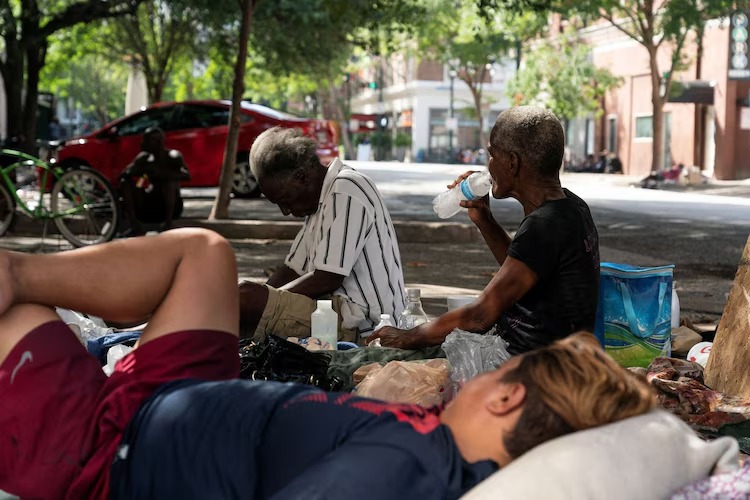
Former flight attendant and retired in Miami, Ilona Biskup has always had a stable income, social security and some wealth accumulated after more than three decades of work. “After being so successful, I now depend on free food,” he told the BBC.
His case sums up the plight of millions of Americans who have lost stability after facing unexpected expenses.
In recent years, Biskup has endured two cancers, complex pancreas surgery and was diagnosed with Parkinson’s. Medical expenses consumed their savings at an accelerated pace, in a country where the healthcare system is the main factor in debt among workers and retirees.
“I never thought that, after working so hard, I would end up depending on the government,” he said.
Despite receiving US$2,000 per month from social security — around R$10,700 —, an amount that puts her above the official poverty line in the United States (R$83,500 per year, or just over R$7,000 per month), she depends on food banks to supplement her diet.
The situation is no longer an exception and begins to reflect a national trend of rapid impoverishment among the elderly, working families and people who have always had a regular income.
Food inflation, high interest rates, housing costs and medical expenses push even retirees into a delicate scenario. Even though she owns an apartment and a car, Biskup reports that she is unable to afford basic items without the support of SNAP — a federal food assistance program — and community organizations.
“I am grateful to receive this help”, she told the BBC.
The trajectory highlights the financial weakening of sectors traditionally considered protected. A health emergency, an accident or the loss of a job has been enough to transform stability into vulnerability.
The fragility of the social protection network, coupled with the high cost of living in large cities, has made millions of Americans dependent on donations and public programs that suffer frequent interruptions.
This process is reinforced by research conducted by sociologist Mark Rank, from Washington University in St. Louis, which shows that around 60% of adults in the United States face at least one year of poverty in their lifetime and that 75% experience poverty or near-poverty at some point.
The data explains why stories like Biskup’s are not isolated, but part of a structural pattern in which stable income does not prevent abrupt drops in living standards.
The country’s own economic dynamics contribute to this fragility: the increase in low-paying jobs, the precariousness of labor benefits and the high cost of healthcare create an environment in which workers and retirees live in permanent financial risk.
With the temporary freeze on SNAP during the Trump administration’s shutdown, families who were already living on the edge began to rely almost exclusively on donations to ensure food on the table.
In states like Florida, organizations like Feeding South Florida report that demand for free food has tripled in just a few weeks, driven by both the suspension of the benefit and the escalation in the price of staple foods.
Biskup’s case helps illustrate how unexpected medical events, high expenses and loss of income have pushed even workers with a history of stability into food insecurity.
The pressure on food banks also began to reflect the accumulated effects of inflation and economic measures adopted by the Trump administration, such as the tightening of migration policies and the imposition of tariffs that increased costs in the agricultural production chain.
Experts interviewed by the BBC point out that the lack of workers in the field and the increase in the cost of inputs have put even more pressure on the price of basic items, increasing the vulnerability of families who were already living close to the limit.
At the same time, national data show that food insecurity accompanies other forms of structural precariousness. According to the Pew Research Center, 27% of Americans have had difficulty paying for medical care in the last year, and 20% have turned to food banks.
Among elderly people with fewer resources, life expectancy is up to nine years lower than that of the richest, according to a study by the National Council on Aging, which highlights how economic and health crises overlap and deepen inequalities.
In this context, stories like that of Ilona Biskup stop being isolated cases and become part of a broader trend of deteriorating living conditions in the United States.
The advancement of poverty and the growing dependence on programs subject to political interruptions reveal the fragility of a fragmented social protection model, incapable of preventing individual crises from turning into widespread food insecurity.
Source: vermelho.org.br