Published 03/17/2026 17:29 | Edited 03/17/2026 18:23
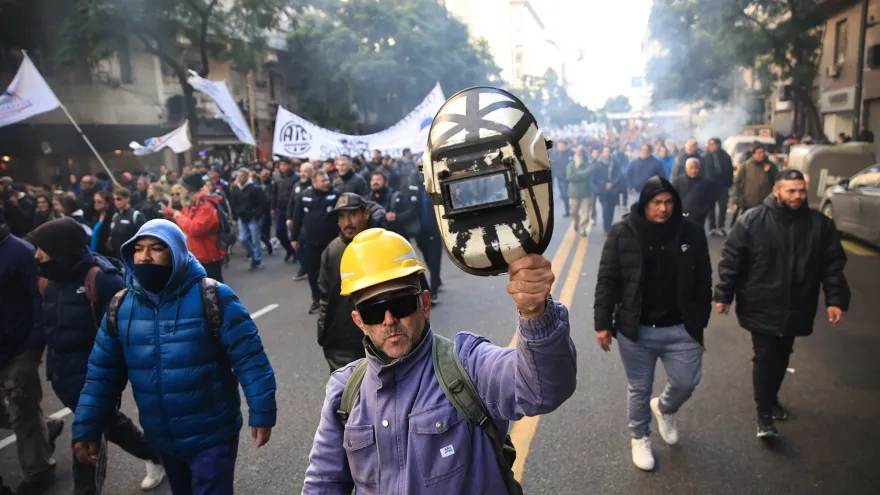
The Javier Milei government’s macroeconomic policy is dismantling Argentina’s productive fabric. While the ultraliberal administration celebrates the entry of imported products and the occasional drop in inflation, factories close, jobs disappear and workers cross the border in search of survival in Brazil.
The report heard trade unionist Ernesto Trigo Quiqui, from the Argentine leather industry, and Argentine economist Eduardo Crespo (UFRJ), who revealed the social costs of a model that prioritizes monetary stabilization to the detriment of national production and labor.
“The government sells the country in pieces”: the testimony of those who produce

“This crisis is basically attributed to the government’s policies, of opening up imports, of stopping subsidizing structures that need support to compete”, says Ernesto Trigo, from the Argentine Leather Manufacturing Union. For him, the adjustment plan not only reduces purchasing power, but eliminates jobs on a large scale.
The numbers corroborate the complaint: milk consumption fell by around 20%, meat consumption by 35%. The population migrates to cheaper proteins, such as chicken, while the upper classes continue to consume luxury goods. “Having a coffee in Paris is cheaper than in Buenos Aires”, compares Trigo, highlighting the distortion of a country where minimum wages are 8 to 10 times lower than those in Europe.
Commercial openness, combined with exchange rate appreciation, flooded the Argentine market with foreign products. In 2025, imports of consumer goods jumped 55%, reaching US$11.4 billion. Platforms like Shein, Temu and Amazon gained ground, while the local textile industry laid off 16,000 workers — 13% of its workforce.
Commercial opening strangles local production, economist analyzes

For economist Eduardo Crespo, the combination of trade openness and exchange rate appreciation is the main factor affecting employment in Argentina. “There is a very large influx of imports that compete with local production. This has led to the closure of many companies”, he explains.
The macroeconomic adjustment, which seeks to control inflation via cheaper products from abroad, has an asymmetric cost: it benefits the urban consumer in the short term, but strangles industrial sectors concentrated in the metropolitan regions of Buenos Aires, Rosario and Córdoba — regions that are home to the majority of the country’s population and productive base.
Sectors such as agribusiness, mining, unconventional gas and lithium are growing, but, as Crespo warns, “they are not major job creators” and do not compensate for the crisis in industry and services. The result is a fragmented labor market, with structural unemployment and forced migration.
Yerba mate in free fall: the collapse that pushes workers to Brazil
No case better illustrates the migratory dynamics than the crisis in the yerba mate sector in Misiones, a border province that concentrates Argentine production. Until 2023, the National Yerba Mate Institute (INYM) defined minimum prices for the green leaf, guaranteeing income for producers and workers. With the mega-decree DNU 70/2023, Milei deregulated the sector, transferring negotiations to the correlation of forces between producers, dryers and industry.
According to a report from Folha de S. Paulothe impact was immediate: a kilo of green leaf, which was worth around 420 pesos in 2023, fell to approximately 180 pesos in parts of Misiones, while inputs and fuel continued to rise. “Many smaller properties began to suffer with the departure of labor,” reports Ángel Enrique Ozeñuk, a producer from San Vicente.
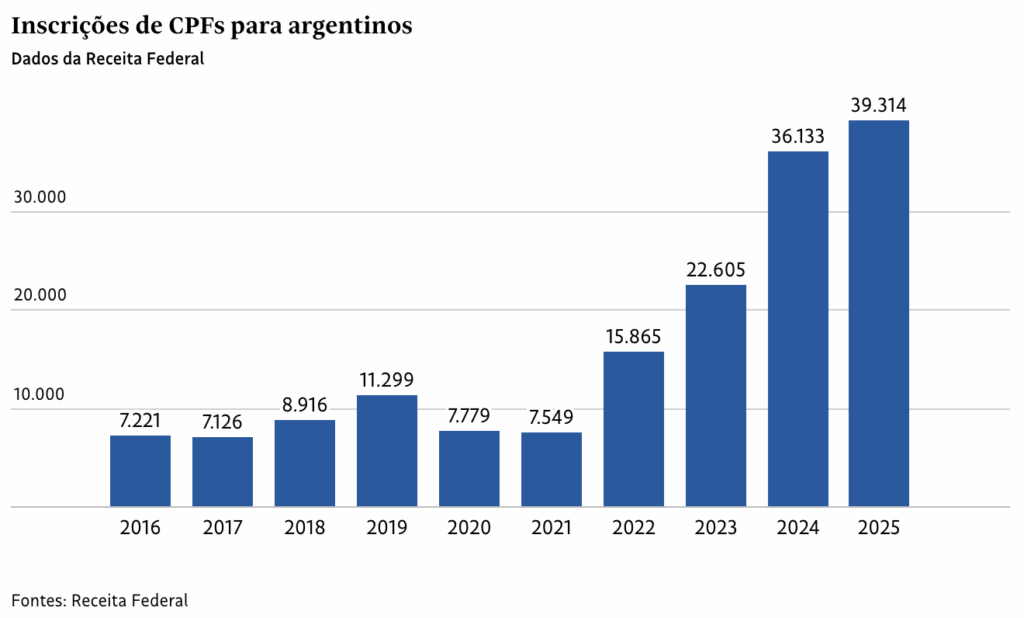
Faced with the deterioration of income, Brazil appears as a close alternative. Federal Revenue data shows that the issuance of CPFs to Argentine citizens jumped from an average of 8,000 per year (2016-2021) to almost 40,000 in 2025. A large part of this flow originates from Misiones, where cities like Puerto Iguazú have become the epicenter of labor migration.
Seasonal work in the South: the new route to survival
Migration is not just permanent — it is seasonal and structured in informal networks. Workers left yerba mate to harvest grapes in Pinto Bandeira (RS), where they receive food and transportation in addition to their salary.
There are workers who have been traveling around Brazil since 2018, working on tomato, apple, grape and strawberry harvests in cities such as Flores da Cunha and Caxias do Sul. With daily earnings and financial margin higher than that obtained in Misiones.
For employers in Rio Grande do Sul, Argentine labor is valued for its technical experience, especially in pruning and manual harvesting. “The workers arrive with knowledge about the plant and better preserve the physiology of the tree”, assesses Ilvandro Barreto, from the Erva-Mate Sector Chamber of RS.
However, the scenario is not without risks. After the 2023 labor scandal, which rescued more than 200 workers in a situation similar to slavery in Serra Gaúcha, the sector expanded formal hiring. For migrants, the CPF has become a gateway to a formal contract, a bank account and a more stable stay — but it also exposes them to new vulnerabilities.
Inflation resists: Milei’s unfulfilled promise
While migration advances, Argentine inflation remains resilient. In February 2026, the IPC reached 2.9%, accumulating 33.1% in 12 months — an acceleration compared to January. Milei promises inflation below 1% between June and August, but private consultants project 1.7% and 1.5%, respectively, for the same months.
The persistence of inflation reflects structural factors: basic food prices, regulated tariffs and fuel continue to put pressure on family budgets. In supermarkets in Buenos Aires, “Two for one” promotions aim to clear stocks, but do not signal a real drop in prices.
Furthermore, the government faces an institutional impasse at Indec, after suspending the launch of a new IPC and losing the institute’s president. Statistical uncertainty reinforces the population’s distrust in relation to official projections.
A model that deindustrializes and exports poverty
Milei’s economic policy reveals a fundamental contradiction: it seeks to stabilize prices via cheap imports, but sacrifices national productive capacity and employment. The result is a vicious circle: less industry, less formal work, more migration and dependence on foreign goods.
As Ernesto Trigo summarizes: “This government is selling the country in pieces and needed to dismantle the nation-state”. Eduardo Crespo adds: trade openness can help with macroeconomic stabilization, but “it obviously strangles part of local production”.
Meanwhile, Brazil — especially the southern states — absorbs Argentine labor in seasonal sectors, revealing a new regional dynamic: the economic crisis in a neighboring country redraws migratory routes and puts pressure on production chains on both sides of the border.
The question that remains is: until when can a model that deindustrializes, unemployed and expels workers be presented as an economic success? For Argentines who cross the border in search of work, the answer is already in their daily lives — and in the Brazilian CPF they carry in their pockets.
Source: vermelho.org.br