Published 01/19/2026 12:04
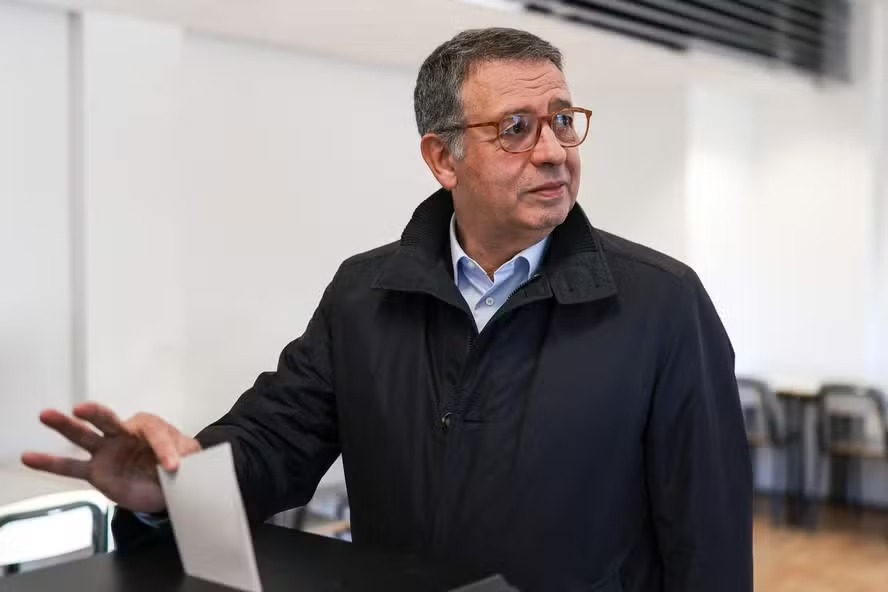
The left contradicted expectations and finished first in the first round of the presidential elections in Portugal, held this Sunday (19). Socialist António José Seguro led the dispute with 31.21% of the votes (1,738,741) and secured a place in the second round, now taking on the task of defeating the advance of the extreme right, in the confrontation scheduled for February 8th.
The second round will be contested against André Ventura, from Chega, who came second in the first round with 23.29% of the votes (1,297,533), in an election marked by the dispersion of the vote among multiple candidates and the absence of an absolute majority.
Next, João Cotrim de Figueiredo, from the Liberal Initiative, obtained 16.01% (891,788 votes), followed by the former Chief of Staff of the Armada Henrique Gouveia e Melo, an independent candidate, with 12.41% (691,489 votes).
Former PSD leader Luís Marques Mendes, supported by Prime Minister Luís Montenegro’s party, came in fifth place, with 11.34% (631,809 votes), a result interpreted in the country as a defeat for the current government.
Among the left-wing candidates outside the PS, Catarina Martins, from the Bloco de Esquerda, finished in sixth place, with 2.05% (114,468 votes), while António Filipe, supported by the Portuguese Communist Party (PCP), came in seventh, with 1.65% (91,889 votes).
Another seven candidates shared the remaining votes, all below 1.1%, in a dispute that brought together 11 names and dispersed the electorate.
The vote recorded the highest turnout in two decades, reversing the pattern of high abstention observed in recent elections. According to official estimates, the abstention rate was between 35% and 40%, well below that recorded in the 2021 presidential election, when more than half of the electorate stopped voting amid the Covid-19 pandemic.
The result also puts Portugal back in front of a second presidential round for the first time since 1986, when socialist Mário Soares won the dispute against Diogo Freitas do Amaral. Since then, all presidential elections had been decided in the first round.
Seguro’s leadership in the first round represented a turnaround in relation to the scenario that prevailed until months ago, when surveys indicated an advantage for candidates on the right.
At the beginning of the second half of 2025, the socialist appeared hovering around 10% of voting intentions, while André Ventura, Luís Marques Mendes and the independent Henrique Gouveia e Melo appeared with percentages close to or greater than 20%, competing at the forefront of the presidential race.
Throughout the final stretch of the campaign, only the extreme right condensed in Ventura maintained consistent growth, while the other candidates from the conservative field started to compete for the same electorate.
The dispersion of votes to the right opened space for the recovery of the socialist candidate, who managed to consolidate himself as a viable alternative in the first round and advance in a dispute that, until then, was unfavorable to him.
According to analyzes published after the vote, Seguro’s recovery was also driven by a moderate movement of useful votes, especially among voters who sought to avoid a second round restricted to candidates located further to the right.
This shift ended up being decisive in taking the socialist to the leadership and pushing the election into a second round unprecedented in four decades.
PCP guides vote in Seguro to stop the extreme right in the second round
Faced with André Ventura’s advancement to the second round, the Portuguese Communist Party (PCP) announced that it will direct the vote for António José Seguro in the decisive round of the presidential elections. The position was presented by communist candidate António Filipe in a speech after the results of the first round were announced.
“The vote for António José Seguro in the second round does not mean support for the candidate António José Seguro, nor for what he defended as a candidate or throughout his political activity. It means the imperative will to defeat the candidate André Ventura. That is what is fundamentally at stake in these elections”, he stated.
In the communist leader’s assessment, the second round dispute will now be defined by the need to prevent the victory of a political project that represents a direct risk to the foundations of the Portuguese democratic regime.
“Now it is a question of, in the second round, preventing the election of a candidate who intends to destroy the democratic regime. This requires a clear option on our part regarding the exercise of the right to vote,” he said.
António Filipe also rejected the interpretation that the second round represents a traditional divide between left and right, maintaining that the central axis of the dispute is the defense of democracy and the Constitution.
“This is not, at this moment, a classic cleavage between left and right. It is a question of responding to a serious threat to democracy that would mean the victory of candidate André Ventura”, he declared.
The communist leader also stated that the behavior of the electorate in the first round already expressed this understanding, reporting that part of the voters chose to concentrate their votes on António José Seguro in the first round to avoid an even more conservative scenario in the final dispute.
“There were many people who, in other circumstances, would have voted for my candidacy, but who, due to the fear of there being two candidates very far to the right in the second round, voted for António José Seguro in the first round, without this meaning political support for the candidate himself”, he stated.
Despite the PCP’s electoral performance in the first round, António Filipe assessed the campaign as politically necessary and reaffirmed that the party will continue to be mobilized in defense of social rights, the Constitution and the values of the April Revolution.
“We do not regret this candidacy. We believe it was worth it, because it brought the country’s central concerns to the center of the presidential election debate”, he concluded.
Source: vermelho.org.br