Published 21/12/2025 13:31
The last 30 days have been marked by a climate of political uncertainty in Chile, accompanied by expectations and bets about which political project would take command of the La Moneda Palace, in Santiago. In addition to choosing the country’s president, the electoral process also defined the new composition of the Chamber of Deputies and promoted the renewal of 23 of the 50 seats in the Senate.
This was the first presidential and legislative election held since the approval and promulgation of the constitutional amendment of December 27, 2022, which reestablished mandatory voting for elections and plebiscites, something that had not occurred since 2012. With the change, eligible citizens who failed to attend the polls were subject to paying a fine of approximately 33 thousand Chilean pesos, the equivalent of around R$200, a measure that reignited the debate public about political participation and civic duty in the country.
In the first round, the result highlighted the political unity of the Chilean left camp in opposition to the advance of fascism. With the exception of the Chilean Communist Party (Proletarian Action), a small party with a pro-Albanian tradition, with a practically irrelevant impact on the electoral board, the entire spectrum of the left was articulated around the candidacy of Jeannette Jara, from the Communist Party of Chile.
Jara contested the presidential primary elections as a representative of the ruling coalition Unity for Chile, a mechanism created to define the name that would run for President of the Republic. In the process, she obtained a significant victory in the coalition, reaching 60% of the votes, surpassing the social democrat Carolina Tohá, from the Party for Democracy, Gonzalo Winter, linked to the political camp of President Gabriel Boric, and the environmentalist Jaime Mulet.
If, on the left, strong political unity predominated, the same did not occur among right-wing parties. The sector reached the first round fragmented, with multiple candidates competing for the same electorate and presenting different projects for the country.
The main name was José Antonio Kast, from the Republican Party of Chile, representing the conservative right. Next came the liberal economist Franco Parisi; Johannes Kaiser, YouTuber and leader of the National Libertarian Party, identified with anarcho-capitalism and the extreme right; and Christian conservative Evelyn Matthei, from the Independent Democratic Union (UDI), a party founded by a direct ally of former dictator Augusto Pinochet.
The political unity of the left guaranteed Jeannette Jara the best performance in the first round, with 26.85% of the votes. Despite the impressive result, the percentage was far from what was necessary for an immediate victory, which took the dispute to the second round.
From then on, a central challenge was imposed that the progressive camp was unable to overcome: how to face the subsequent unification of the right around José Antonio Kast’s candidacy? The question began to guide the political debate in the following weeks and exposed the limits of the strategy adopted until then.
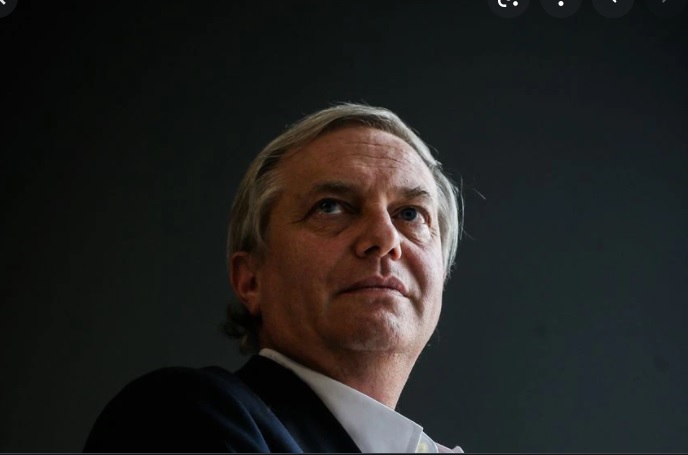
José Antonio Kast, known by the acronym JAK, is a Chilean lawyer and politician. He served as a member of the Chamber of Deputies between 2002 and 2018, initially for the Independent Democratic Union (UDI) and, later, for the Republican Party of Chile, a party that he himself helped to consolidate as one of the main right-wing forces in the country.
Of German family origin, Kast is the son of Michael Kast, former lieutenant colonel in the German Army during the Third Reich and member of the National Socialist German Workers’ Party. After Germany’s defeat in 1945, Michael Kast fled to Chile, where he later became linked to the repressive apparatus of Augusto Pinochet’s dictatorship, especially the National Information Center (CNI), the body responsible for political persecution, torture and forced disappearances.
Another family member, Michael “Miguel” Kast Rist, held the position of Minister of Labor during the military regime. José Antonio Kast, the son, followed a political trajectory marked by extreme right-wing positions, expressing explicit support for the former dictator Augusto Pinochet throughout his career and defending the adoption of a “firm hand” policy in running the State.
It is often described as ultra-conservative, with a strong emphasis on law and order discourses and the defense of free-market economic policies. In the social field, Kast takes a stand against euthanasia, abortion and same-sex marriage, in addition to defending restricted social assistance policies, aimed primarily at married women.
It also rejects the scientific consensus on climate change, minimizing its impacts and denying human responsibility for the phenomenon. At the international level, it maintains close links with right-wing and extreme-right leaders and movements, having received public support from Donald Trump and participated in the Madrid Forum.
Kast expresses admiration for figures such as Giorgia Meloni, Javier Milei, Jair Bolsonaro and the Spanish party Vox, led by Santiago Abascal. He also praises the policy of repression adopted by Salvadoran President Nayib Bukele, stating that Chile would need “more Bukele” to combat violence.
In relation to immigration, he defends the tightening of border control and opposes illegal immigration, even proposing the excavation of a moat on the border between Chile and Bolivia. In the cultural field, he claims to seek to defend what he calls “Chile’s European heritage” and national unity, positioning himself against indigenous agendas, multiculturalism and identity agendas promoted by the left.
José Antonio Kast was elected new president of Chile on Sunday (14), after obtaining more than 58% of the votes, according to data from the country’s Electoral Service (Servel). The result reflects the concentration, in the second round, of votes that in the first were dispersed among several right-wing candidacies, now unified around Kast.
Jeannette Jara acknowledged defeat on the night of the counting. “Democracy has spoken loudly and clearly. I have just spoken to the elected president José Antonio Kast to wish him success for the good of Chile”, he wrote on his account on the social network X, a stance compatible with anyone contesting an election in a democratic regime.
Still, the question that remains is inevitable: success for whom, and at what cost, will this “Chile’s good” be? For the Chilean left, and also for progressive sectors around the world, the election raises a series of uncertainties.
What can we expect from a far-right president who openly flirts with authoritarianism, has family ties to Nazism and the dictatorship of Augusto Pinochet, and defends an agenda marked by tightening repression and the withdrawal of social rights?
Doubts accumulate both domestically and internationally. What awaits the Chilean working class under an extremist-oriented government? What impacts will this victory have on the labor movement and progressive forces on a global scale?
In Chile, the predominant feeling among broad popular sectors is one of political mourning. But, as voices from the left remind us, injustice is not just a source of sadness, it is also fuel for organization, resistance and struggle.
Source: vermelho.org.br