Published 10/09/2025 16:27 | Edited 10/09/2025 16:41
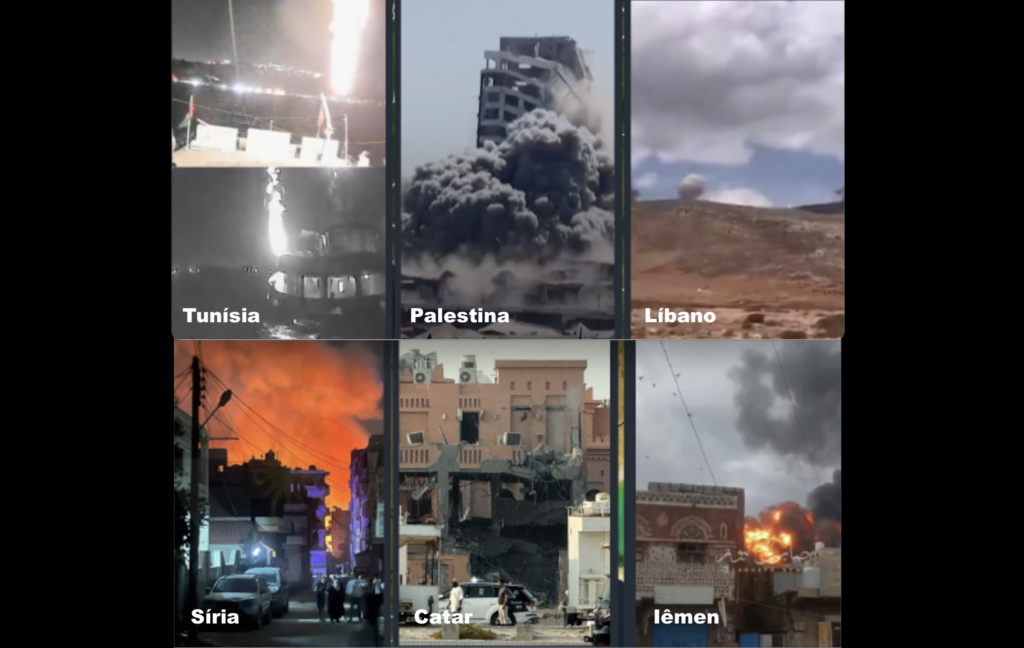
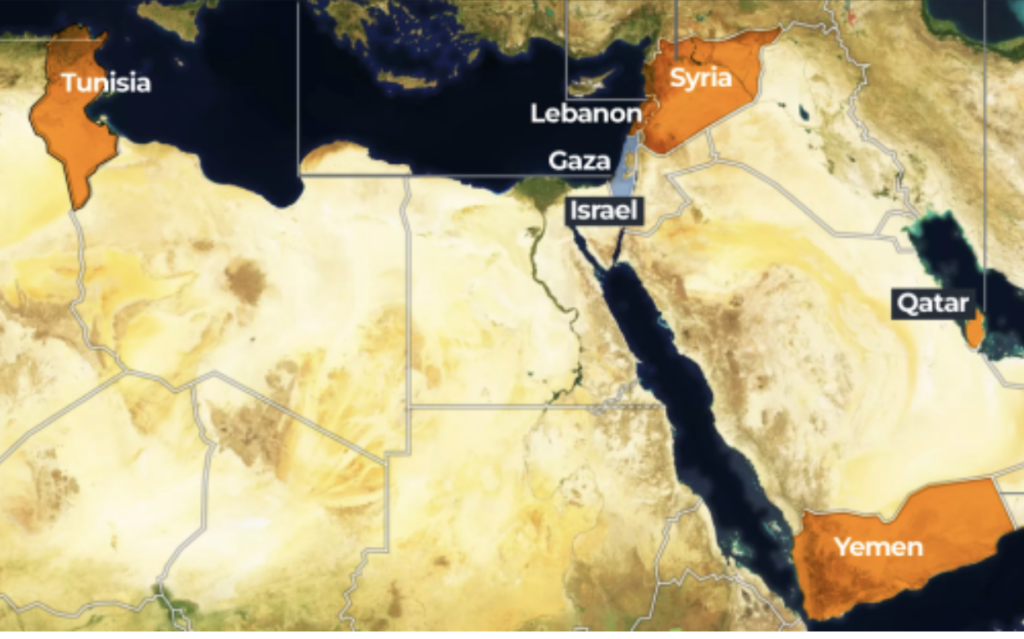
In just three days, Israel expanded its military offensive to six different countries, opening multiple conflict fronts in the Middle East and North Africa. The climb included attacks on Qatar, Lebanon, Syria, Tunisia, Yemen and Gaza, turning the war against Hamas into a regional scope. It must also be remembered that Iran has been the target of Israeli attacks in recent months, retaliating with bombing.
The most striking episode took place on Tuesday (9), when Israel launched an air strike against a Hamas complex in Doha, the capital of Qatar, during a meeting discussing a US mediated ceasefire. The bombing killed six people, including leader Khalil al-Hayya’s son, but the group’s leading leaders survived.
Israel publicly assumed responsibility. “Israel began, Israel led and Israel assumes full responsibility,” said Benjamin Netanyahu’s office.
“Netanyahu killed any hope for Israeli hostages,” said Caaria Prime Minister Mohammed Bin Abdulrahman al-Thani. “This was state terrorism. We expect a collective response from the region.”
1. Gaza – The epicenter of destruction
While expanding his external actions, Israel kept the offensive in Gaza. Since Monday (8), more than 150 Palestinians have been killed and another 540 were injured. The city continues under bombing, with residential buildings and infrastructure being destroyed.
According to local authorities, since October 2023 the war has killed more than 64,600 Palestinians, including 404 people hungry. Thousands remain missing under the rubble.
2. Lebanon – Daily violated truce
In Lebanon, Israeli attacks hit the regions of Bekaa and Hermel, killing at least five people, in violation of a ceasefire agreement signed in November 2024. One day later, Israeli drones injured a Mezbollah member in Barja, just 30 km from Beirut. Israel maintains five positions of occupation in the Lebanese South, systematically violating the ceasefire of November 2024.
3. Syria – Strategic targets in collapse
In Syria, Israeli fighters attacked air bases in Homs and Latakia. The Syrian government has classified the action as “flagrant violation of sovereignty” and accused Israel of seeking to undermine any regional stability.
Since the fall of Bashar al-Assad in December 2024, Israel has released almost 100 attacks in Syria, destroying 135 locations and killing 61 people. It also expanded its occupation in the Golhan hills, breaking the 1974 agreement.
4. Tunisia – Attack on humanitarian flotilla in international waters
Two ships of the Global Sumud flotilha, which sought to break the blockade to Gaza, were hit by Israeli drones on the coast of Tunisia. The first attack took place at the port of Sidi Bou Said; The second, in Tunisian waters, hit the Alma vessel. There were no dead, but damage increased diplomatic tension with North Africa. “It’s an attack on global solidarity,” the coalition reported.
5. Yemen – bombing to the capitals and provinces
On Wednesday (10), Israeli planes bombarded Sanaa, the capital of Yemen, killing at least nine people and injuring more than 100, according to local authorities. The targets included residential areas and medical facilities. The Houthi group promised retaliation, maintaining attacks against Israel while the war in Gaza continues.
6. Qatar – the geopolitical inflection point
Qatar, which hosts ceasefire negotiations and houses the largest US military base in the region, classified the attack in Doha as “state terrorism.” Premier Mohammed Bin Abdulrahman al-Thani called for a collective response from the Gulf countries and said that Israel undermined any chance of peace.
The attack on Doha was not only military – it was diplomatic and symbolic. Qatar is the main mediator between US, Hamas and Israel. Shelter negotiations of ceasefire did not protect him. “Israel challenged the sovereignty of a US strategic ally – and no one stopped him,” says Mairav Zonszein of the International Crisis Group.
Analysts point out that Daha bombing exceeds a delicate diplomatic limit: Israel attacked an ally from the United States in the midst of negotiating zone, a few kilometers from Centom’s command base.
The risk of regional war grows
Attacks in six countries in 72 hours represent a qualitative change in war. Israel not only expands its military operations, but openly challenges the sovereignty of neighboring states and allies.
“If Qatar is not safe, Saudi Arabia and the Emirates are not either. The Israeli Air Force is coming to its neighborhood. No one is really safe, and nothing is out of the question,” said Grazia Bianco, a researcher at the European Foreign Council.
Analysts point out that Israel advances with total impunity, even against US allies. “There is no way to believe that Israel did it without Washington’s green light,” says Marwan Bishara of Aljazira. “If there was no permission, then where is the disapproval?”
The multiplication of battle fronts raises the risk of regional conflagration, at a time when ceasefire negotiations in Gaza are already facing impasses.
With information from Aljazira
Source: vermelho.org.br