Published 03/31/2026 16:29 | Edited 03/31/2026 16:33
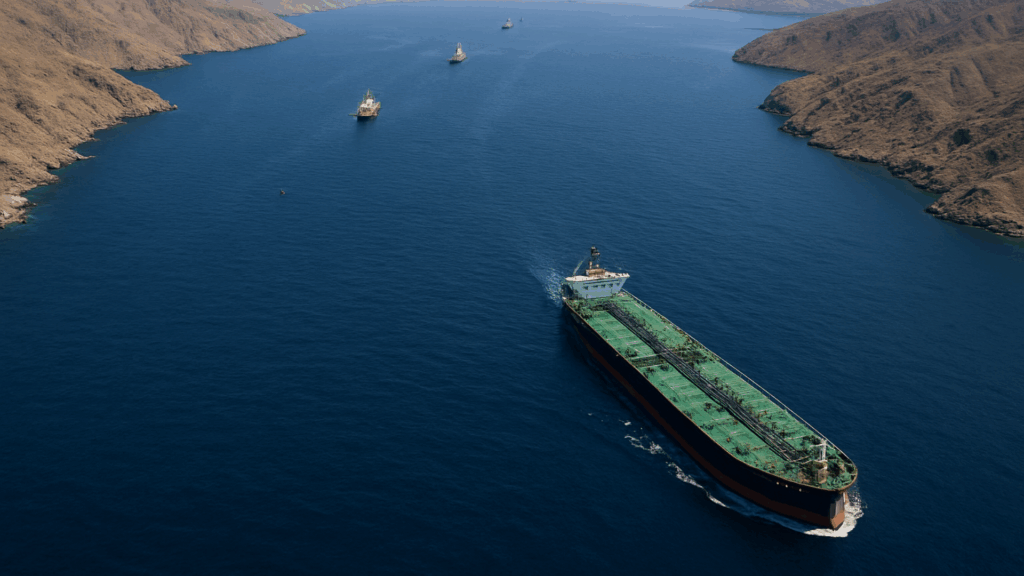
The National Security and Foreign Policy Committee of the Iranian Parliament approved this Tuesday (31) a bill that establishes the charging of tolls for vessels that travel along the route, where a significant portion of the world’s oil circulates. The measure, which requires payments in rial (Iranian currency), links the right of passage to the direct control of the Armed Forces and the Revolutionary Guard.
Although it determines the payment of a fee, the legislative text does not have a strictly collection nature. In practice, it works as a political filter. The project explicitly prohibits the passage of ships linked to the United States and Israel, transforming the strait into a selective traffic channel. According to Iranian parliamentarians cited by state broadcaster IRIB, the fee is presented as a way to cover “war costs” and guarantee the safety of navigation under Tehran’s terms.
The traffic collapse and the Chinese exception
The numbers reflect the immediate impact of the new Iranian stance. The flow of vessels in the strait suffered a drastic drop: from 4,140 crossings in February, the volume plummeted to just 125 in March — a 97% reduction.
In this scenario of almost total paralysis for the West, China emerges as the Iranian regime’s main interlocutor. Although Beijing avoids publicly formalizing a toll agreement, the reality of the seas points to pragmatic coordination. Chinese Foreign Ministry spokeswoman Mao Ning recently confirmed that after “coordination with relevant parties”, three Chinese ships crossed the strait, thanking them for their assistance.
information Lloyd’s Listthe main global reference in tracking the shipping sector, indicate that Iran already accepts payments in yuan to facilitate transit, a strategic maneuver that allows Tehran to circumvent the financial system dominated by the dollar and the sanctions imposed by Washington. Pakistan and India would also have obtained specific authorizations, reinforcing the configuration of an “allied channel”.
Washington’s response increases uncertainty
As Iran tightens its siege on Hormuz, the reaction of Donald Trump’s government increases uncertainty for US allies. In recent contradictory statements, while disembarking marines in the region, the North American president signals that he does not intend to commit military forces to guarantee the opening of the strait to third parties.
Trump classified the blockage as a “world problem”, suggesting that countries dependent on oil in the region should “buy from the United States” or, alternatively, “go there and take” control of the road themselves. Although the United States president’s statements cannot be fully trusted, the new stance reflects a strategy of direct military disengagement in favor of commercial pressure. By accepting the partial closure of Hormuz as a fait accompli, Washington is encouraging the export of its own energy and transferring the burden of maritime security to European and Asian capitals.
The Iranian strategy of instituting a sovereign toll, combined with Trump’s declared refusal to police the region, generates apprehension in global markets. Analysts point out that the institutionalization of charging and the selective exclusion of Western flags could perpetuate the rise in energy prices.
Source: vermelho.org.br