Published 03/17/2026 12:41 | Edited 03/17/2026 12:46
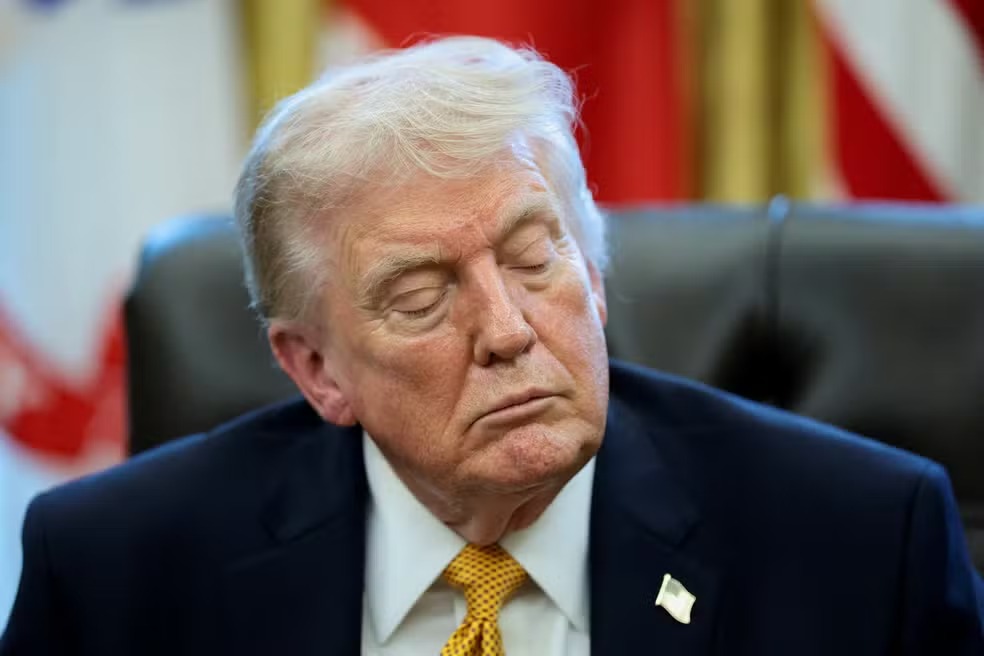
The President of the United States, Donald Trump, threatened Cuba again this Monday (16), stating that he could “take over” the island and do “whatever he wanted” with the country.
The statements come amid the prolongation of the war of aggression against Iran, the increasing economic costs of the conflict and Washington’s increasing difficulty in gathering international support for its military actions.
The speeches mark another chapter in the escalation of pressure against Havana, which has intensified since the end of 2025 and gained new momentum after the military offensive against Venezuela in January.
At the time, Trump announced an oil blockade on the island, cutting off access to fuel and deepening an energy crisis that is already affecting essential sectors of the Cuban economy.
During the statement at the White House, Trump described Cuba as a “very weakened” country and once again openly defended the possibility of intervention.
In January, he had already stated that “entering and destroying” the island could be the only alternative to forcing a regime change, after decades of frustrated attempts by successive North American governments.
The rhetoric was accompanied by concrete measures. At the end of January, Trump signed an executive order that declared a national emergency and classified Cuba as an “extraordinary and unusual threat.”
The measure opened the way for sanctions against countries that supply oil to Havana, directly or indirectly, interrupting the flow of fuel and worsening shortages.
Cuban authorities indicate that the country has not received oil shipments for more than three months. The impact is already reflected in the functioning of basic services, such as transport, food distribution, education and hospital care, in addition to causing a decline in economic activity.
The blockade imposed by Washington expands a framework of restrictions that has already lasted decades and is seen by experts and international organizations as a form of collective punishment.
The measures directly affect the civilian population, compromising the energy supply and the functioning capacity of vital sectors of Cuban society.
In recent statements, Trump stated that the country was “at the end of the road” and made an eventual agreement conditional on accepting demands imposed by Washington. On Sunday (15), he said again that “either there will be an agreement soon or we will do whatever is necessary”, keeping the possibility of using force open.
The threats occur in parallel with initial diplomatic contacts between the two countries. Cuban President Miguel Díaz-Canel confirmed on Friday (13) the existence of preliminary stage talks on bilateral differences, in addition to announcing the early release of 51 detainees, in agreement with the Vatican.
War in Iran prolongs and increases Washington’s isolation
The new rhetorical escalation against Cuba coincides with the impasse faced by the United States in the war against Iran. Trump once again postponed predictions about the end of the conflict, which has already undergone different estimates over the last few weeks, without presenting a clear horizon of closure.
At the same time, resistance from historic US allies to join the offensive is growing. European countries have reiterated that they do not intend to become directly involved in the conflict, prioritizing the reduction of tensions and the maintenance of freedom of navigation, especially in the Strait of Hormuz.
Washington’s difficulty in mobilizing international support adds to the military impact of the war. Iranian attacks have hit US positions, with reports of deaths and injuries among US troops. The conflict has also generated billion-dollar costs in just a few days, putting even more pressure on the North American economy.
Internally, the government is facing a series of wear and tear. Rising energy prices, market instability, rising unemployment and unfavorable court decisions have contributed to the drop in the president’s approval ratings.
At the same time, divisions are growing within his political base and within the MAGA movement itself.
This scenario increases uncertainty about Republican performance in the mid-term elections and highlights the government’s difficulties in sustaining its external and internal agenda.
Still, Trump maintains the strategy of putting pressure on Cuba, intensifying measures that deepen the crisis on the island.
Source: vermelho.org.br