Published 01/29/2026 09:24 | Edited 01/29/2026 11:32
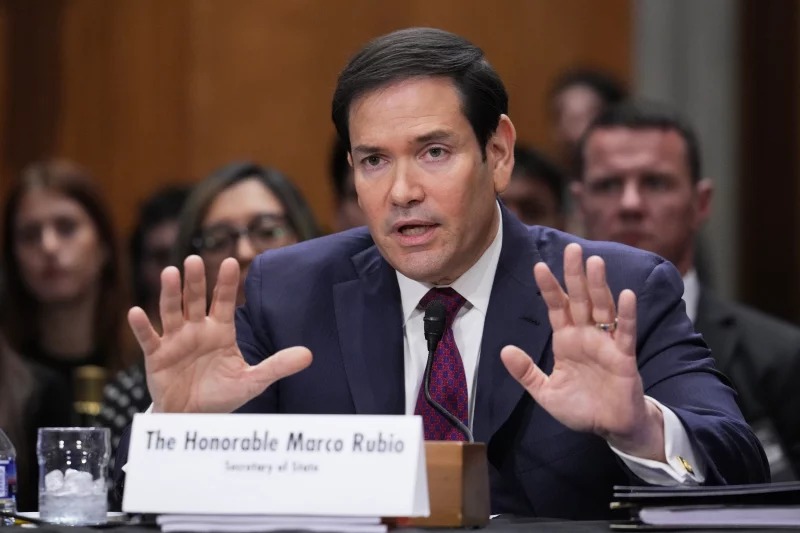
In an intimidating tone, the Secretary of State of the United States, Marco Rubio, stated this Wednesday (28) that the Trump administration “is prepared to use force” against Venezuela if interim president Delcy Rodríguez does not “cooperate” with Washington’s demands.
Rubio confirmed that the North American administration began to impose unprecedented financial protection mechanisms on Venezuela, including control over oil sales and budget execution, but admitted that Chavismo continues to control the country’s armed forces.
During the hearing at the Senate Foreign Relations Committee, Marco Rubio avoided ruling out the possibility of new military actions against Venezuela, even though he stated that there were no immediate plans in this regard.
“Make no mistake: as the president has already stated, we are prepared to use force to ensure maximum cooperation if other methods fail,” he said. “I can say with complete certainty that we are not positioned, nor do we intend or expect to have to take any military action in Venezuela at this time,” he added at another time.
The statements provoked reactions from senators from both the Democratic and Republican Parties, who questioned the legality of the military operation carried out at the beginning of the month and the lack of prior consultation with Congress, as required by US legislation.
Republican Rand Paul compared the action to the hypothesis of a foreign country bombing the United States, capturing the president and imposing a blockade, and then asking whether the White House would consider this an act of war.
Democrat Chris Coons stated that, if there was time to plan and execute the operation, there should also have been time to inform and consult the Legislature. Rubio responded evasively, claiming that, until the end of December, there was no certainty about the viability of the action, an argument that did not dispel the criticism.
The tone of the debate shows that, even within the North American institutional system, the offensive against Venezuela faces questions regarding its legal basis and the limits of the Executive’s power in military operations abroad.
When detailing the United States’ policy towards Venezuela, Rubio confirmed that Washington began to directly control the sale of Venezuelan oil and the allocation of the resources obtained.
According to the secretary, the revenues are being deposited into an account initially managed by third parties and will only be released upon presentation of a monthly budget submitted for approval by the US government.
“The funds will initially be kept in an offshore account managed by a third party, before eventual transfer to a United States Treasury account,” explained the secretary.
Rubio stated that the mechanism is temporary and necessary to guarantee the functioning of the Venezuelan state, including the payment of police officers and basic services.
Democratic senators, however, classified the arrangement as unprecedented, improvised and possibly illegal, questioning the transparency of the process and the fact that the United States government decides, in practice, how and for what purposes another country’s resources will be used.
The secretary himself recognized the exceptional nature of the measure, describing it as a “short-term” solution, given what he called Venezuela’s fiscal strangulation.
Criticism also focused on the decision to shield resources from international creditors, which, according to parliamentarians, could violate legal obligations of the United States.
Rubio admitted, however, that Venezuela’s internal power structure remains intact. When asked about the possibility of the opposition taking over the government, he stated that “the people who control the weapons are in the hands of this regime”, in reference to Chavismo’s control of the Armed Forces.
The secretary also recognized that military actions do not favor economic recovery or a stable political transition, and avoided establishing any concrete timeline for institutional changes in the country.
“It’s not a frozen meal that you put in the microwave,” he said, justifying the lack of definition.
Sovereignty, alliances and Venezuelan response
In contrast to Washington’s demands, interim president Delcy Rodríguez has publicly reiterated her rejection of external orders and the defense of Venezuelan sovereignty.
In a recent speech, she stated that she was “fed up” with the impositions of the United States and defended that the country’s internal conflicts be resolved through Venezuelan politics.
Reports cited by international agencies indicate that Washington is suspicious of Caracas’ willingness to sever relations with historical allies such as China, Russia and Iran, one of the declared objectives of the North American strategy.
Analysts point out that a new military attack could increase popular rejection of external intervention and generate additional instability, including outside the Chavista base.
Source: vermelho.org.br