Published 01/12/2026 18:47
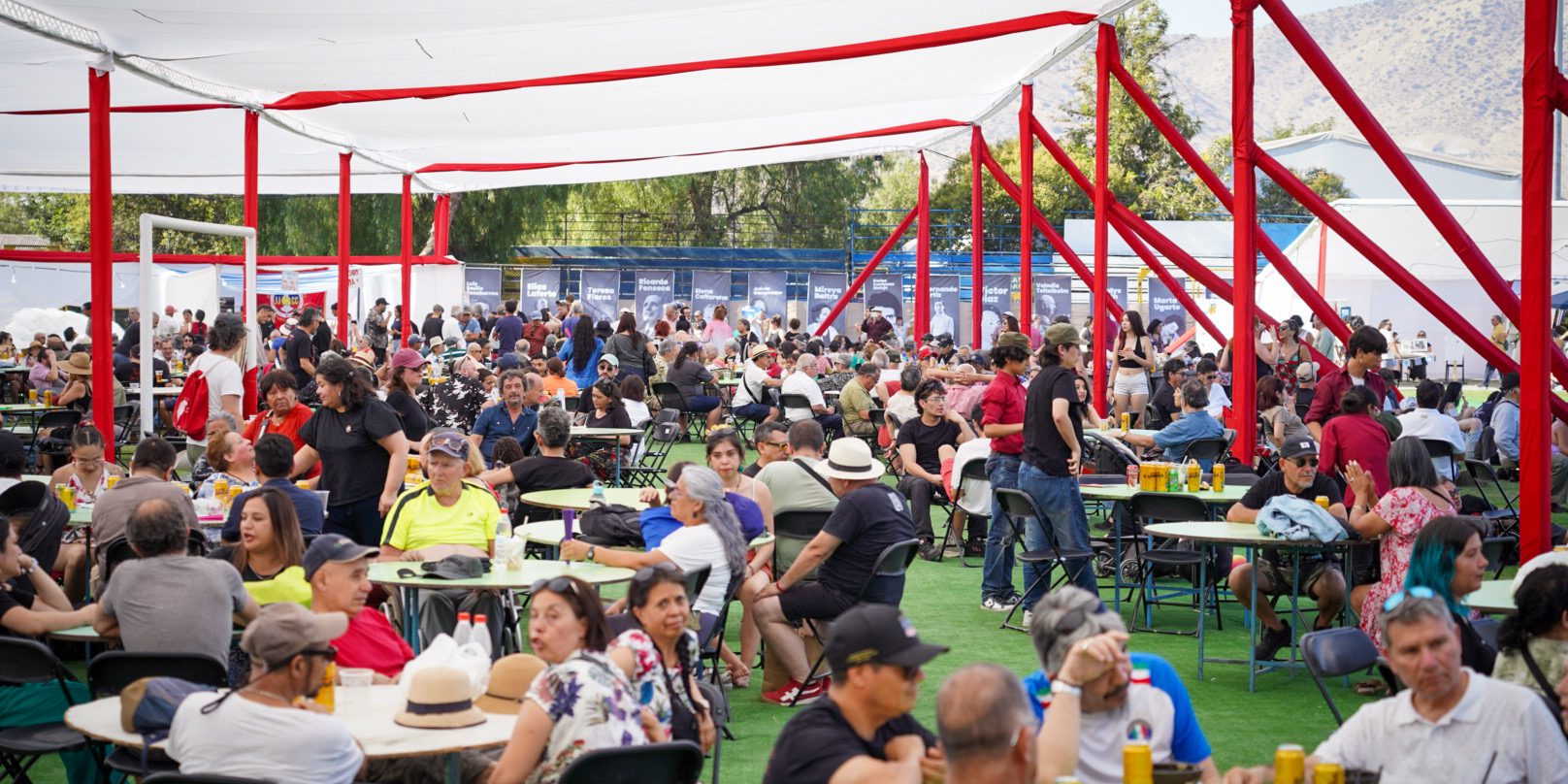
The 36th edition of the Fiesta de los Abrazos once again occupied, on January 10th and 11th, the Popular Stadium of Recoleta Leonel Sánchez, in Santiago, reaffirming its place as one of the most important political-cultural meetings of the Latin American left. After a year in which the activity could not be carried out due to a process of political persecution of the Communist Party of Chile, the return of the party had a deeply symbolic meaning. Resuming hugs, music, debate and collective coexistence was also a political gesture of resistance, regrouping and affirmation of identity.
The opening of the party strongly expressed this reunion. The inaugural act was attended by the president of the Communist Party of Chile, Lautaro Carmona, as well as deputies elected in the last parliamentary election, who took the stage as representatives of a group forged in an adverse political context. Also present was Jeannette Jara, communist candidate for President of the Republic in the recent elections, whose participation was received with enthusiasm and emotion. For the first time in the country’s history, a communist woman ran for president of Chile and obtained 38 percent of the votes, an expressive result that marked the national political debate and was remembered throughout the party as a historic milestone and a starting point for new challenges.
The Fiesta de los Abrazos took place just a few months after a difficult electoral process, in which the far right emerged victorious. The feeling shared among activists, leaders and participants was that, despite the defeat, the result imposed on the Chilean people the task of reorganizing forces, reflecting on the moment experienced and building paths to defeat Katz’s right-wing government. The party was, therefore, much more than a celebration. It was a space for collective reflection, political assessment and reaffirmation that the democratic struggle is still alive.
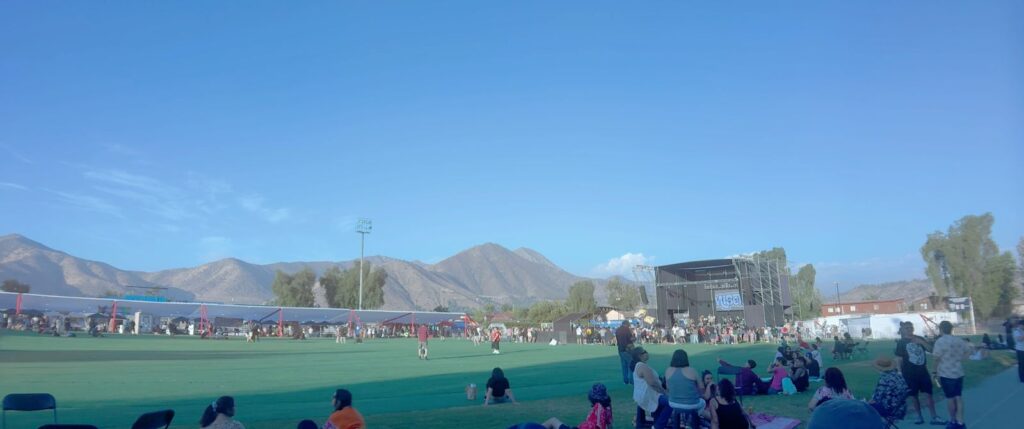
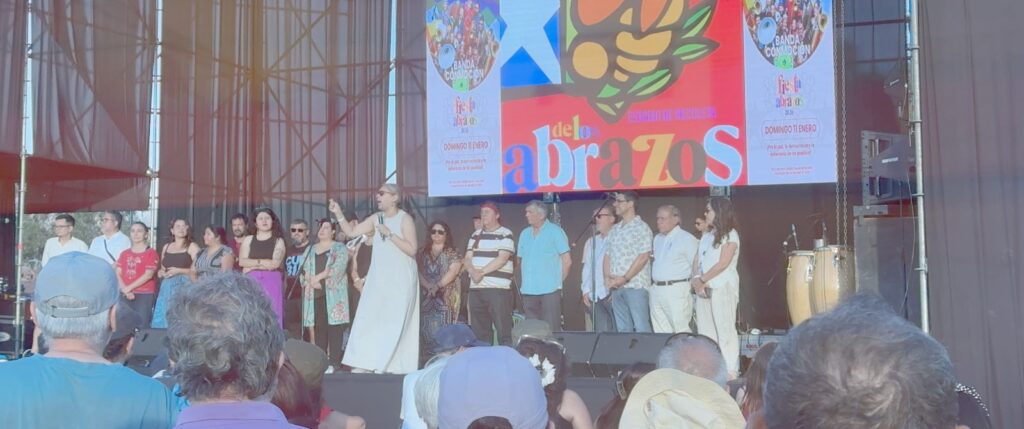
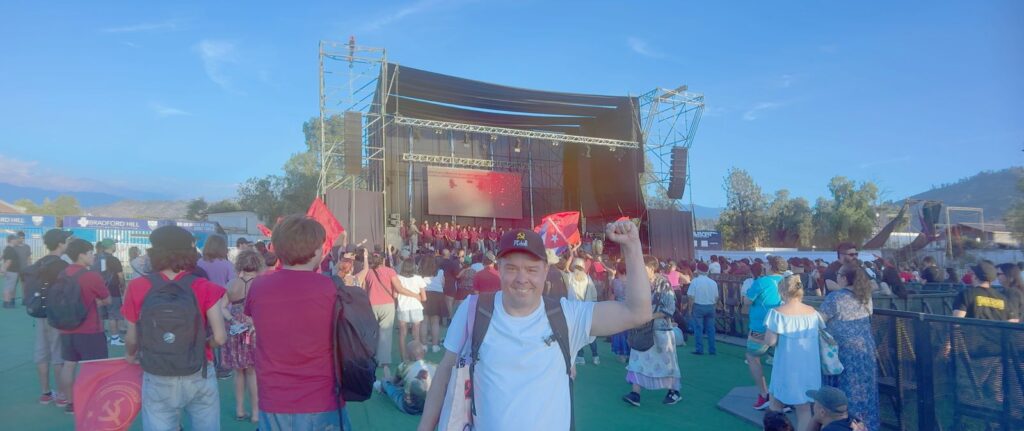
From the Recoleta Stadium, a municipality historically run by the Communist Party and currently governed by the mayor Fares Jadue, it was possible to see the imposing Andes Mountains. The landscape accompanied all the activity as a constant symbolic presence. We crossed the Andes to reach the Fiesta de los Abrazos and, as a well-known saying from the Latin American left goes, they continue to be the Sierra Maestra of South America, a symbol of revolutionary persistence and possible paths to social transformation.
The Fiesta de los Abrazos 2026 program was intense and diverse. Political forums, debates, book launches, artistic presentations, a craft fair, popular gastronomy and musical shows occupied the stadium over the two days. The party was experienced as a deeply intergenerational space. Children played with water hoses while parents exchanged ideas, met and celebrated. Ladies watched with shining eyes the vibrant presence of the Communist Youth of Chile, the JJCC, recognizing the continuity of a history that spans decades.
Also read:
Muralism, memory and generosity in Santiago
Chilean Memory Museum: art and human rights as democratic practice
Chile Stadium: memory, resistance and the permanent fight against oblivion
One of the most moving moments of the party occurred in its final act, when new JJCC activists took to the stage wearing their traditional burgundy shirts to swear allegiance to the organization they were joining. The scene brought tears from many of those present who, in other times, had experienced similar rites. The gesture synthesized the historical meaning of Fiesta de los Abrazos as a space for the passing of generations, living memory and militant renewal.
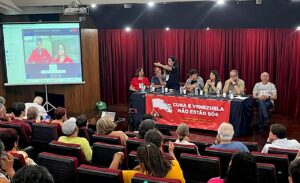
Throughout the program, the international campaign for the freedom of Daniel Jadue, imprisoned through a process widely denounced as lawfare, was permanently present. A tent dedicated to the topic, debates and public events reinforced solidarity with the communist leader and denounced the criminalization of politics as an instrument of persecution of popular forces. The campaign ran through the party like a common thread, connecting past, present and democratic dispute.
The international presence was another central element of this edition. Delegations and representations from sister parties from Uruguay, Argentina, Peru and Brazil were present, reinforcing the need for Latin American unity in the face of the common challenges posed by the advance of the extreme right and the offensives against the sovereignty of the people. Once again, Brazil was present, with representation from the Communist Party of Brazil and special coverage from the Red Portal, reaffirming the historical ties between the communist parties of the two countries and the commitment to a common agenda of democracy, sovereignty and social justice.
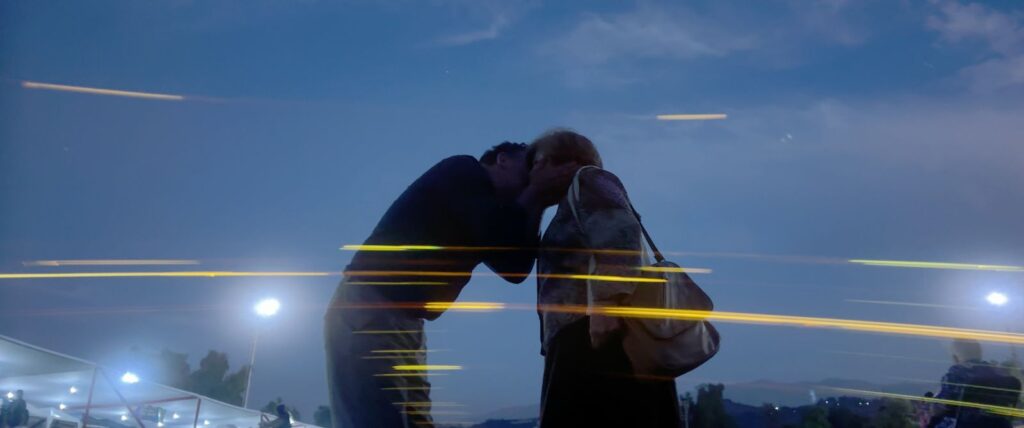
Over the two days, the Fiesta de los Abrazos reaffirmed its deepest meaning. Hugging, dancing, sharing food, ideas and affection proved, once again, to be a political act. In a context of conservative offensive and attempts at silencing, occupying public space with joy, memory and fraternity has become a revolutionary gesture. The 36th Fiesta de los Abrazos not only resumed a tradition interrupted the previous year, but also reaffirmed that culture, meetings and popular organization continue to be central tools in the construction of possible futures for Chile and Latin America.
Source: vermelho.org.br