Published 03/27/2026 22:23 | Edited 03/27/2026 22:29
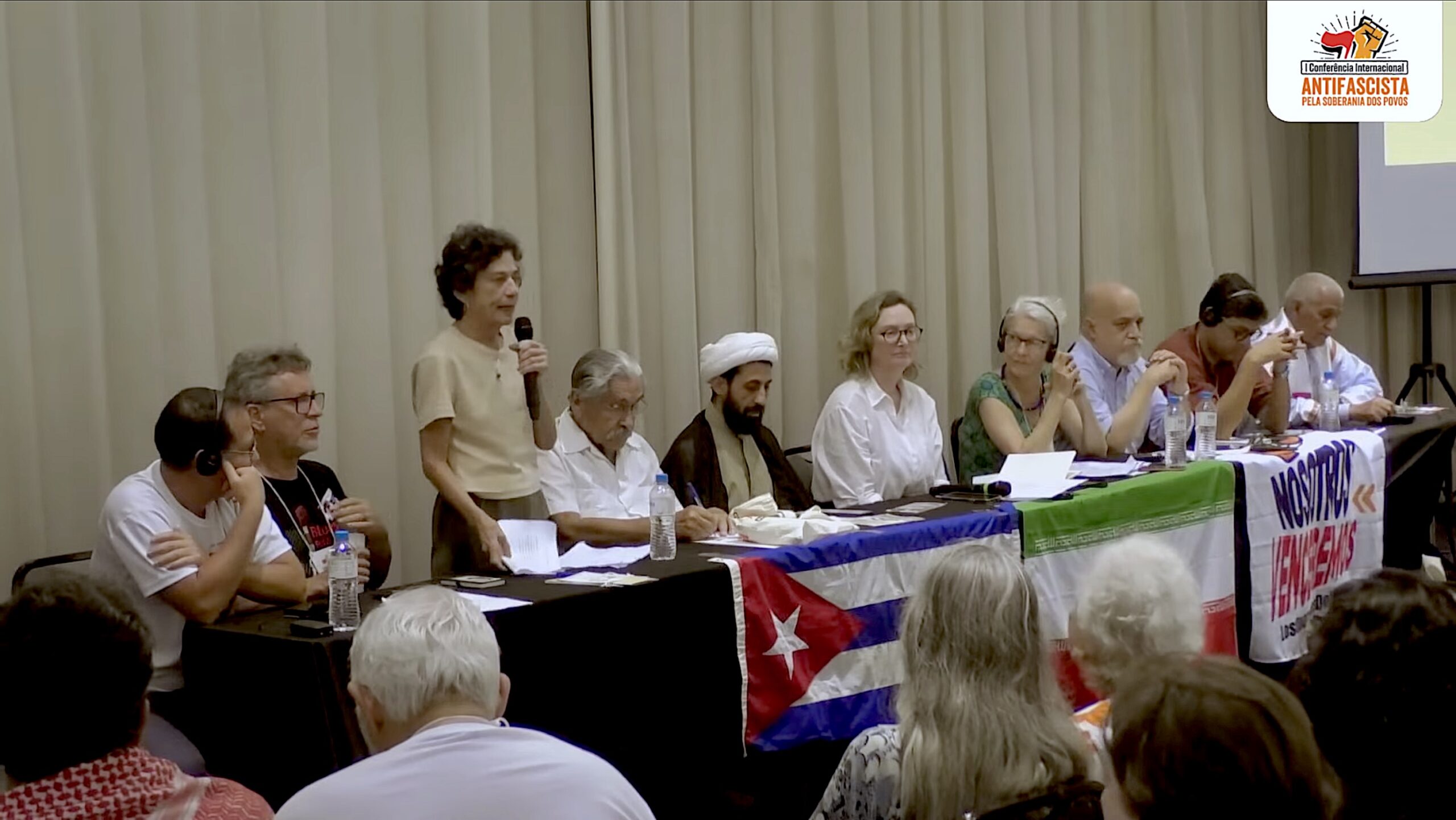
The former president of the World Peace Council and leader of Cebrapaz, Socorro Gomes, denounced this Thursday (27), during the 5th panel of the 1st International Anti-Fascist Conference for the Sovereignty of Peoples, in Porto Alegre, that “in the DNA of imperialism is fascism”. In her intervention, the leader highlighted that the current moment is crucial, with capitalism entering into crisis and imperialism suffering defeats, but seeking to postpone its collapse through wars and terror.
The fifth table brought together leaders from four continents to debate “Solidarity between Peoples and the Anti-imperialist Struggle”. Mediated by federal deputy Maria do Rosário (PT-RS), the panel highlighted that anti-fascism cannot be dissociated from the fight against imperialism and capitalism, at the risk of becoming an incomplete struggle.
In her opening, Maria do Rosário emphasized that “solidarity is always something active, it demands more from us than words, especially when those who are imperialists act by producing war”. The deputy connected the anti-fascist struggle to the defense of peoples under attack: Palestine, Cuba, Iran, Venezuela and Western Sahara, reinforcing that “human rights cannot be selective”.
For Socorro Gomes, imperialism imposes “unheard of terror” to plunder wealth and dominate people, citing the genocide in Palestine as a “symbiosis between imperialism and Zionism”. “The way out is the struggle of the people, there is no other way,” he stated, defending iron unity against the global offensive.
The leader cited as examples the genocide in Palestine, the result of the “symbiosis between imperialism and Zionism”, and the attacks on Iran, which date back to the 1950s, when imperialism deposed Mossadegh to rob Iranian oil. “The Iranian people reacted and now, in this new stage, [o imperialismo] tries to destroy this nation”, he denounced.
Read also: Anti-Fascist Conference in Porto Alegre highlights causes of fascism
Anti-fascist march takes over the streets of Porto Alegre in defense of the sovereignty of the people
Anti-Fascist Conference begins with table in support of Iran’s resistance
The fight against fascism only wins with the masses, says Daiana Santos
Authorities Forum opens Anti-Fascist Conference with participation from 40 countries
NATO is imperialism’s war machine
Socorro Gomes also highlighted the role of NATO as the armed wing of imperialism. “NATO grows and surrounds Russia with the aim of destroying, dismantling Russia. And there this war machine attacks the people”, he stated. According to her, even after the fall of the Soviet Union and the dismantling of the Warsaw Pact, the military alliance continued to expand as an instrument of aggression.
The leader also criticized the new Monroe doctrine adapted by Trump, which clearly states that the objective is the Latin American continent. “In this collapse, [o imperialismo] Search your backyard. So the threats to the people of the continent are serious and some have already been carried out”, he warned.
Offensive against Latin America: Venezuela, Cuba and electoral interference
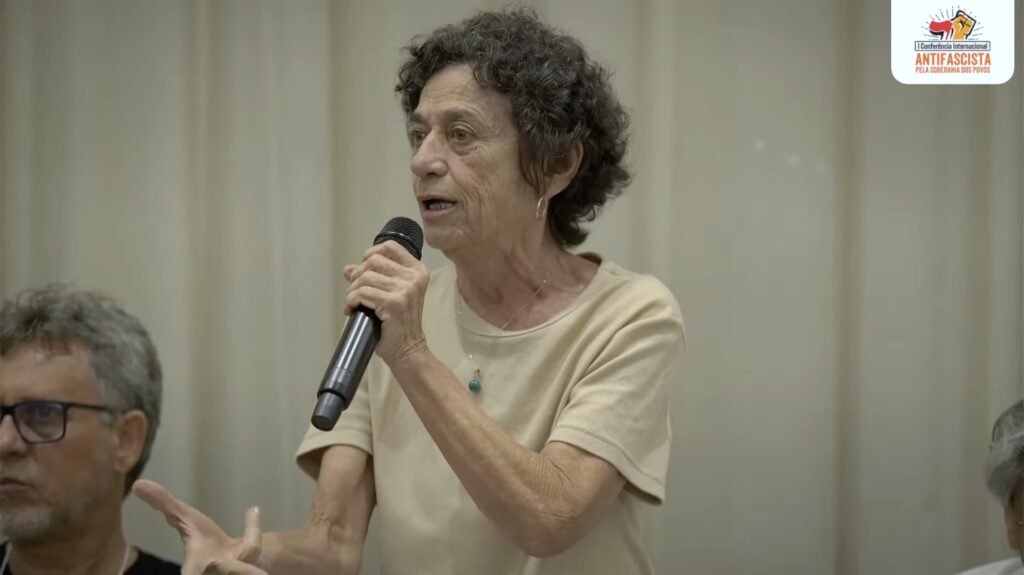
Socorro Gomes specifically denounced the attacks on Venezuela, including “the terrorist act by bandits against Venezuela, the assault, the murder of hundreds of people and the kidnapping of the legitimately elected president, President Maduro.”
Regarding Cuba, the leader classified as “grotesque and cynical” the fact that Trump considers the island a “great threat” and “unusual threat” to the United States. “Cuba, an island with around 9 million inhabitants, small, that has resisted more than 60 years of blockade, perversity, murder, invasions several times, attempts to assassinate President Fidel. He says that Cuba is a great threat”, he joked.
Exit is the struggle of the people with iron solidarity
Faced with this scenario, the leader of Cebrapaz was emphatic: “The way out is the struggle of the people, there is no other way out. And for that to happen, strong solidarity is also necessary.” According to her, at various times people and nations have already defeated empires through solidarity, constant struggle and anti-imperialist and anti-fascist resistance.
“Each people chooses the type of government and the destiny and path that suits them. No arrogant, intransigent, fascist, terrorist, imperialist nation has the right to prevent people from conquering their freedom and achieving peace and progress for all”, he stated.
Resistance experiences: Cuba, Venezuela and Western Sahara
Fernando Rojas, from Cuba’s House of the Americas, warned of the seriousness of the crisis on the island, worsened by the US blockade and the lack of fuel. “Solidarity with Cuba must be militant, not uncritical and not softened,” he argued. Rojas highlighted that the anti-imperialist struggle requires articulation between national and international scales, with popular empowerment at the center.
Blanca Eekhout, from Venezuela, spoke via video about the “kidnapping” of President Nicolás Maduro and Congresswoman Cilia Flores by imperialism. “We are facing an undeclared war against all of our America”, he denounced, reinforcing that “there is no effective possibility of an anti-fascist struggle without the unity of the people”.
Ahmed Mulay, from the Polisario Front, reported on the Saharawi people’s 50 years of resistance against the Moroccan occupation, supported by France and the USA. “We are the last colony in Africa”, he stated, asking for recognition of the Saharawi Republic and concrete solidarity. “Other peoples like Algeria and Angola achieved independence with their blood; we will also fight until freedom.”
Fascism, capitalism and multipolarity: strategic debates
Sushovan Dhar, from India, warned that “anti-fascist struggle without anti-imperialism is incomplete”, but also that “anti-imperialism without anti-capitalism is almost impossible”. He criticized the idea that BRICS would represent a progressive alternative: “Structurally, these forms of multilateralism cannot be an alternative for the people, only for the elites”.
Rafael Bernabe, from Puerto Rico, argued that the anti-imperialist struggle requires “a united front of the working classes, with total independence from the bourgeoisie and its institutions”. He denounced the 126-year colonial relationship with the USA and called solidarity with Cuba as the “central axis” of the struggle in the Caribbean.
Patrícia Pol, from France, brought the European perspective: “I come from a Europe that is a champion of neoliberal policies, which finances the war economy and implements racist immigration policies.” He argued that “we were unable to forge an anti-extractivist, feminist, anti-racist global front”, but that the “alter-globalist” struggle is still alive and needs radicality.
Hossein Khaliloo, from Iran, highlighted that imperialism also acts through culture and the media: “Where they cannot enter militarily, they enter through cinema, through the economy, to change the thinking of the new generations”. He cited Iran’s advances in technology and medicine despite the blockade: “A people who believe in their sovereignty can advance.”
Unity in diversity: conclusions and calls to action
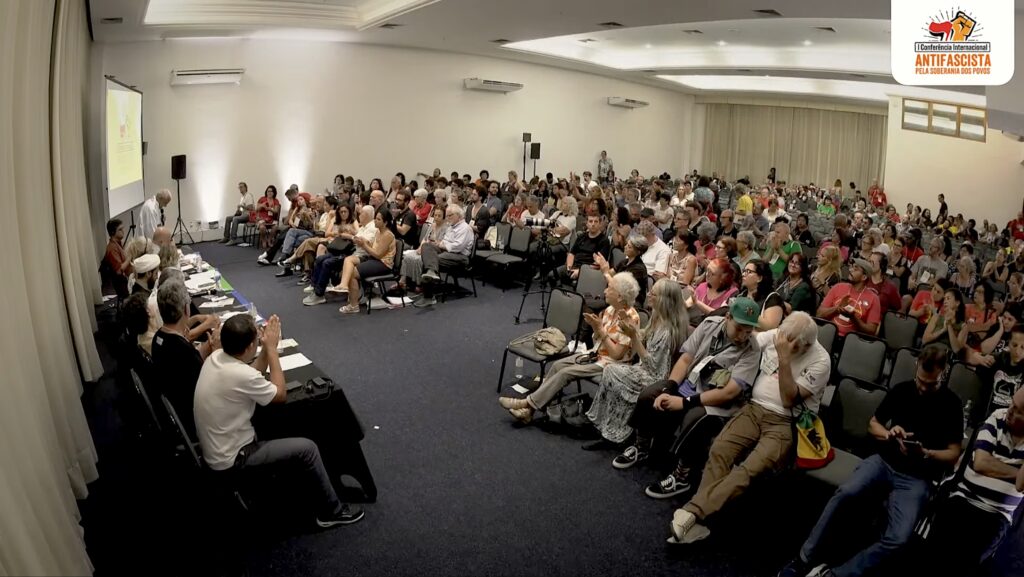
In the debates, Olívio Dutra reinforced that “the fight against imperialism is also for the construction of a project for a new world, which does not fit into capitalism”. Pedro Cesar Batista, from the Anti-Fascist International, called for unity: “Defeating fascism means being clear that it is our common enemy; we are not enemies among ourselves.”
The panel ended with consensus on the need to articulate national and international struggles, combine denunciation and proposal, and build militant solidarity.
In times of global offensive by the extreme right, the Porto Alegre conference reaffirms that people’s resistance continues to be the main weapon against barbarism. The message is clear: solidarity is not a gesture, it is an organized practice; Anti-imperialism is not rhetoric, it is a political project. And the fight, as one panelist said, is not for a less worse world, but for a truly just, sovereign and humane world.
Source: vermelho.org.br