Published 05/01/2026 13:05 | Edited 06/01/2026 09:34
The new imperialist face of the United States (USA) in Latin America is summarized in the 33 pages of the recently released National Security Strategy. By incorporating President Donald Trump’s rhetoric, the document updates the bicentennial Monroe Doctrine – the first state policy to openly say that America should be under North American rule.
Thirty days separate the release of the text by the White House, on December 4, and the attack that resulted in the illegal kidnapping of the president of Venezuela, Nicolás Maduro, and the first lady, Cilia Flores, last Saturday (3). It’s no coincidence.
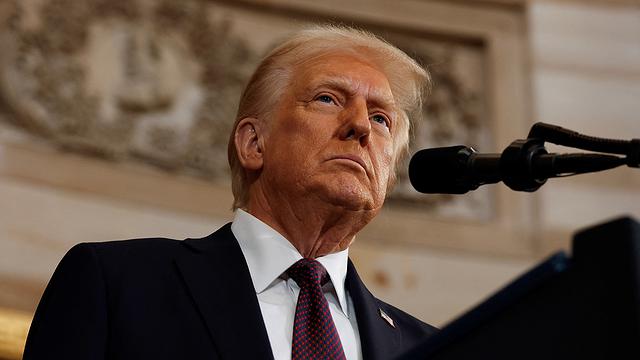
“America will never again allow foreign powers to steal from us or threaten our sovereignty in our own hemisphere,” Trump said on Saturday, hours after Maduro’s capture. “Under our new National Security Strategy, American dominance in the Western Hemisphere will never again be questioned.”
“Continuous access”
One of the axes of the National Security Strategy launched by Trump is to expand the US “global military presence” – with a focus on Latin America – “to face urgent threats in our Hemisphere”. In addition to the unconvincing chants about immigration control and the fight against drugs, the White House talks about “establishing or expanding access in places of strategic importance”.
This is one of the keys to understanding the US offensive in the Caribbean Sea, which culminated in the siege of Maduro. In terms of location, Venezuela stands out precisely because it is one of the main connections between South, Central and North America, as well as between the Caribbean Sea and the Atlantic Ocean.
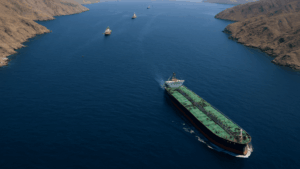
The South American country has more than 2,800 kilometers of coastline and several ports, such as La Guaira and Puerto Cabello. Its privileged borders – with Brazil and Colombia, for example – connect the territory to the Amazon, the Andean region and the Pacific Ocean. It is privileged access to several critical global routes. Furthermore, navigation from Venezuela to Florida, on the North American coast, takes just a few days.
“We want to ensure our continued access to important strategic locations. In other words, we affirm and will apply a ‘Trump corollary’ to the Monroe Doctrine,” the document points out. “The United States will chart its own course in the world and determine its own destiny, free from outside interference.”
Oil and rare earths
The North American boycott of COP30, held in November, in the city of Belém (PA), involves not only denialism or the environmental disdain of Trumpism. The first time a United Nations Climate Conference took place in the Amazon region, the United States did not send “high-level” officials to the climate negotiations. In addition to responding to lobbying from the fossil fuel industry, Trump made it even clearer that he is opposed to the Amazon Fund and that he treats the world’s largest tropical forest as an obstacle to development.
If the American president fulfills his promise to “govern” Venezuela, this predatory vision will be established over its natural wealth, starting with oil. It is in Venezuelan territory that the largest global reserves of the product are located, estimated at 303 billion barrels, well ahead of Saudi Arabia (267 billion), Iran (208 billion) and Canada (159 billion).
The country also has large reserves of natural gas (the largest in Latin America), gold, iron, bauxite and coltan (a strategic mineral used in the electronics industry, in military applications and in capacitors). As if this diversity were not enough, recent geological studies have indicated the presence of niobium, tantalum, yttrium and lanthanum in remote regions in Serra dos Pardaos, in the Guiana Shield.
These ores are known as “rare earths” and serve as the basis for advanced technologies in numerous industrial segments – from electronic products to military missiles, including wind turbines and batteries. Alongside other strategic minerals, rare earths helped to support, in 2016, the creation of the National Strategic Development Zone in the Orinoco Mineral Arc, with an estimated potential of US$2 trillion.
Although the US Geological Survey (USGS) does not validate Venezuela’s official data on these discoveries, the Trump administration wants to “pay and see”. To date, such riches remain practically unexploited – there is a lack of roads, energy networks and other structures that make their mining viable. Venezuela also does not have expertise in the processes of extracting, separating and refining rare earths, depending on partnerships with other countries. Any steps forward require billion-dollar investments.
For all these reasons, when trying to subordinate Venezuela to his National Security Strategy, Trump sees oil as a central, but not absolute, issue. There are more interests at stake.
What US oil companies say
Even with a fifth of the world’s oil reserves on its soil, Venezuela faces limitations. Its oil is heavy and acidic, which makes extraction and refining more complex, increasing costs. The situation is aggravated by cyclical factors. The attacks and sanctions on Venezuela in recent years, combined with the end of “boom the commodities“, affected local production, which fell by half. From 3 million barrels per day recorded in 1999, the figure fell to 1.5 million in 2024.
During this period, the “China factor” gained strength. It is to the Asian country that Venezuela currently exports 80% of its oil – it was 68% in 2023. As almost 90% of Venezuelan export revenues are due to oil, the Chinese have become strategic allies of Venezuela.
On Saturday, Trump stated that the US will make Venezuelan oil “flow”, increasing production with the support of North American giants. “We are going to take our big oil companies – the biggest in the world – to invest billions of dollars, repair the destroyed infrastructure and return to generating wealth for the country,” Trump said.
Report from Bloomberg shows that Trumpist rhetoric is unrealistic. Although he even promised that the companies will be “reimbursed”, the sector’s expectations are far from paradise. “Such an effort to rebuild the oil industry would be virtually unprecedented, and Trump left many crucial questions unanswered,” says Bloomberg. “It is unclear how willing industry giants like Exxon Mobil, Chevron, ConocoPhillips and others would be to invest substantial sums in a country governed by a US-backed temporary administration without consolidated legal and fiscal rules.”
According to the report, “in addition to billion-dollar disbursements for years, low oil prices are another discouraging factor for companies, according to experts, especially due to the level of investment that may be necessary. The companies themselves have already communicated these concerns to Trump administration authorities.”
If the attack on Venezuela is the rehearsal for Trump to return to the idea “of America for Americans”, the future paths are not designed. Business investments become scarcer when there is no legal certainty or political stability. Even so, imperialism has gained trump cards in Venezuela and is already beginning to threaten Colombia. The claws of the US want oil – and much more.
Source: vermelho.org.br