Published 01/21/2026 17:08 | Edited 01/21/2026 18:24
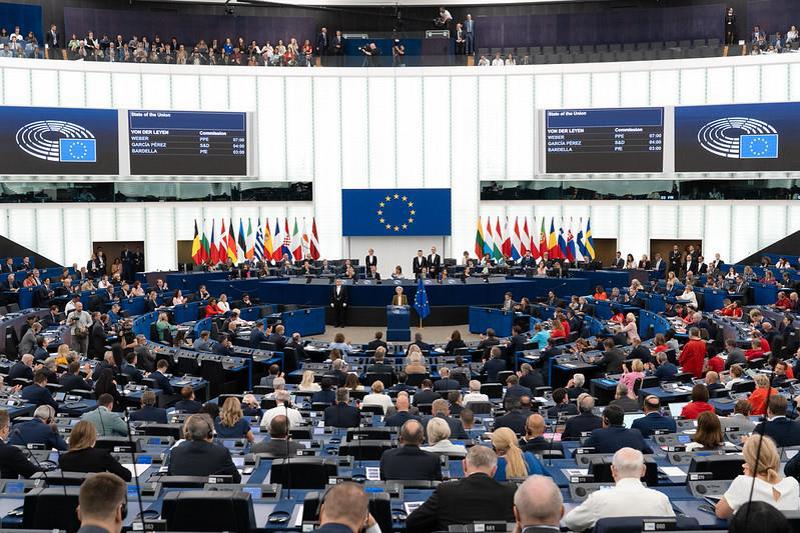
The European Parliament made official this Wednesday (21) the indefinite suspension of the analysis and ratification of the Turnberry Agreement, the commercial treaty that should stabilize economic relations between the European Union and the United States.
The decision, announced by Bernd Lange, president of the International Trade Commission, comes as a direct response to the escalation of hostilities by Donald Trump, who made tariff peace conditional on the handover of the territory of Greenland to the USA. By classifying Washington’s stance as a violation of Danish sovereignty and an unacceptable attempt at coercion, Lange signaled a movement that goes far beyond diplomacy, and triggers practical effects that affect the American economy and redraw the map of global alliances.
In practice, the suspension represents a setback for North American industry, being a real “shot in the foot” delivered by the White House itself. By freezing the process, US exporters immediately lose preferential access to the European market and the elimination of tariffs on industrial products that was provided for in the original agreement.
The seriousness of the situation extends to the real possibility of the European Union activating its own “commercial bazooka”: the Anti-Coercion Instrument (ACI), which allows sanctions of up to €93 billion to be imposed on American goods.
Without the agreement’s protection, strategic sectors such as aviation and US agribusiness will face the maintenance of heavy barriers, while technology giants could suffer the suspension of licenses on European soil.
The unstable scenario is already causing visible bleeding on Wall Street. New York indices registered sharp falls and the dollar lost strength, reflecting global fears that Trump’s strategy is isolating the world’s largest economy.
Economic impacts and Washington’s isolation
In the political-military field, the impact threatens the very existence of NATO, since the attempt to subjugate a sovereign territory through economic sanctions managed to divide the Atlantic alliance in an unprecedented way. Leaders such as Emmanuel Macron and Ursula von der Leyen classified the American stance as a monumental strategic error, and the European gesture of solidarity was immediate. With several countries joining the sending of military contingents to Greenland. As The Economist’s analysis noted, Trump runs the real risk of winning an island but losing an entire continent, fragmenting the Western union and creating a geopolitical vacuum.
The biggest setback for the United States, however, lies in the acceleration of Europe’s strategic autonomy, which now seeks paths to the East with renewed vigor. The European Parliament and the governments of countries on the continent are beginning to look at Eurasia and intensify commercial ties with China to diversify markets and supply chains, producing a result contrary to that intended by the USA, which seeks to isolate the Asian power. Furthermore, the split in NATO opens the way for Russia and China to exploit vulnerabilities in the Arctic region, both in new trade routes and in the exploitation of natural resources in areas that the US considered to be under its exclusive domain.
Reconfiguring partnerships and strengthening the Global South
In this scenario of fragmentation of the Atlantic axis, the rupture with the United States creates a window of opportunity for the definitive conclusion and implementation of the agreement between the European Union and Mercosur. The European need to replace American agri-food products and industrial inputs directly benefits the South American bloc.
In the medium and long term, the European shift drastically benefits China, which tends to consolidate itself as the main supplier of technology and capital goods to Europe, replacing tariffed American products.
While US exports languish under the weight of the trade war, China and Mercosur fill the vacuum left, permanently altering the global trade balance and reducing the dollar’s hegemony in international trade.
Source: vermelho.org.br