Published 01/24/2026 12:19 | Edited 01/24/2026 12:22
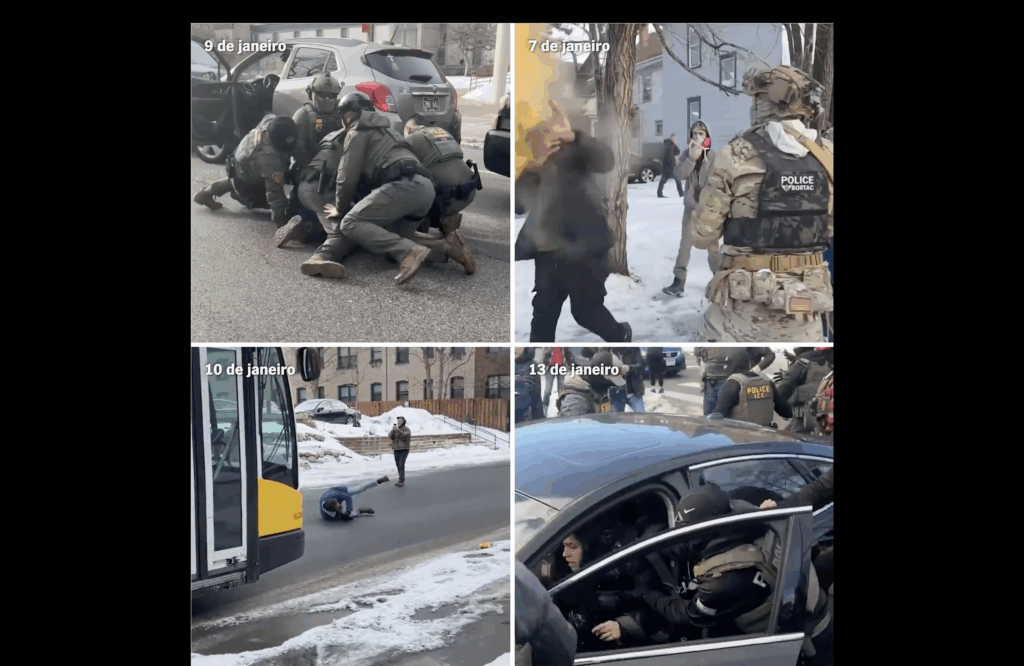
Videos recorded by residents and independent journalists in Minnesota have revealed, in recent weeks, a series of aggressive operations conducted by agents from the United States Immigration and Customs Enforcement (ICE). The images show agents breaking vehicle windows, dragging people out of their homes, knocking suspects to the ground and using pepper spray directly in the faces of protesters and detainees. The massive circulation of these records on social media increased public outrage and intensified the climate of fear in the state.
The actions are part of the Donald Trump administration’s immigration offensive, which sent thousands of federal agents to Minnesota under the argument of combating serious crimes and threats to public safety. Federal authorities maintain that tough tactics are necessary in the face of protests and alleged violent resistance. However, the analysis of dozens of videos carried out by The New York Times indicates a pattern of excessive use of force, including against people who did not pose an immediate risk or were not even direct targets of the operations.
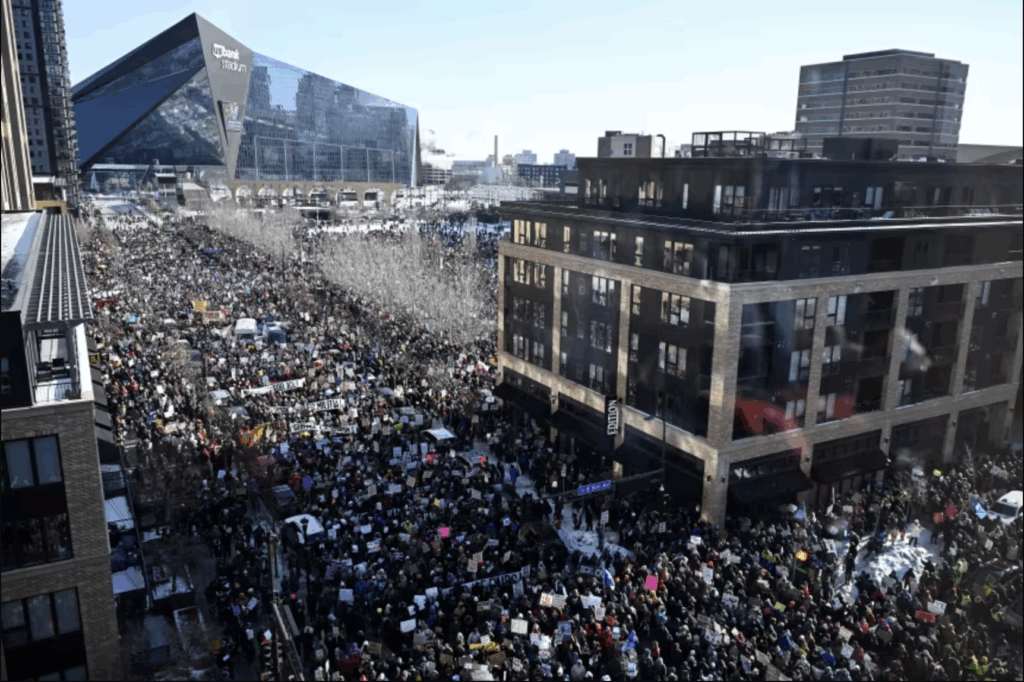
The episodes occur amid an unprecedented wave of popular mobilization in Minneapolis. On Friday (23), residents braved subzero temperatures to occupy entire blocks of the city, the international airport and even the NBA’s Minnesota Timberwolves arena, demanding the removal of ICE from their neighborhoods. There was also an “economic blackout”, with companies closing their doors in protest against the presence of federal agents.
Despite popular pressure, the general commander of the Border Patrol, Gregory Bovino, reaffirmed that the detentions will not cease. At a press conference, he promised to remove the so-called “criminal foreigners” “en masse” from the streets. The statement reinforced the federal government’s confrontational tone, even in the face of reports of arrests involving legal residents, American citizens and even preschool children.
The detention of a 5-year-old boy with his father, later sent to a family detention center in Texas, increased outrage. The case adds to other episodes that place children at the center of the mass deportation policy. For school districts and civic organizations, the psychological and social impact of these actions already constitutes a local humanitarian crisis.
Warrantless arrests and breach of protocols
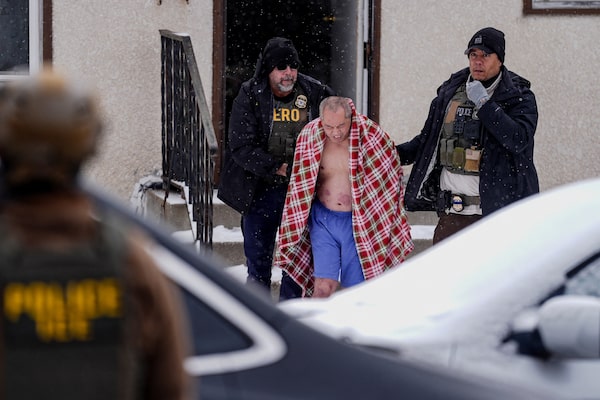
One of the most sensitive points revealed by the images and leaked documents is the entry of agents into homes without a court order. The case of ChongLy Scott Thao, a naturalized American citizen, dragged from his home in St. Paul without being presented with a warrant, has become emblematic. The elderly man was dragged through the snow dressed only in a sheet.
An internal ICE memo, obtained by whistleblowers, indicates that agents began to rely on administrative warrants — issued outside the federal judicial system — to justify this type of action. Experts say the practice represents a significant departure from decades of the agency’s own protocols.
Racial Profiling and Civil Violations
The videos also show agents interrogating people based on their accent, appearance or presumed origin. Ramon Menera, an American citizen, was questioned by agents who said they were asking for his documents “because of his accent”. Although he was released after presenting identification, the episode reignited the debate about racial profiling. In July, a federal judge banned this type of approach in Los Angeles, but the decision was later suspended by the Supreme Court, leaving room for these practices to resume.
Cases of already immobilized people being attacked — including blows to the face with a knee and pressure on the neck — provoked a reaction from jurists and experts on the use of force. For law and criminology academics, attacks on the head and the use of chemical agents at close range constitute potentially lethal force, admissible only in the face of an imminent threat, which is not evident in the available recordings.
As ICE arrests increased, the Trump administration attempted to cut the body camera program. The series of violent incidents has intensified calls for more body cameras. However, the Department of Homeland Security (DHS) proposed reducing spending on this device in its initial budget proposal.
Confrontation with protesters and repression of the protest
Since the murder of Renee Good by a federal agent on January 7, demonstrations against ICE have multiplied in and around Minneapolis. The videos show officers pushing, knocking down and arresting protesters, as well as using pepper spray without warning. Although the government classifies the protests as acts of “terrorism” and vandalism, legal experts remember that the First Amendment guarantees the right to protest, film and verbally confront state agents.
Another recurring element in the images is the anonymity of the agents, who operate with unmarked vehicles, balaclavas and sunglasses, without visible identification. The Department of Homeland Security says the practice protects agents from retaliation. Critics, however, argue that the absence of identification weakens accountability and can encourage abuse by making it difficult to hold individuals accountable.
Institutional reaction and fissures in the State
The crisis went beyond the streets and reached the interior of institutions. An FBI agent who tried to investigate the ICE officer responsible for Renee Good’s death has resigned after coming under pressure to stop the investigation. At the same time, the Department of Justice opened investigations against Democratic officials in Minnesota and brought charges against protesters, expanding the perception of political use of the federal apparatus.
The episodes in Minnesota were consolidated as an extreme portrait of the Trump administration’s immigration policy: militarized operations, expansion of administrative powers, repression of protests and growing tension between the federal government, local authorities and civil society. More than a regional controversy, the case exposes a central dispute over limits on state power, civil rights and the future of immigration in the United States.
The set of actions turned Minnesota into a laboratory for the Trump administration’s toughest immigration policy. The open confrontation with state and municipal authorities, the expansion of operations to other states, such as Maine, and the use of belligerent rhetoric indicate that repression is likely to intensify.
Source: vermelho.org.br