Published 03/17/2026 10:18 | Edited 03/17/2026 10:35
There is something that the blockade never managed to block: the memory of what Cuba did for the world. Doctors in the furthest reaches of Africa. Teachers in each village that the school could not reach. Internationalist fighters in Angola when the continent was bleeding under apartheid and colonialism. Ophthalmologists restoring sight to millions of Latin Americans who could never afford this dignity. No blocking erases this record — because it is not stored in libraries. It is inscribed in the material conditions of entire populations that Cuba transformed without asking for authorization or waiting for permission from any power.
I write this not as a prayer, but as a given. I am a doctor trained at the Latin American School of Medicine in Havana — an institution that only exists because Cuba decided that health was a human right before any multilateral body included that phrase in its documents. I studied on an island that, under lockdown, taught medicine to children of poor workers from more than 120 countries who would never have made it to a conventional university. This is the extent of what is discussed when discussing Cuba.
The collapse is real. Responsibility too.
Cuba did not reach the limit, the limit was imposed. Criminally. It is not necessary to be romantic to recognize it, nor is it necessary to betray solidarity to see reality. Twenty-hour blackouts. Surgeries suspended. Bakeries operating with firewood. Planes without fuel. Three months without receiving a shipment of oil. An energy crisis so deep that the country that survived the Special Period now faces something that many analysts describe as worse.
But this comparison requires precision. Today’s Cuban society is not that of the late 80s and early 90s. Decades of blockade, precarious subsistence, and accumulated material impoverishment leave marks that go far beyond the economic. More than 80% of the Cuban population was born and raised under the blockade — not as a sign of resistance, but as a warning: no one should be surprised that the harsh material conditions of a lifetime end up having an impact on the spiritual, the ideological, the political. The society facing this crisis is more fragile, more skeptical and more exhausted than the one that went through the Special Period.
And there is a second element that cannot be omitted: the lack of Fidel — a charismatic leader. He could talk for hours and keep the attention of those who disagreed with him – they said he ended up convincing through exhaustion, that if he didn’t persuade at least he made them doubt. Leaders with these characteristics, so necessary in times of deep crisis, are not produced in everyday life. They are not decreed or inherited.
The criminal responsibility lies with the blockade. More than six decades of deliberate economic suffocation — a crime against an entire people, systematically condemned by the UN General Assembly for more than thirty consecutive years and ignored with the cynicism of those who know that power does not need legitimacy to impose itself. The blockade is not foreign policy. It is collective punishment applied to eleven million people for not accepting the tutelage of Yankee capital. Banning medicines, blocking spare parts for hospitals, preventing other countries from selling fuel to an island — this has a name in international law: a crime against humanity.
But it is also necessary to say what needs to be said: the cowardly silence of allies and friends deepened the collapse. It seems that after Gaza the world cowered. Declarative solidarity, which exists in speech but does not translate into action in moments of maximum pressure, is a sophisticated form of abandonment.
I don’t point fingers without measuring my own. The internationalism I defend demands honesty, including about the limitations of the global left in the face of crises that matter. Cuba cannot just be a banner for a party congress. There needs to be a concrete commitment from governments when the crisis hits. Thirty grams of action is worth more than a ton of intentions.
Between continuity and transition, Cuba will continue to be Cuba.
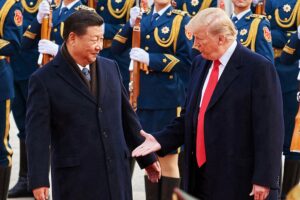
Negotiations are ongoing. Multiple channels, actors who do not appear in official statements, possible mediation by the Vatican, contacts reported in Mexico and the Caribbean. Havana negotiates under maximum pressure. The third generation of the revolution takes a stand. The dynamics are real, complex, and still have no visible outcome.
I don’t know what will happen. Historical materialism didn’t give me a crystal ball, and I’m suspicious of anyone who claims it does. What I know is that between continuity and transition, between reform and rupture, between “Cubastroika” and resistance, there is a variable that no negotiation in St. Kitts or the CIA can buy or sell: what the Cuban people built, what they lived, what they taught the world about collective organization and class consciousness.
This legacy does not belong to any government. It belongs to the working classes that produced it and those that benefited from it. And that is why solidarity is not conditional on the outcome of the negotiations. Solidarity with the Cuban people is not a bet on who will govern the island tomorrow. It is the objective recognition of what these people did with the resources they had, under the conditions they imposed on them, and with the political consciousness they built under permanent blockade.
Cuba’s destiny belongs to Cuba.
There is a trap that the international left often falls into: turning solidarity into tutelage. Loving Cuba in a way that, deep down, removes the island’s right to decide its own destiny. Defend the past as if it were a golden prison that the Cuban people must inhabit forever in the name of our convictions.
No. Cuba, with its challenges, must choose its destiny. Your contradictions and limits are yours. It is up to them alone to decide how to get through this historic moment. Sovereignty is not a principle that is defended only when the result pleases us. We defend Cuban sovereignty because we believe that no people should have their future hijacked by external powers — and this applies both to the Yankee imperialism that imposed the blockade and to any solidarity that arrives with an embedded agenda.
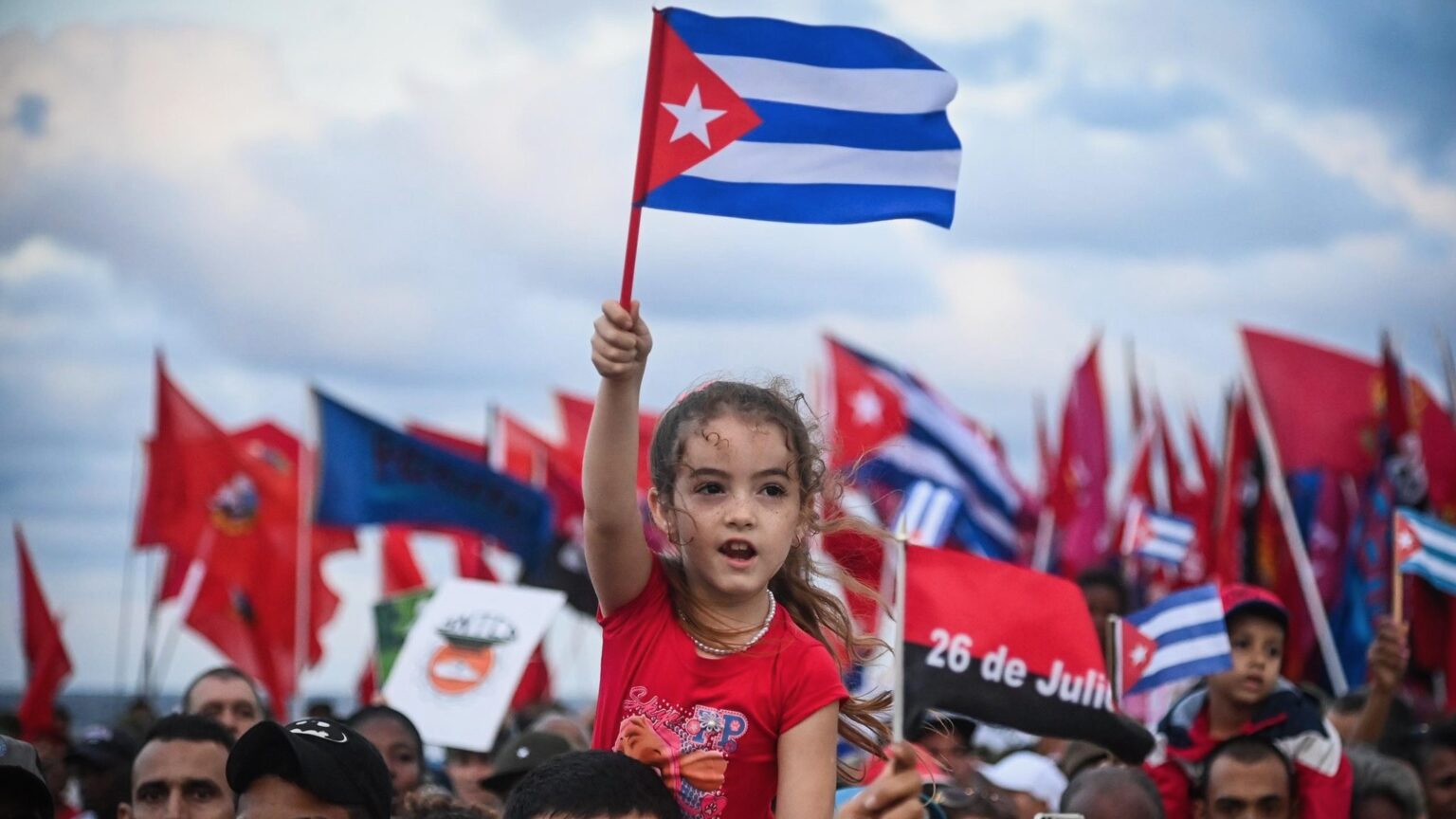
What will happen to our solidarity? Will follow. Internationalist, proletarian, human, Latin, Fidelist and Martian. Not as nostalgia, but as a project. Not as a tribute to those who have already left, but as a commitment to those who are still building, exhausted, under the blackout, even when their friends are silent.
The most consequential internationalist project that the periphery of capitalism has ever produced deserves, at least, that the solidarity it receives matches what it built. Cuba will go through this moment — because the people who build collective consciousness do not dissolve. What is required of us is not sentimental loyalty, but class position: clear, consistent, without agenda and without abandonment.
Source: vermelho.org.br