Published 15/08/2025 13:21 | Edited 15/08/2025 13:47
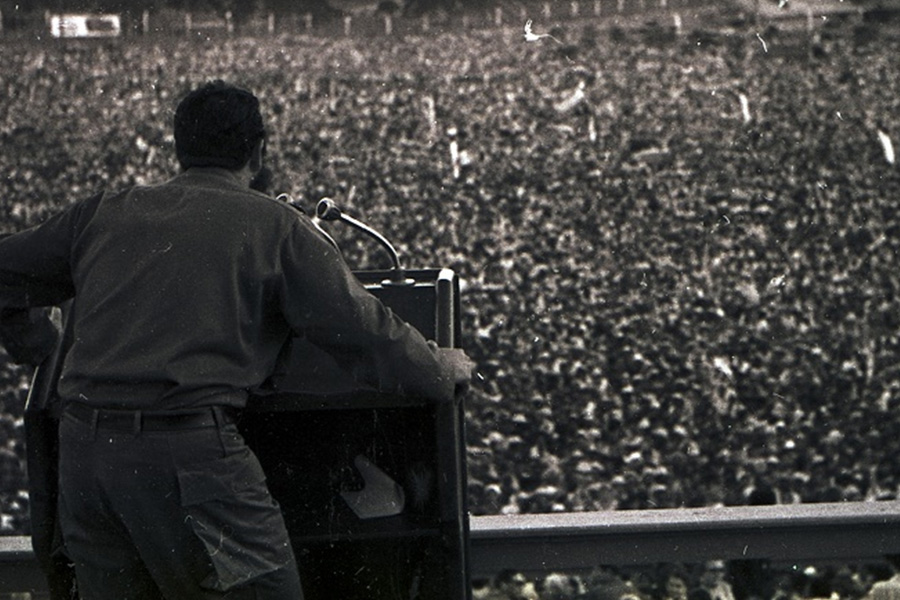
The Government of Cuba began, on Wednesday (13), to the official program of the centenary of Fidel Castro, which will extend until December 2026. The opening occurred with two central acts: one in Birán, homeland of the leader of the Revolution, and another in the cemetery of Santa Ifigenia, in Santiago de Cuba, where their remains are stored.
The ceremonies brought together historical leaders, militants, young people and representatives of international solidarity movements, marking the beginning of an agenda that also foresees workshops, cultural and sports events, as well as popular mobilizations across the country. The initiatives are coordinated by the Communist Party, the Fidel Castro Ruz Center and the Union of Young Communists (UJC).
Where Fidel was born, the ceremony was presided by former President Raúl Castro, defined in the speeches as “the most faithful of all the Cubans” and “brother of blood and ideas” of the commander.
Beside his side were President Miguel Díaz-Canel, members of the Political Bureau, UJC leaders, representatives of the Revolutionary Armed Forces (Far), the Ministry of Interior (Minint) and Youth Delegations of Santiago de Cuba, Guantanamo and Holguín.
The cultural program included the presentation of the La Colmenita children’s company, inspired by the book All the time of cedarsby Katiuska Blanco, who recounts episodes of Fidel’s childhood, the relationship with his parents and the route that turned him into a symbol of resistance.
In the end, the audience sang “Yo Soy Fidel!”, Followed by thanks from Raúl and Díaz-Canel to children “for such a revolutionary spectacle, so beautiful and so friendly.”
In the central discourse, the secretary of organization of the Central Committee, Roberto Morales Ojeda, said that the centenary program is “a celebration of respect and commitment” and that honoring Fidel means “doing good things, banishing apathy, facing their own errors, and staying with the people and the humble for whom this revolution was made.”
Tribute in Santa Ifigenia connects past and present
In the morning, Díaz-Canel was at the Santiago de Cuba Cemetery, where he placed flowers in the tomb of Fidel and also paid tribute to José Martí, Carlos Manuel de Céspedes and Mariana Grajales.
In a statement to the press, he said that “Fidel is eternal” not by his own choice, but for incorporating the independentist, anticolonial, anti-imperialist, and Marxist ideas that preceded him.
The president argued that the challenge is to “bring Fidel to the present moment”, seeking in his legacy answers to contemporary problems. He recalled that the revolutionary leader “never surrendered”, had “conviction of optimism” and turned setbacks – such as the military’s military failure – into political victories. Given the current scenario of economic crisis and intensified blockade, he said: “There are no setbacks. There will be victory.”
Cultural activities and popular mobilization
The centenary calendar includes August 2025 to December 2026 activities. The Fidel Castro Ruz Center will promote free workshops for children and adolescents in areas such as museology, fine arts, photography, chess and sign language, as well as audiovisual projections, international photographic exhibitions and monthly performances on the 13th.
Part of the program will be carried out in neighborhoods, hospitals, productive centers and penitentiary, with virtual transmission to expand range.
On the eve of the birthday, the UJC and the National Institute of Sports, Physical Education and Recreation (Inder) organized a giant camp in the Havana sports city, bringing together more than 10,000 people for musical performances, sports activities and cultural fairs.
Source: vermelho.org.br