Published 01/13/2026 12:43 | Edited 01/13/2026 18:20
China condemned the new tariff offensive announced by United States President Donald Trump against countries that maintain trade relations with Iran and reaffirmed the defense of Iranian sovereignty, amid the risk of reopening the trade war between Beijing and Washington.
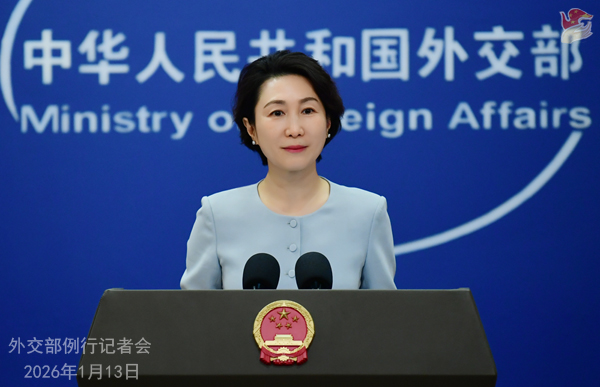
At a press conference this Monday (12), spokesperson Mao Ning stated that China “always opposes interference in the internal affairs of other countries” and defended that “the sovereignty and security of all States are fully protected by international law”.
According to her, Beijing rejects the use or threat of the use of force as an instrument of political and economic pressure, and called on all parties to act in a way that preserves stability in the Middle East.
The Chinese spokesperson’s statement is a reaction to the new round of trade threats announced by Trump, who declared his intention to impose a 25% tariff on countries that maintain economic relations with Iran.
The official reaction was reinforced by the Chinese embassy in Washington. In a statement, spokesman Liu Pengyu stated that Beijing “firmly opposes any unlawful unilateral sanctions and far-reaching extraterritorial jurisdiction” and declared that the Chinese government will take “all necessary measures to safeguard its legitimate rights and interests”.
The announcement, made through the US president’s social media, was interpreted by Beijing as part of an escalation of political and economic pressure that combines sanctions, commercial intimidation and rhetoric of force amid internal Iranian instability.
Beijing is now Iran’s main trading partner and its biggest oil buyer, a relationship that helps explain the Chinese government’s immediate reaction to the new tariff threats announced by Donald Trump. Even under sanctions imposed by Washington, trade between the two countries remains active and has strategic importance for both.
Official data from the Chinese government indicate that, in the first 11 months of 2025 alone, bilateral exchange totaled around US$9 billion, including US$6.2 billion in exports from China to Iran and US$2.85 billion in Iranian imports through Beijing — without fully accounting for oil purchases, often made through intermediaries.
International analysts estimate that more than 90% of the oil exported by Iran is destined for the Chinese market, which makes the energy relationship one of the main pillars of the Iranian economy and a relevant factor for China’s energy security.
In addition to energy trade, Iran occupies a strategic position in the Belt and Road Initiative, the New Silk Road, functioning as a logistical corridor between Asia, the Middle East and Europe — a central element of Chinese economic projection in the region.
Beijing is now Iran’s main trading partner and the main destination for its oil exports, even after years of sanctions imposed by the United States. According to official data from China’s General Administration of Customs, bilateral trade between the two countries totaled around US$9 billion in the first 11 months of 2025, keeping China as Tehran’s largest external economic link.
During the period, China exported approximately US$6.2 billion in goods to Iran and imported US$2.85 billion in Iranian products.
The official figures, however, do not include all purchases of Iranian oil by China, much of which is carried out through intermediaries and independent refineries to circumvent US sanctions.
Estimates by international analysts indicate that more than 80% to 90% of the oil exported by Iran has its final destination in China, which makes the Chinese market the country’s main source of currency amid the Western economic siege.
Although large Chinese state-owned companies have reduced direct operations since 2022 to avoid secondary sanctions, private refineries continue to absorb significant volumes of Iranian oil.
In addition to energy, Iran occupies a strategic position in Chinese Eurasian integration plans.
The country is one of the main land and logistics corridors of the Belt and Road Initiative, the New Silk Road, connecting China to the Middle East, the Caucasus and Europe. The eventual interruption of this relationship would have a direct impact not only on the Iranian economy, but on the logistical and energy architecture that supports Chinese projection in the region.
Source: vermelho.org.br