Published 01/16/2026 15:43
In 2025, Brazil and the United States deepened a clear strategic divergence in the way they relate to the international system. While the Brazilian government allocated around R$2.2 billion to pay mandatory contributions to multilateral organizations — ensuring full compliance —, President Donald Trump’s administration announced the withdrawal of the US from dozens of international agencies and forums, especially those linked to the UN.
At a time of increasing geopolitical fragmentation, Brazil and the United States charted diametrically opposite paths on the international scene. While Brasília discharged its obligations in 2025 to fully honor its commitment to multilateral organizations — including the UN, WHO, ILO, UNFCCC and development banks — Washington announced the withdrawal of 66 international entities, including central UN agencies linked to climate, human rights, migration and gender equality.
President Donald Trump’s decision, justified by the White House as a measure to protect “national interests”, represents the consolidation of a unilateralist vision that had already manifested itself in his first term — with the departures of the WHO, UNESCO and the Human Rights Council. Now, however, the scope is even broader: even technical bodies such as the Intergovernmental Panel on Climate Change (IPCC) and the United Nations Framework Convention on Climate Change (UNFCCC), frequent targets of the Republican administration’s anti-woke rhetoric, have been cut.
The contrast reveals more than budgetary choices: it expresses antagonistic views on multilateralism, sovereignty and the role of the national state in global governance.
Brazil: compliance as a diplomatic strategy
As announced this Thursday (15) by the Ministry of Planning and Budget, payments made in 2025 ensured Brazil’s full participation in global, regional and sectoral forums considered strategic.
For the Brazilian government, keeping up with international contributions is not just a matter of fiscal responsibility — it is a pillar of its foreign policy. By paying off all commitments to the UN, including peacekeeping missions and international criminal courts, Brazil joined a restricted group of fully compliant countries, alongside nations such as Germany, Norway and Canada.
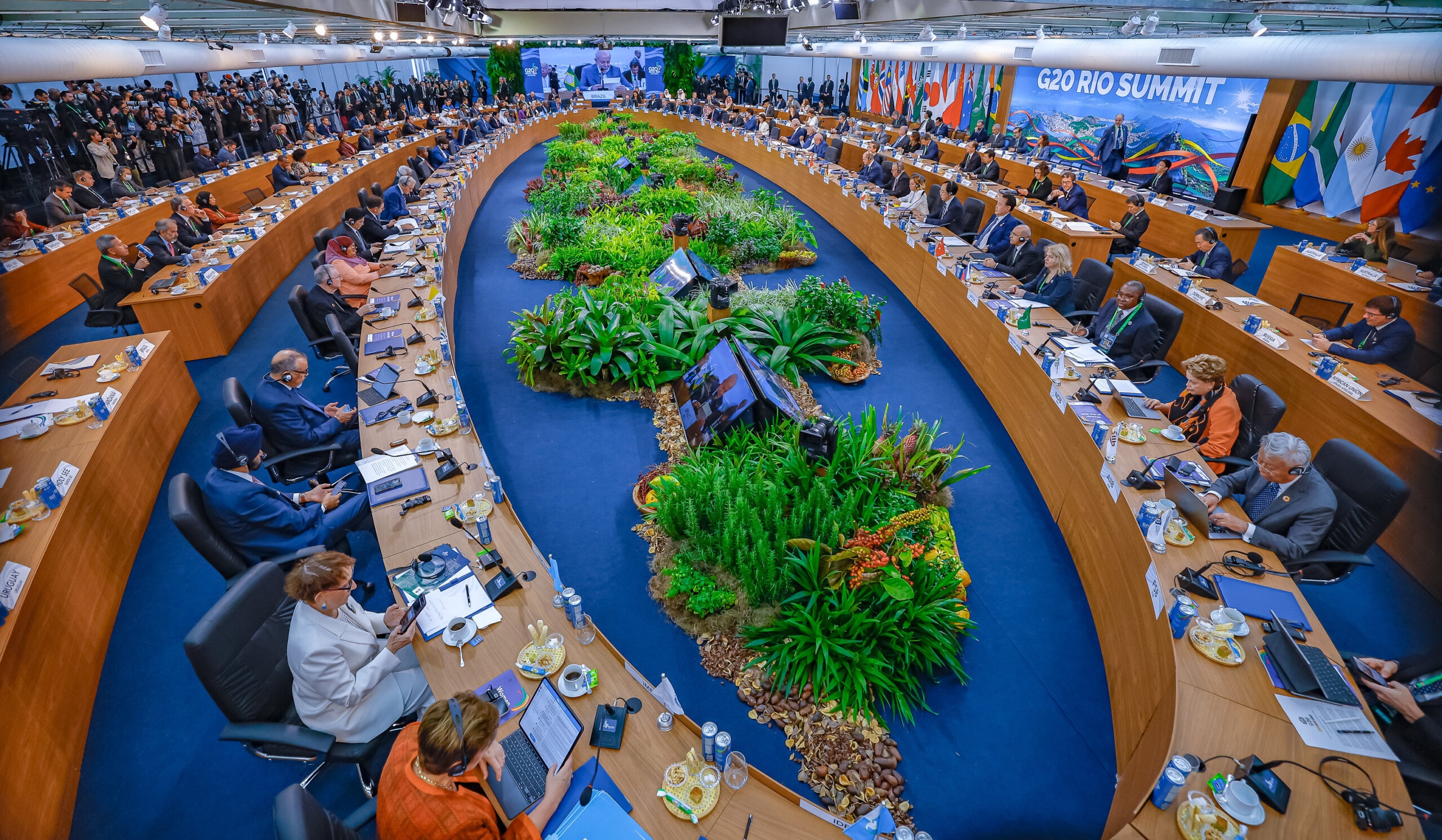
In addition to the UN system, Brazil regularized contributions in sensitive areas such as climate, human rights, labor, migration and regional integration. Discharge from the UNFCCC and environmental protocols gained additional importance in the year in which the country hosted COP30, reinforcing the narrative of climate leadership and commitment to sustainable development.
The government also highlights financial management as a central element of the strategy: staggered payments, exchange rate monitoring and budget predictability allowed the Treasury to reduce costs and preserve fiscal responsibility.
USA: “my way or nothing”
In the United States, Trump’s approach has turned multilateralism into an ideological battlefield. According to analysts, the list of abandoned bodies reflects a clear political agenda: to dismantle structures that promote diversity, climate justice, women’s rights and consensus-based global governance.
The Trump administration formalized the United States’ withdrawal from 35 organizations outside the UN and 31 entities directly linked to the United Nations system. The central argument, according to the White House, is that these bodies “operate contrary to US national interests”.
Analysts note that this is not complete isolation, but selective cooperation. The US maintains support only for operations that it considers to be aligned with its immediate strategic interests.
“What we are seeing is the crystallization of a worldview where cooperation only exists if it is subordinated to American hegemony,” says Daniel Forti, of the International Crisis Group. “It’s ‘either my way or nothing’.”
The US exit has a real impact: without the main historical funder, many agencies face drastic cuts. Funding cuts forced staff reductions, closure of programs and suspension of projects carried out in partnership with international NGOs, especially after the dismantling of USAID (humanitarian aid). USAID’s operations were reduced to rubble, leading to the closure of health, education and food security projects in dozens of poor countries.
In the field of global health, the history of the US withdrawal from the WHO during the Covid-19 pandemic — in Trump’s first term — remains a negative reference, frequently cited by diplomats as an example of the risks of fragmentation of international cooperation in times of crisis. It is worth remembering the constant non-compliance of the Bolsonaro Government, Trump’s ally between 2019 and 2022, with international organizations, as well as its criticism of the WTO during the pandemic.
Multilateralism as a political asset
For Brazil, compliance is not just symbolic. It guarantees voting rights, influence on strategic decisions, access to financing and technical cooperation, in addition to reinforcing the country’s image as a reliable actor. In multilateral banks and development funds, financial regularity ensures the country’s active position as shareholder and beneficiary.
While Brazil reaffirms its commitment to the Kyoto Convention, the Montreal Protocol and the protection of the Amazon via ACTO, the USA abandons even technical environmental monitoring mechanisms. While Brasília supports UN Women and the ILO, Washington classifies such entities as “ideological” and “anti-Western”.
In this context, Brazil not only preserves its diplomatic space — it expands it. Unlike the USA, which is increasingly isolating itself, the South American country positions itself as a bridge between the Global South, Europe and regional blocs, especially on issues such as food security, clean energy and human rights.
In the USA, the retraction posture reflects a conception of sovereignty based on distrust of multilateral institutions and the primacy of national power. This logic breaks with a historical American tradition — shared by Democratic and Republican governments — of leadership within the UN system, even when critical of it.
Who pays, decides — and stays
The comparison between Brazil and the United States in 2025 exposes two distinct projects of international insertion. On the one hand, Brazilian diplomacy is committed to cooperation, institutional predictability and the gradual reform of the multilateral order from within. On the other, Washington favors unilateral pressure and conditional adherence, accepting the cost of weakening global structures to preserve internal political autonomy.
The lesson of 2025 is clear: in an unstable world, compliance is power. By honoring its commitments, Brazil maintains an active voice in decisions that will shape the 21st century — from climate finance to the regulation of digital commerce. The United States, by refusing to participate in the same rules it imposes on others, runs the risk of becoming spectators in a game it helped create.
While Trump celebrates “absolute sovereignty”, Brazil demonstrates that true sovereignty is exercised with responsibility, partnership and constant presence — not with closed doors, but with outstretched hands.
Source: vermelho.org.br