Published 13/08/2025 13:51 | Edited 13/08/2025 18:29
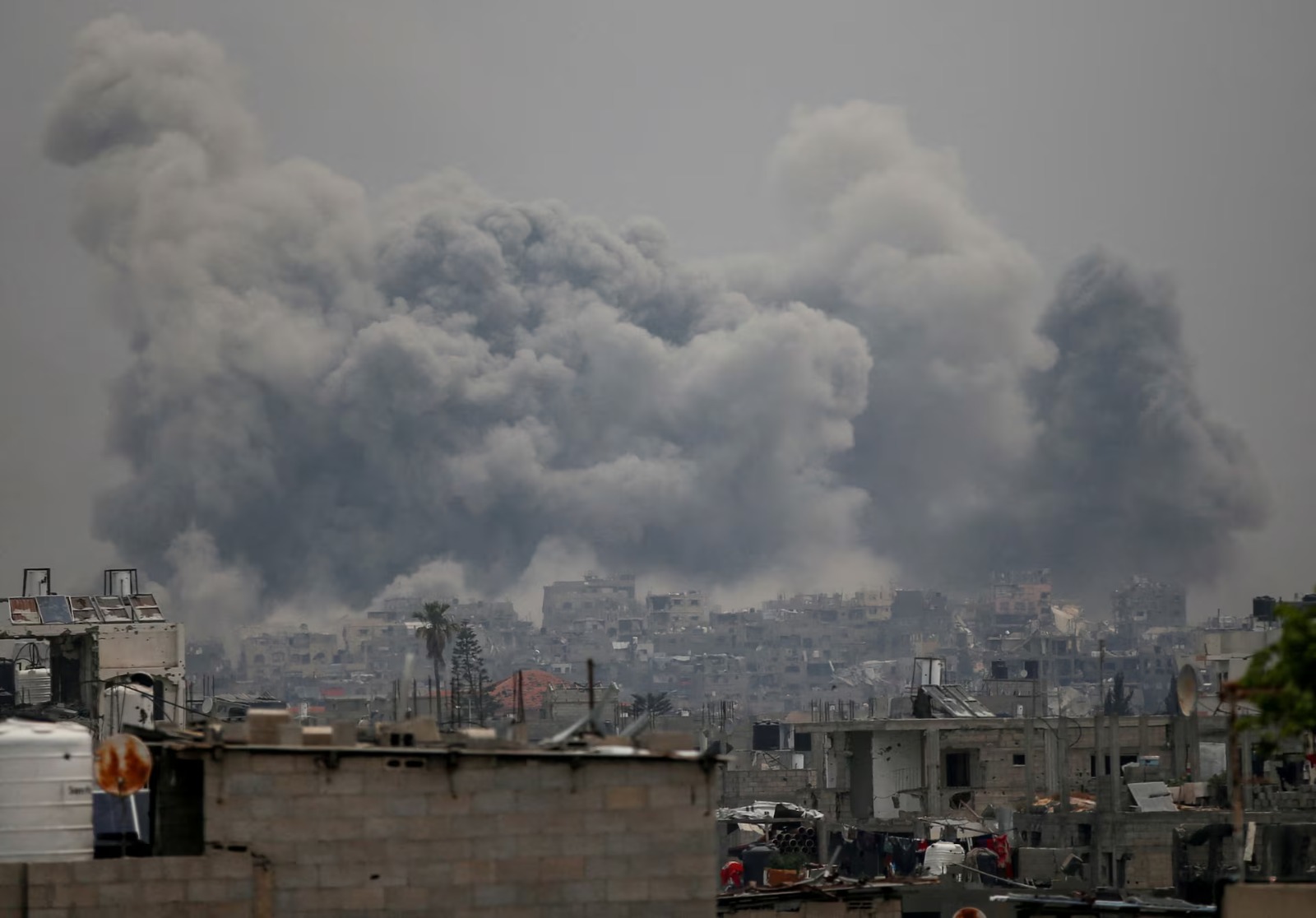
Israel intensified on Wednesday (13) attacks against the city of Gaza, killing at least 123 people in 24 hours, according to the Ministry of Health of the Territory. The area concentrates the largest refugee camps in the enclave and, according to Israeli intelligence, can host hostages.
The offensive marks the first phase of Prime Minister Benjamin Netanyahu’s plan to occupy the entire Gaza Strip, approved by the Security Office last Friday (8).
The bombings hit densely populated neighborhoods such as Zeitoun and Shejaia, destroying homes and killing civilians waiting for humanitarian aid. Al-Ahli Hospital reported 12 deaths in an air strike against a house in ZeiToun.
In the south, Israeli tanks destroyed housing in eastern Khan Younis, and in the center, shots fired by military killed nine people looking for food. The Ministry of Health also reported that eight people, including three children, died from hunger and malnutrition on the last day, raising to 235 the number of deaths from these causes from the beginning of the war.
The government approved by the Government provides five axes: Hamas Disarmament, Return of all hostages, Gaza Demilitarization, Maintenance of Security Control by Israel and the creation of an “alternative civil administration” – which does not include neither hamas nor Palestinian authority.
Netanyahu states that the operation is limited and denies that it is an occupation, but in statements to the press admitted that Israel “intends” to take control of Gaza before transferring it to an Arab forces administration.
The speeches of the prime minister vary according to the public. In English, for the international press, he says that Israel does not want to occupy Gaza and that the civil administration will be delivered to a non -Israeli force.
In Hebrew, omits this negative and hardens the tone, without ensuring that management will be in charge of third parties. For critics, the difference indicates an attempt to minimize international perception that it is a prolonged occupation.
The proposal of “temporary control” repeats a pattern observed in other areas under Israeli military domain, where the separation between security and civil administration proved to be nonexistent.
In the West Bank, under Palestinian “civil control” in part of the territory, Israel maintains power over water and energy supply, displacement authorizations and checkpoints, directly affecting everyday life.
Government faces impasse to expand calling reservists
The offensive about the city of Gaza advances in the midst of political difficulties to expand the military contingent. On Tuesday (12), the Netanyahu coalition postponed again, for lack of majority, the vote on the Foreign Affairs Committee and Knesset defense that would allow us to extend the emergency call orders of reservists.
According to the opposition, the government intended to expand the call to about 300,000 to 400,000 soldiers, a number considered necessary to support the resumption and control of the city of Gaza.
“We prevented the increase in the load on the reservists by stopping the proposal,” said oppositionist leader Yair Lapid, accusing Netanyahu of heading a “minority and illegitimate government.”
The government lost the majority in parliament after the departure of the Ultra -Orthodox Judaism party united from Torah and Deputy Avi Maoz last month. Today, it has 60 of the 120 seats, and absences between the allies themselves have made it difficult for strategic votes.
In May, a similar proposal had failed before it was resumed and approved; Now the opposition promises to attend in weight to block the measure again.
Without approval, Israel’s army operates with the current staff, considered insufficient to maintain a prolonged operation of occupation, while the political command insists on moving over the city of Gaza as the first step for the total control of the track.
Source: vermelho.org.br