Published 02/19/2026 12:54 | Edited 02/19/2026 14:16
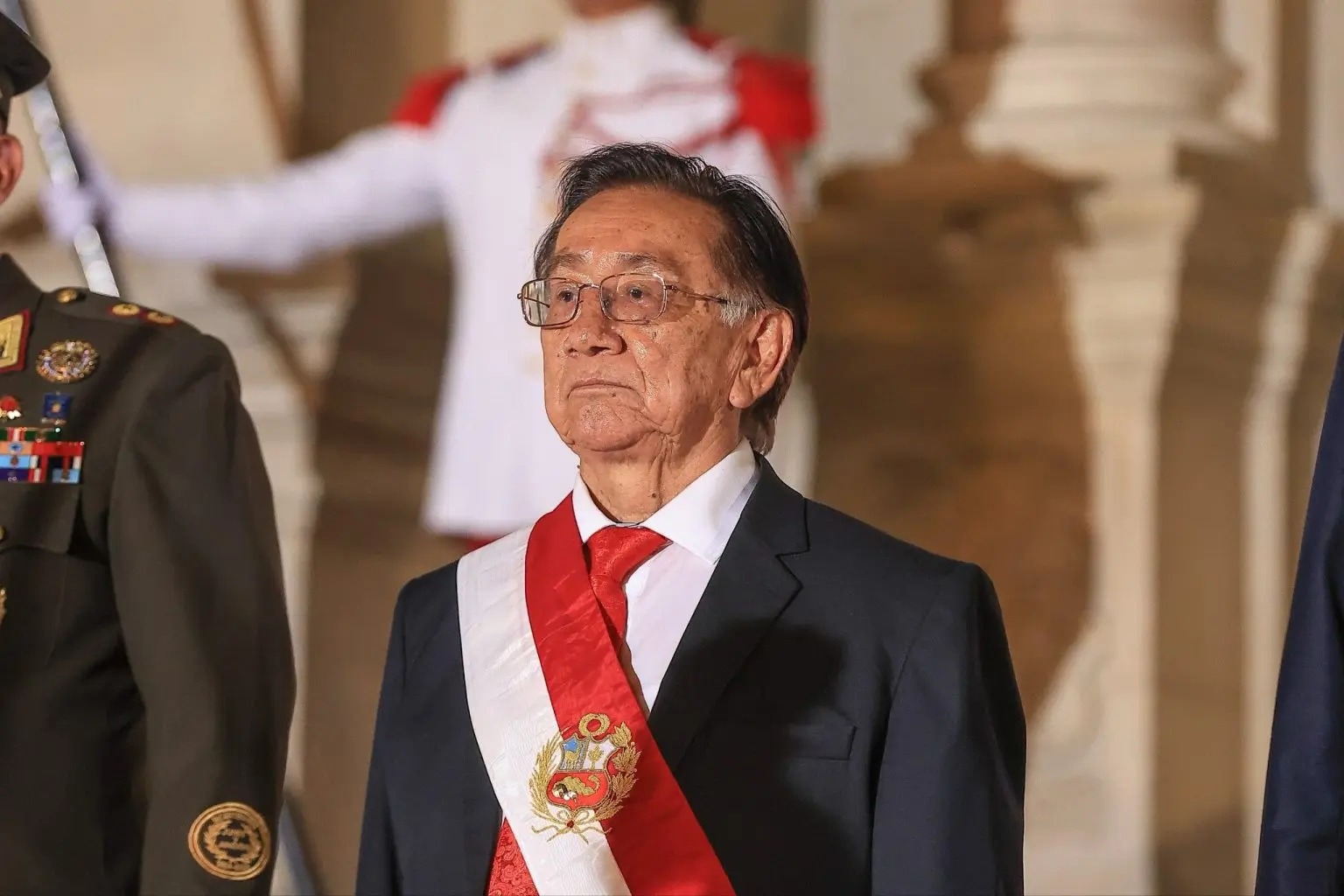
The Congress of Peru swore in this Wednesday (18) deputy José María Balcázar, from the left, as interim president of the country. With the inauguration, Peru has its eighth president since 2016.
Balcázar assumes command of the Executive after being elected president of the Congressional Board of Directors, as provided for in the Peruvian Constitution in cases of presidential vacancy.
The mandate is transitional and extends until July 28, the date set for the inauguration of the president elected in the general elections, the first round of which is scheduled for April 12, with a possible second round in June.
The new head of state was not elected by direct popular vote and will have limited powers, with the main task of leading the country until the conclusion of the electoral process.
Balcázar’s election took place in an internal Parliamentary process that brought together four lists competing for the Board of Directors. In addition to him, María del Carmen Alva, from Ação Popular, competed for the position; Héctor Acuña, from Honor and Democracy; and Edgar Reymundo, from the Popular Democratic Bloc.
In the first round of voting, Balcázar obtained 46 votes, against 43 for Alva, 13 for Acuña and 7 for Reymundo, which took Balcázar and Alva to the second round. Before the final vote, parliamentarians from the Popular Democratic Bloc announced their withdrawal from the dispute, alleging a lack of guarantees of transparency in the process.
In the second round, Balcázar was elected with 64 votes, against 46 for Alva, securing the presidency of Congress and, automatically, the interim Presidency of the Republic.
A left-wing deputy and member of the Perú Libre party, Balcázar has a long history in the Legislature and the Justice system.
Lawyer, he was chief judge of the Superior Court of Justice of Lambayeque and provisional minister of the Supreme Court. At 83 years old, he becomes the oldest president in Peru’s history and takes office at a time of strong erosion of political institutions.
After taking office, Balcázar addressed the country in a speech in which he stated that the interim government will seek to overcome political conflicts and guarantee a peaceful electoral transition.
In his speech, he promised to ensure transparent elections and stated that there will be no changes in the conduct of economic policy during the short period in office, defending the maintenance of stability and the regular functioning of the State.
The interim president also highlighted the need to reinforce public security and preserve institutional order until the next government takes office.
Balcázar takes over after the dismissal of José Jerí, removed from office through a motion of censure amid investigations into suspected influence peddling and other irregularities.
The fall of Jerí is another episode in a sequence of clashes between the Executive and Legislative branches that have marked Peruvian politics in recent years, deepening the country’s institutional fragility.
Since 2016, Peru has experienced a continuous cycle of presidential crises, marked by resignations, impeachments, dismissals and short-lived governments. The accelerated succession of presidents transformed the country into one of the most extreme cases of political instability in Latin America, with direct impacts on governability and trust in institutions.
Until the elected president takes office, Balcázar’s interim government will have the main task of conducting the electoral process and avoiding new institutional upheavals.
Expectations regarding the mandate are limited, given the short term and political restrictions, and the outcome of the Peruvian crisis, at least in the short term, will depend on the holding of regular elections and the ability of the next government to face a deeply frayed political system.
Source: vermelho.org.br