Published 07/01/2026 14:57 | Edited 07/01/2026 15:24
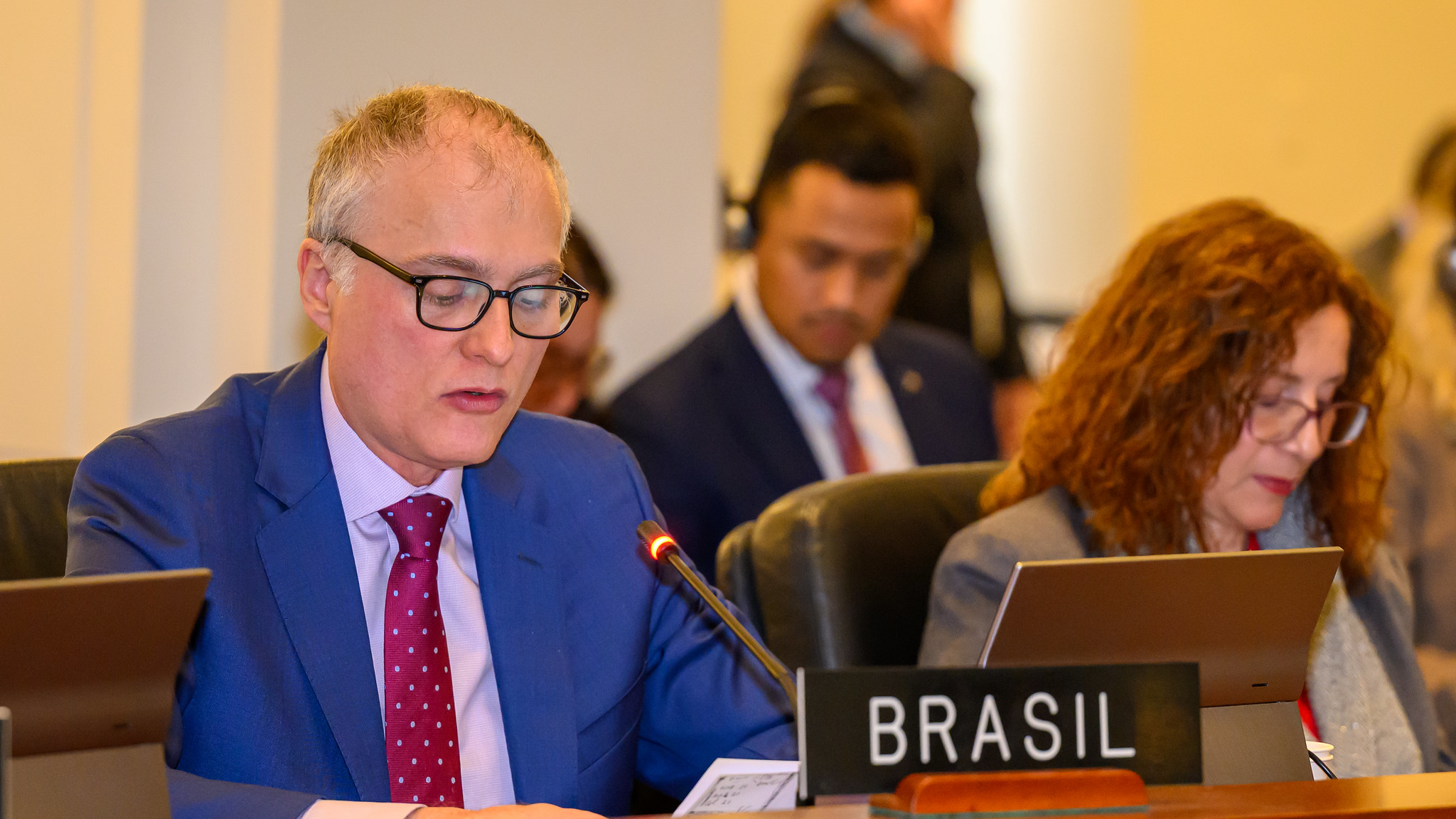
Brazilian diplomacy raised its tone against United States military action in Venezuela during an extraordinary meeting of the Permanent Council of the Organization of American States (OAS), this Tuesday (6). Brazil’s ambassador to the organization, Benoni Belli, stated that the bombings on Venezuelan territory and the forced withdrawal of President Nicolás Maduro and his wife, Cilia Flores, constitute a “very serious affront” to national sovereignty and create a dangerous precedent for the international community.
According to Belli, the moment is “serious” and refers to practices that were believed to be outdated in Latin America and the Caribbean. For the Brazilian representative, accepting military aggression is equivalent to legitimizing the “law of the strongest” to the detriment of multilateralism and international institutions.
“The ends do not justify the means”, says Brazil
At the heart of the Brazilian position is the rejection of the argument that political or legal objectives can legitimize the use of force. Belli stated that this logic lacks legitimacy and leaves room for powers to ignore national sovereignty, imposing decisions on weaker countries. “Sovereignty supported by international law is fundamental for people to exercise their self-determination”, he declared.
The same line was reiterated by Brazil’s ambassador to the United Nations (UN), Sérgio Danese, in an emergency meeting of the Security Council, on Monday (5). Danese warned that relativizing the prohibition on the use of force leads to the erosion of multilateralism and a scenario of violence and disorder.
Kidnapping and contested charges
US military personnel removed Maduro and Cilia Flores from Venezuelan territory in an operation that caused explosions in Caracas and resulted in the deaths of members of the president’s security forces. The US government says Maduro will face charges related to international drug trafficking in New York. The Venezuelan president denied the accusations, declared himself innocent and classified himself as a “prisoner of war”.
read more: Only 33% of Americans support the US attack on Venezuela
For Brazil, the arrest constitutes “kidnapping” and violates the United Nations Charter, which prohibits the use of force against the territorial integrity or political independence of States, except for strictly provided exceptions.
OAS between mediation and the recent past
Belli considered that it is still too early to define the role of the OAS in the crisis, but assessed that the current secretary general, Albert Ramdin, adopts a more balanced tone and is willing to mediate, in contrast to Luis Almagro’s previous administration, marked by sanctions, recognition of a parallel government and open defense of armed intervention.
Ramdin defended the resumption of dialogue in search of peace, democracy and stability, making the OAS technical staff available to support possible electoral processes with transparency — as long as the will of the Venezuelan people is respected.
Isolation of the North American position
During the meeting, the United States representative’s speech was interrupted by a protest in support of Venezuela, highlighting the climate of challenge to the “law enforcement” narrative defended by Washington. At the UN, Russia and China also condemned the US action, reinforcing the isolation of the US position in the multilateral debate.
In line with the note signed by President Luiz Inácio Lula da Silva, Brazil reaffirmed that it will not hesitate in defending non-intervention and peace in South America. For Brazilian diplomacy, giving in to the logic of areas of influence and strength is abdicating national dignity and one’s own collective destiny.
Source: vermelho.org.br