Published 03/29/2026 23:00
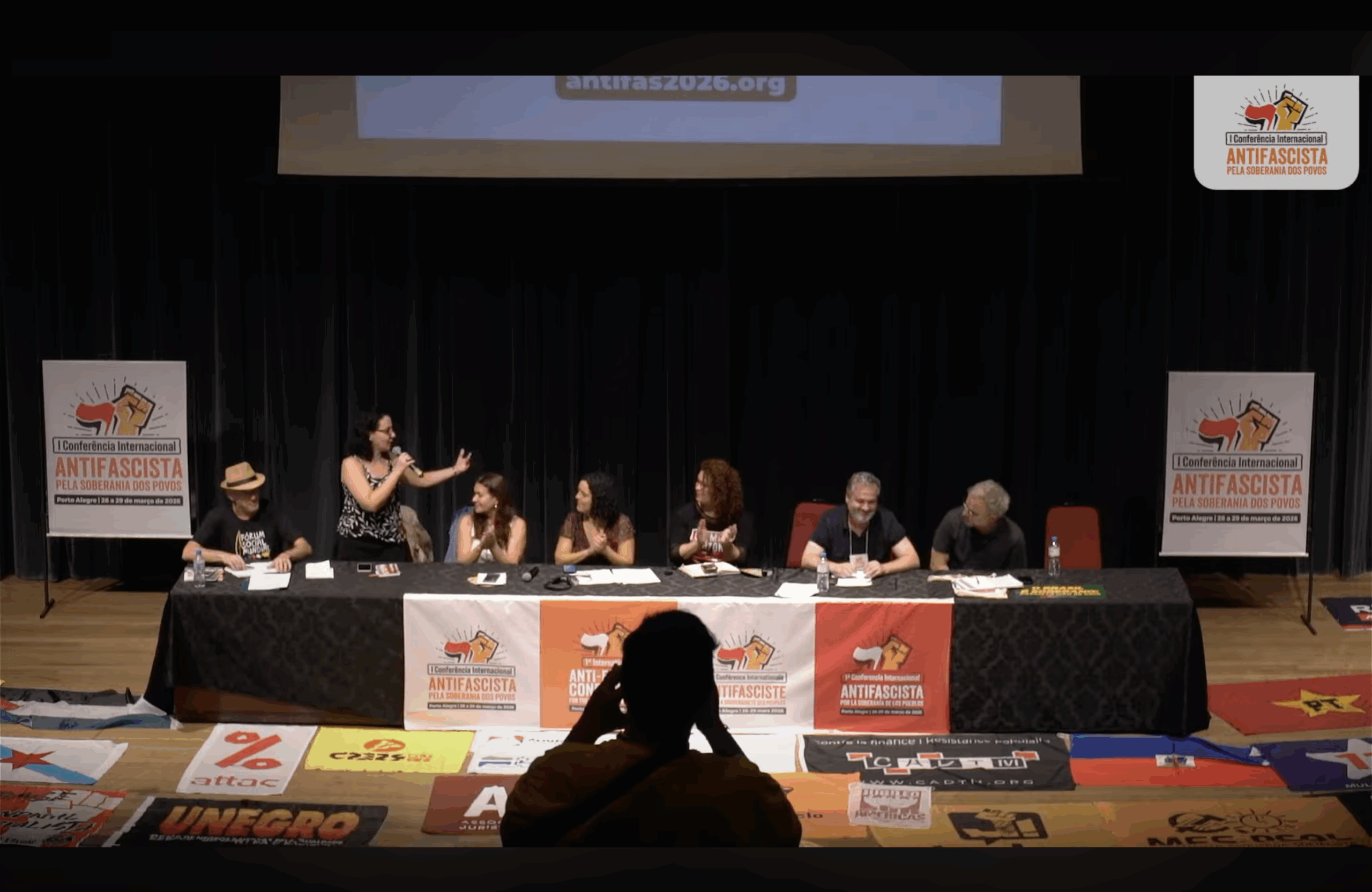
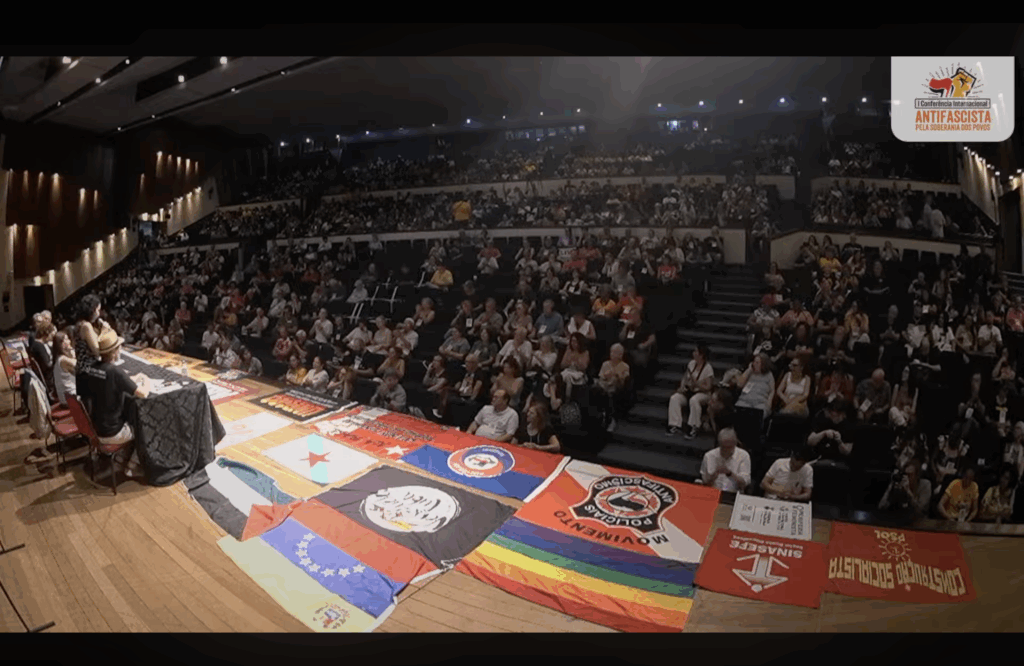
The 11th and final panel of the 1st International Anti-Fascist Conference for the Sovereignty of the People, held this Sunday afternoon (29) at the UFRGS Hall of Events, in Porto Alegre, debated “Resistance, Articulations and Democratic Alternatives”. Mediated by Damian Hazar, from the International Council of the World Social Forum, the panel brought together leaders from four continents to affirm that the anti-fascist struggle requires unity in diversity, protagonism of social movements and radicality in the defense of democracy.
In her intervention, Ana Maria Prestes, Secretary of International Relations at PCdoB, highlighted the historical urgency of the anti-fascist organization. “In the last two years, this is the third anti-fascist conference in which I have participated”, he stated, citing Caracas (2024), Moscow and Porto Alegre (2026).
According to Ana, January 3, 2026 — the date of the kidnapping of President Nicolás Maduro and Congresswoman Cilia Flores — “woke us up to the very cruel, very dramatic, very serious Latin American reality”. For her, Trump’s executive order of January 29 imposed an even greater blockade on Cuba, which is experiencing “the highest limitations, restrictions that a people can suffer.”
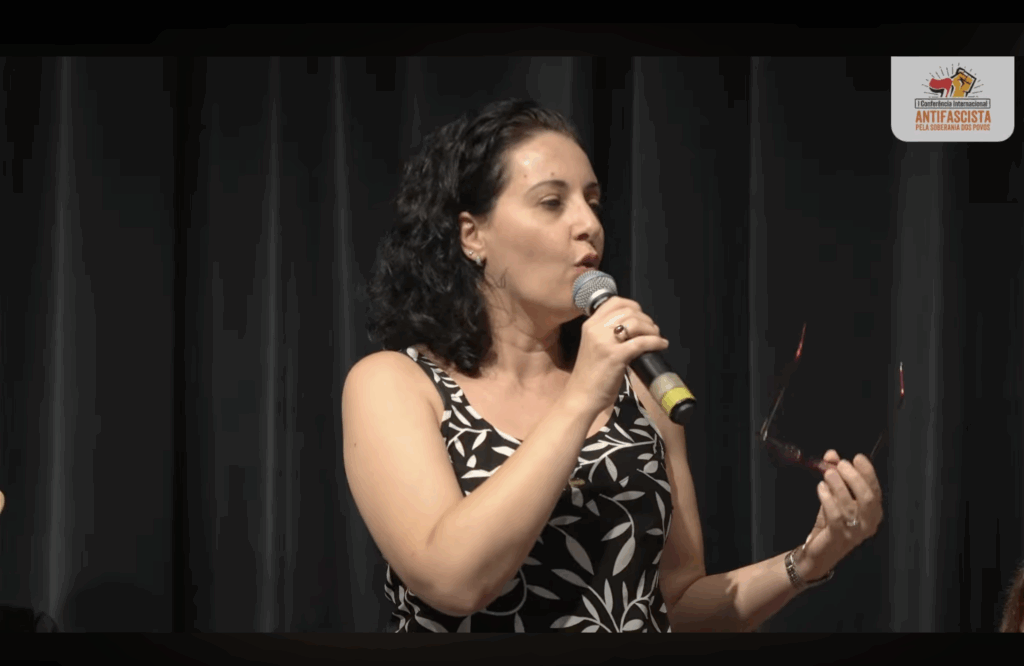
Ana connected the attacks on Iran, on February 28, with the suffering of the Palestinian, Lebanese, Cuban and Venezuelan peoples: “The bombs that fall on Iran, Lebanon, Gaza or Palestine… the siege that is placed on Cuba is a siege that is placed on all of us”.
The leader warned of the imperialist offensive in the region: the agreement with Paraguay that transforms the entire country into a US military base; the control of Panama to remove it from China’s trade route; the remilitarization of the Galápagos in Ecuador. “All of this shows how delicate, dramatic and demanding this moment is for all of us”, he maintained.
Ana also connected the external offensive to the Brazilian electoral scenario: “We are targets in this process and the elections, perhaps the most complex in recent times, are the ones we will face”.
Recounting a recent experience in the “Conboio Nuestra América” caravan to Cuba, with more than 650 people from 30 countries, Ana highlighted that solar panels already cover 50% of the island’s daily energy needs. “Every campaign that we have carried out to save people, at this very dramatic moment for the Cuban people, counts,” he stated, calling for the reactivation of solidarity campaigns and pressure on governments to break the blockade, especially in the sending of fuel.
Liége Rocha: female protagonism and struggle in everyday life
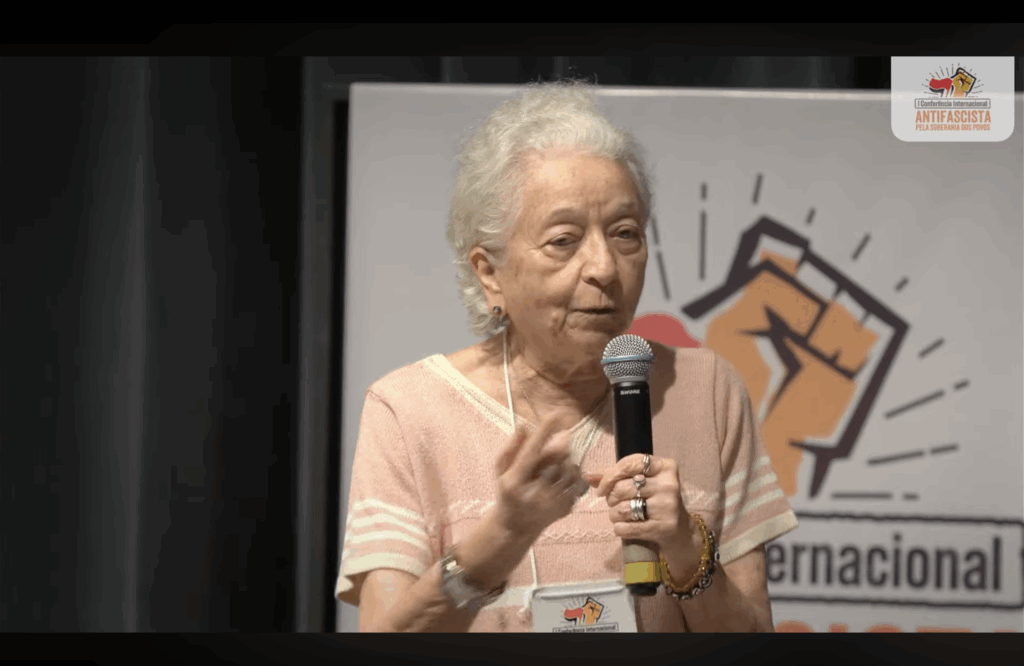
As a debater, Liége Rocha, from the International Council of the World Social Forum and the International Democratic Federation of Women (FDIM), emphasized the historic role of women in resistance. “We, women, fought and won the right to vote. We, women, fought and won a Brazilian constituent that would give us space, that would respect our rights”, she stated.
For Liége, the articulation of social movements must occur not only in international forums, but in everyday life: “The struggle of ideas doesn’t just happen in the gym, it’s in everyday life. It’s at the bus stop, it’s at school, it’s in the workplace, it’s eye to eye.”
Recounting an episode of racism at a bazaar in São Paulo, Liége illustrated the need for constant interaction: “How come my daughter doesn’t want me to interact? I have to interact.”
Citing his participation in the meeting of the FDIM steering committee in Cuba and the anti-fascist conference in Caracas, Liége closed with a reflection on “accumulated youth”, quoting Chávez: “We are not old, we are accumulated youth. That is why we are firm in the fight until now”.
Unity and protagonism in the anti-fascist struggle
Fernanda Gadea (ATTAC Spain) defended progressive supervision, control of capital flows, cancellation of illegitimate debts and ecological transition as a social challenge. “No person is illegal,” he stated, citing the regularization of immigrants in Spain as a possible achievement.
Donka Atanassova (Pacto Histórico, Colombia) described the Colombian reality as the result of a historic cycle of popular mobilizations, highlighting achievements of the Petro government such as land redistribution, better wages and recognition of community workers. “Constant mobilization strengthens the government”, he maintained.
Manon Aubry (LFI France) denounced the rise of the extreme right in Europe and defended parliamentary and extra-parliamentary resistance: delivery of morning-after pills in Poland, participation in pride parades in Hungary, solidarity with flotillas to Palestine. “If the extreme right won in the 1930s in Europe, it was because the left was incapable of proposing an alternative of hope and of uniting with social movements,” he warned.
Roberto Robaina (PSOL Porto Alegre) highlighted the unity effort to hold the conference and thanked the dean of UFRGS for the courage to provide the space. “Unity does not mean hiding differences, but debating essential elements that should unite us. And in this case it is very simple: the documents have already shown what fascism means,” he stated.
Valter Pomar (Fundação Perseu Abramo) reaffirmed that fighting fascism requires fighting neoliberalism and imperialism simultaneously. Quoting Mao Tse-Tung, he stated that imperialism is “a paper tiger strategically, but a steel tiger tactically”. “We will only triumph if there is a fight. A lot of fighting. A lot of mobilization”, he concluded.
Referrals and Letter from Porto Alegre
The panel ended with consensus on the need to articulate local and international resistance, combine denunciation and proposal, and build militant solidarity. The subsequent General Assembly approved the Porto Alegre Charter, a document that summarizes the anti-fascist, anti-imperialist and eco-socialist commitments debated over the four days of the conference.
As Damian Hazar summarized in the mediation: “Another world is possible when we are together and together with our differences, but also with our anti-fascist and anti-imperialist unity”. In times of global offensive by the far right, Porto Alegre reaffirms that resistance is also internationalizing — and that the fight continues.
Source: vermelho.org.br