Published 03/28/2026 13:13
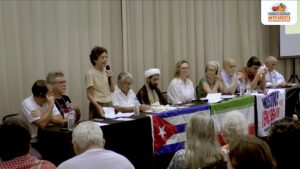
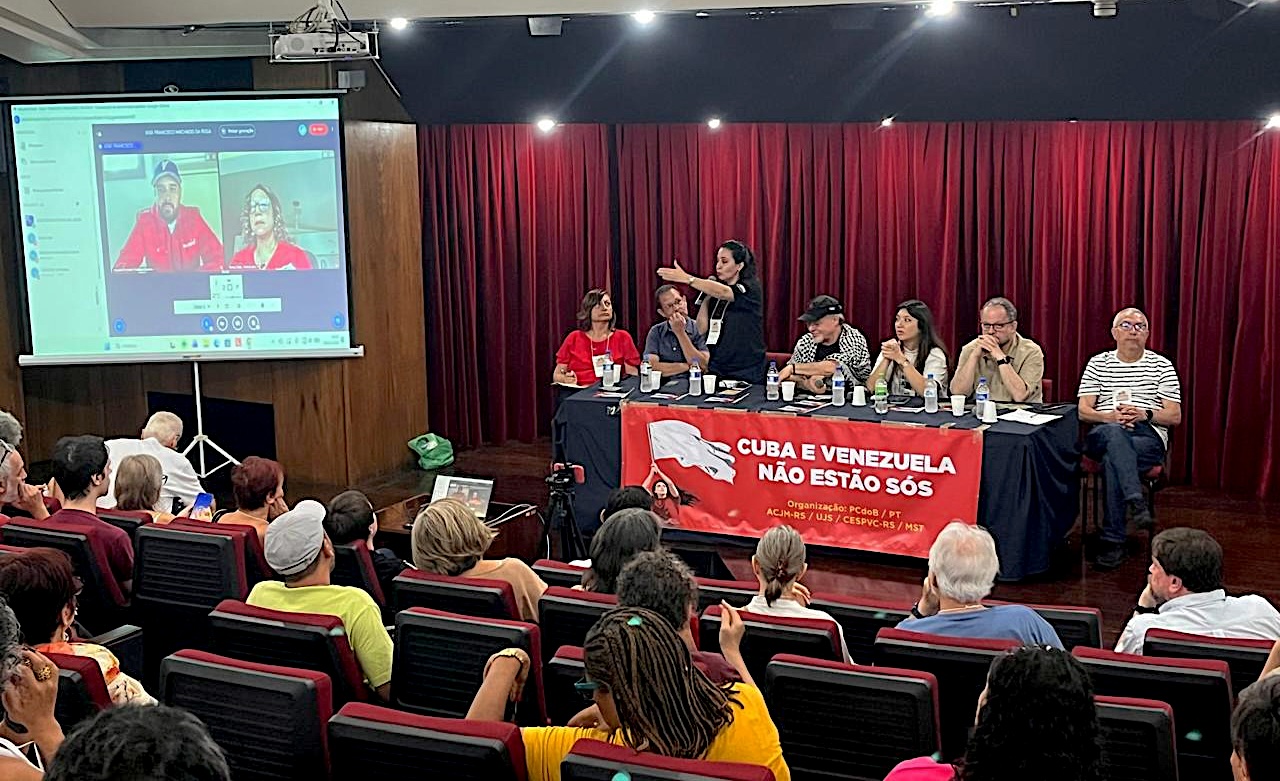
The intervention of the Secretary of International Relations of the PCdoB Ana Prestes marked the political tone of the table “Cuba and Venezuela are not alone”, held this Saturday (28) in the Hall of Events of the Federal University of Rio Grande do Sul, as part of the program of the 1st. International Anti-Fascist Conference for the Sovereignty of the Peoples. His speech combined an empirical report — the recent participation in an international solidarity brigade for Cuba — with a strategic reading of the global situation.
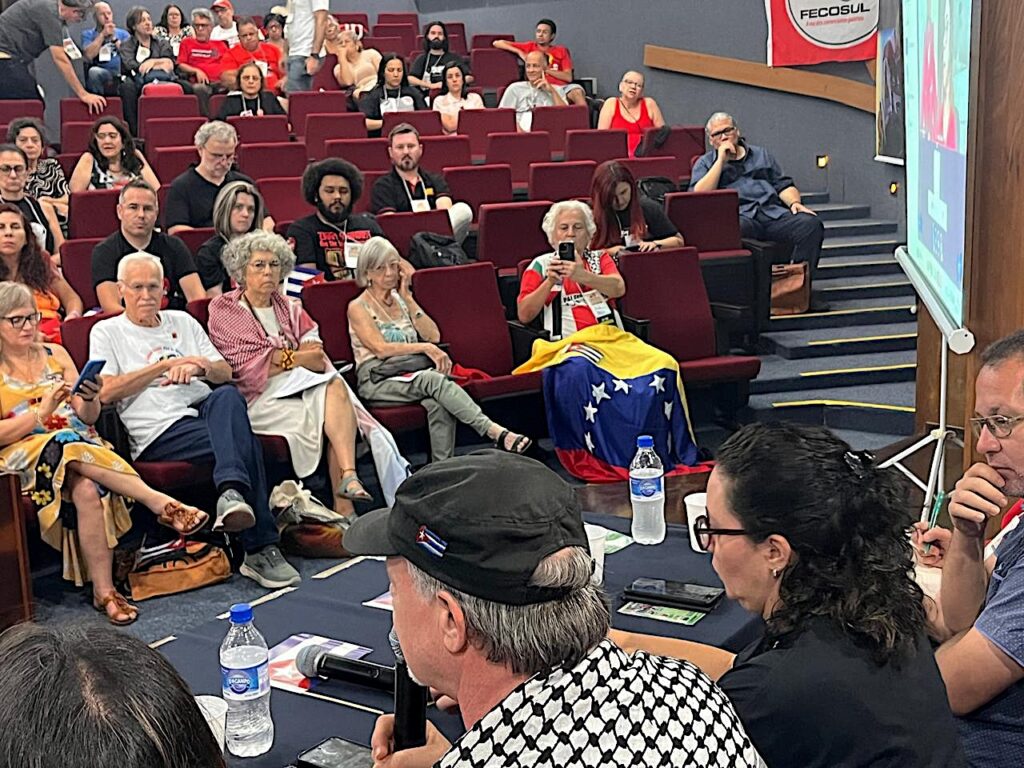
The panel, mediated by Mônica Valente, from the São Paulo Forum, featured interventions by Breno Altman (Opera Mundi), Tania Díaz (PSUV-Venezuela), Fernando Rojas (Casa das Américas-Cuba) in addition to Ana Prestes.
Ana Prestes reported that, exactly one week ago, she joined the “Nuestra América Train”, a mission that brought together more than 650 people from more than 30 countries and 120 organizations on a solidarity visit to Cuba. “It was very interesting to prepare this caravan to gain insight into how the large corporate media contributes to generating a climate of absolute terror and fatalism,” he stated.
According to her, the Cuban reality is dramatic: blackouts of 13 to 14 hours a day impact transport, health, education and food distribution. “It’s truly a war situation. You have injured people, you have all the restrictions that a war imposes on the people”, he maintained. The leader emphasized that this is not a total humanitarian crisis — “Cubans still have food, they have water” — but rather a logistical bottleneck that makes it difficult for supplies to reach different regions of the country.
She highlighted the role of communication in the contemporary political dispute, pointing out that the construction of a “climate of fatalism” in relation to Cuba is part of a broader war, based on disinformation and psychological pressure.
Imperialist offensive has Latin America as its central target
Ana Prestes refuted the idea that Trump’s focus on Iran would ease pressure on the region. “No, no, no. There is a project on what is the Trump corollary of the Monroe Doctrine,” he said. According to her, Marco Rubio, from the first minute of his government, has been carrying out “surgical” attacks that aim to strategically control the hemisphere.
The leader cited concrete examples: the agreement with Paraguay that transforms the entire country into a US military base; the control of Panama to remove it from China’s trade route; and the remilitarization of the Galápagos in Ecuador. “All of this shows how delicate, dramatic and demanding this moment is for all of us”, he warned.
Ana Prestes connected the external offensive to the Brazilian electoral scenario. “We are targets in this process and the elections, perhaps the most complex in recent times, are the ones we will face”, he stated. For her, international solidarity cannot be just speech: it needs to translate into pressure on governments, especially those on the left, to break the blockade on Cuba.
For Ana, the moment demands unity as an organizing principle. The leader warned that the dispersion of progressive forces favors the adversary offensive, echoing a Latin American political tradition that favors cohesion in the face of crisis scenarios.
Concrete solidarity: solar panels, medicines and fuel
The PCdoB secretary highlighted that the caravan took food, medicine and solar panels — and that the latter “really help”. “Today, solar panels in Cuba already cover 50% of the day’s energy needs,” he informed. But the most urgent battle, according to her, is for fuel: “Today Cuba is experiencing a literally physical blockade of the arrival of fuel. And this is the most important battle at this moment.”
Ana Prestes concluded by calling for the reactivation and expansion of solidarity campaigns and organized pressure on governments to send fuel and break the siege. “It’s time for us to reactivate these solidarity campaigns even more. What we need is to make them spread even further”, he defended.
Imperial offensive and geopolitical dispute
The situation analysis presented by Breno Altman complemented the panel’s political diagnosis. According to him, the intensification of United States actions in Latin America is linked to the relative decline of its global hegemony.
Altman argued that, faced with the loss of influence in Asia and other regions, Washington is strengthening its operations in the Latin American continent, considered historically strategic since the Monroe Doctrine.
In this scenario, Cuba and Venezuela would be priority targets because they represent political experiences that broke with the traditional logic of dependence. For him, Venezuela and Cuba are the two pillars of popular forces in the region, so they need to be victorious — and solidarity with these revolutionary processes must be unconditional.
Venezuela: resistance and narrative in dispute
International interventions, such as that of Venezuelan leader Tania Díaz, emphasized the political and symbolic dimension of the conflict. The narrative presented points to a scenario of multifaceted siege — economic, media and institutional — against the government of Nicolás Maduro.
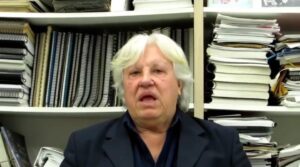
Tânia sent a video message from Venezuela, thanking the international solidarity and reaffirming the unity of the revolution. He highlighted that President Nicolás Maduro is firm, despite being kidnapped by imperialism, and that the Venezuelan economy grew 5% in 2024-2025 despite 1,088 sanctions. He called on parties and movements to engage in the campaign for the freedom of Maduro and Cilia Flores.
The leader highlighted the need to confront what she classified as a global fascist offensive, in addition to reinforcing the importance of internal unity and popular mobilization to guarantee stability and continuity of the Venezuelan political project.
Fernando Rojas, from Casa das Américas, detailed the critical situation in Cuba: the executive order of January 29 constitutes a de facto blockade, with four months without fuel entering the island. He argued that solidarity must be full and unconditional, and that no cause replaces another — full solidarity with Cuba, Venezuela, Palestine and all peoples under imperialist attack is necessary.
International solidarity as a central axis
A point of convergence between the speeches was the defense of active and organized solidarity. The panel pointed out that this is not just symbolic support, but concrete actions:
- pressure on governments to break blockades;
- international information campaigns;
- sending brigades and material assistance;
- political articulation between parties and movements.
The reference to historic campaigns — such as the release of Nelson Mandela and Luiz Inácio Lula da Silva himself — was used as an example that international solidarity can change correlations of force.
Latin America at the center of the dispute
The panel concluded that the continent is experiencing a moment of accelerated political reconfiguration, with advances and retreats of progressive forces. The recent alternation of governments in the region has been cited as evidence of an ongoing conservative counteroffensive.
In this context, the defense of Cuba and Venezuela was presented not only as a specific agenda, but as part of a broader dispute over sovereignty, development and regional integration.
Ana Prestes’ intervention synthesized this perspective: faced with an adverse scenario, the response involves unity, mobilization and active internationalism.
Source: vermelho.org.br