Published 06/01/2026 14:35 | Edited 01/08/2026 15:58
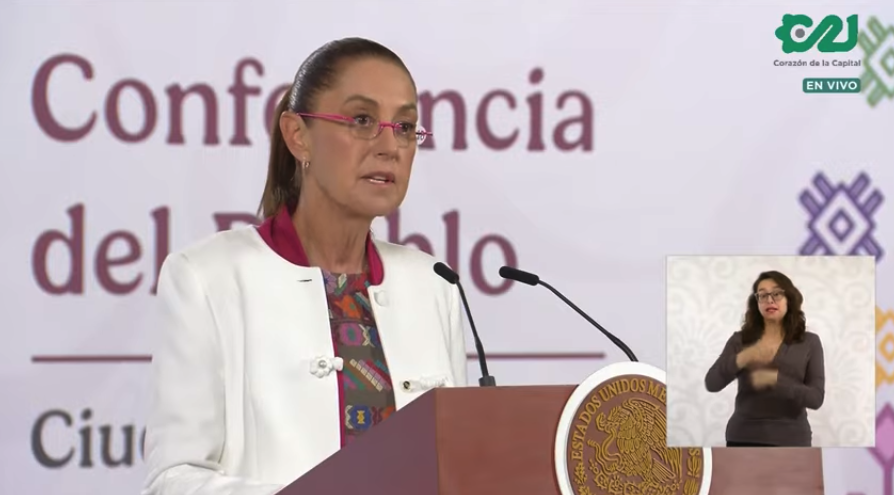
The president of Mexico, Claudia Sheinbaum, used the stage of the traditional morning this Monday (5) to send a strong message to the White House. THE morning is a morning press conference that has become the heart of Mexican domestic political communication. It was on this stage, looking at the TV cameras, live, for around 90 minutes, that the leader deconstructed Donald Trump’s interventionist rhetoric and condemned the US military operation that kidnapped Venezuelan President Nicolás Maduro last Saturday (3).
With the authority of someone who presides over a country that shares a critical border with the United States, Sheinbaum drew on the Mexican tradition of non-intervention to emphasize that “the history of Latin America is clear and compelling in demonstrating that intervention has never brought democracy, nor has it generated lasting well-being or stability.” For the president, only the people can build their own future, decide their path and exercise sovereignty over their natural resources, a principle that she classified as “non-negotiable” and enshrined in articles 39 and 40 of the Mexican Constitution.
President of Mexico defends the self-determination of the continent’s nations
Sheinbaum’s speech had as its central target the logic of the Monroe Doctrine, which in 2026 will reemerge under the shadow of Trump’s threats to “manage” strategic resources such as oil and uranium in Latin America. By forcefully stating that America “does not belong to a doctrine or a power, but rather to the people of each of the countries that form it”, the president extended her solidarity to other nations in South America. She defended that the continent must be a space for cooperation for development and not a scenario for the strength of a single State, making a direct appeal for the United Nations and the Organization of American States (OAS) to assume the role of guarantors of the self-determination of nations to avoid bloodshed.
Sheinbaum’s concern was not limited to Venezuela. She also spoke of recent threats against Colombia and the sovereignty of the Panama Canal, classifying such movements as “setbacks that harm the territorial integrity and mutual trust necessary for the stability of the hemisphere.” On the domestic front, the president firmly refuted Trump’s insinuations about a possible military invasion of Mexico under the pretext of combating drug trafficking. She reiterated that “internal security is an exclusive prerogative of the Mexican people”, and defended an understanding based on “coordination without subordination”.
In a direct criticism of sectors of the Mexican right that flirt with interventionism, Sheinbaum stated that “those who think that foreign interference will have any popular legitimacy are mistaken.” According to the president, bilateral collaboration must focus on the causes of violence, such as illicit arms trafficking that flows from north to south, and not on invasions that she classified as “not serious” and unnecessary given the capabilities of national institutions. For her, the defense of sovereignty must be a unanimous position of all Mexicans.
In addition to his strong stance against American interventionism, Sheinbaum presented significant advances in the Mexican social agenda for 2026, such as the 13% growth in the general minimum wage and the expansion of the safety net that now reaches 14.1 million elderly people and 3.5 million women over 60 years of age. By reaffirming state control over energy and water infrastructure as a pillar of development, Sheinbaum ended the speech by linking the protection of native corn and water to the political freedom of Latin America itself: a continent that “refuses to be the backyard of any power”, he stated.
Source: vermelho.org.br