Published 03/29/2026 10:24
A month has passed since the launch of “Operation Epic Fury” by the United States and “Operation Roaring Lion” by Israel, on February 28, 2026, the conflict in the Middle East has entered a phase of strategic stalemate that exposes the limitations of conventional military power in the face of asymmetric resistance. What began as a bet on rapid regime change in Tehran has turned into a geopolitical, economic and diplomatic drain on Washington, as Iran demonstrates a capacity for retaliation that impacts global energy and security chains.
After thirty days of offensive against Iran, what is emerging is not a quick victory, but a picture of increasing wear and tear for the United States and Israel. The campaign that promised to weaken Tehran in the short term turned into a strategic impasse, revealing operational, political and diplomatic limits.
Donald Trump’s conduct exposed weaknesses that go beyond the military field: the conflict began to erode Washington’s international credibility, while at the same time failing to deliver concrete results on the ground.
Successive retreats and loss of initiative
Throughout the first month, Donald Trump’s strategy was marked by constant inflections, which evidence a loss of control over the course of the war.
On March 1, the president stated that the operation would take “a month or less” to achieve its objectives. On March 23, however, he announced the suspension of attacks on Iranian energy infrastructure for five days and mentioned “productive talks”. The next day, the US sent Tehran a 15-point peace plan, according to reports by Reuters and the New York Times.
The change in tone reflects internal and external pressures: the price of oil has soared to record levels since 2022, affecting the US economy; regional allies called for a ceasefire; and Congress questioned the legality of the operation without a formal declaration of war.
The reduction in objectives — from an offensive that hinted at regime change to specific actions — symbolizes a forced retraction. Trump threatened to destroy Iranian energy infrastructure, but backed off and postponed the ultimatum to open the Strait of Hormuz. There was also a suspension of attacks on power plants, after an initial threat. The suspension of broader operations, given the risk of regional escalation, reinforces the inability to impose a decisive solution.
The oscillating rhetoric, alternating maximum threats with nods to negotiation, deepens the perception of indecision. Trump started to defend an agreement with Iran, even after starting the offensive. It publicly declared that negotiations were “productive”, but Iran denied that they existed. On the external front, the failure to consolidate a robust coalition exposes an isolation unusual for the US by historical standards.
Before: threat of “total destruction” of Iran; later: Trump says he wants to negotiate and end the war. The result is a picture in which moving forward implies uncontrollable risks, while retreating consolidates the image of political defeat.
Iran imposes resistance and resets the pace of the conflict
The Iranian response was the most disruptive element of the conflict. Contrary to initial expectations, Tehran not only resisted but managed to impose its own pace on the war. Iran launched missiles at Israel after Trump’s speeches. Attacks also hit bases and countries in the Gulf (Bahrain, Qatar, Saudi Arabia).
Against initial expectations of a rapid fall of the regime, Iran has demonstrated resilience that has surprised analysts and military commanders. The Islamic Republic managed to degrade US radar systems in the Persian Gulf, affecting the ability to intercept missiles in allied countries such as Kuwait, Qatar, Saudi Arabia and the United Arab Emirates.
“The US has no way of overthrowing the Iranian government without a land invasion, which would bring huge casualties. Iran’s topography makes any quick action unfeasible. The US has simply entered a quagmire and Trump doesn’t know how to get out”, assesses defense expert Ali Ramos, consulted by Brazil Agency.
In addition to territorial defense, Tehran expanded the theater of operations: it attacked US bases in six Gulf countries, blocked the Strait of Hormuz — through which around 20% of the world’s oil passes — and intensified proxy attacks via Hezbollah, Houthis and Iraqi Popular Mobilization Forces
The combination of indirect actions, use of regional allies and military coordination capacity increased the cost of the offensive. Internally, the country avoided significant disorganization, maintaining political cohesion under pressure. Iranian and allied attacks hit: strategic shipping lanes, US bases in Syria and regional energy infrastructure.
By prolonging the conflict, Iran turned time into a strategic weapon — wearing down adversaries who depended on a quick victory to sustain their narrative of strength.
Tehran’s political gains and wear and tear on opponents
Even under bombings and sanctions, Iran has made significant progress in the political field. The sovereignty narrative gained strength, mobilizing domestic support and expanding regional legitimacy.
At the international level, Tehran has repositioned itself, deepening relations with countries and blocs that contest US hegemony. At the same time, it demonstrated the ability to impose ongoing costs on adversaries, making a quick solution unfeasible.
For the United States and Israel, the effect is the opposite: increased attrition without equivalent strategic gains.
War expands and puts pressure on the global system
The conflict quickly went beyond the bilateral axis, generating systemic impacts. Instability in energy markets, rising tensions in the Middle East and the risk of new fronts indicate a scenario of expansion.
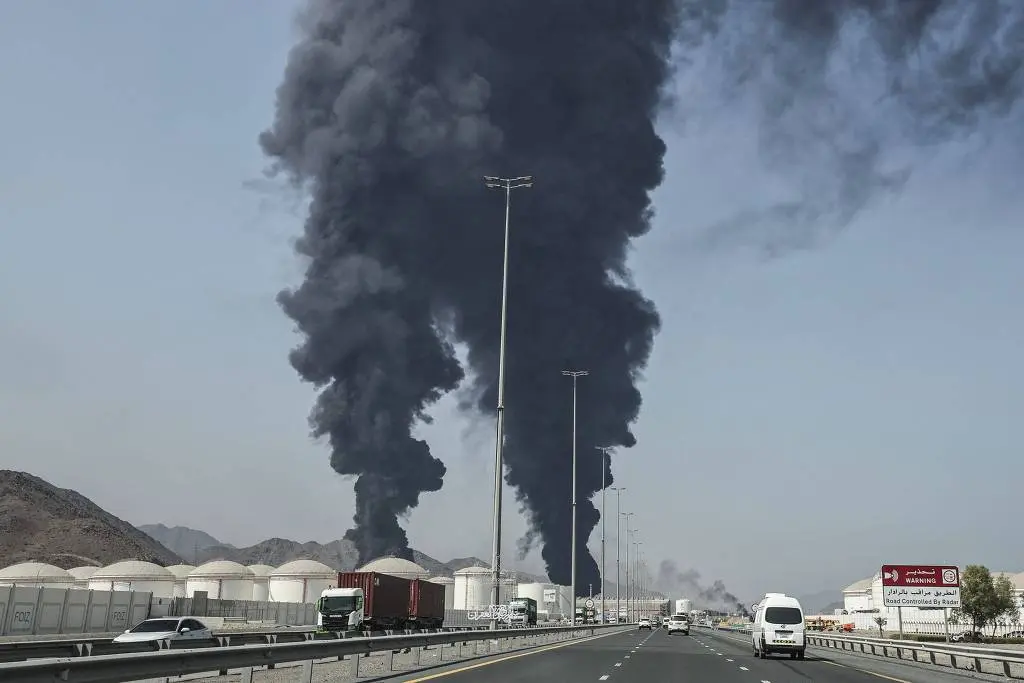
The war expands and generates global impact due to an international energy crisis. Oil and gas disruptions are worse than previous recent crises. Partially closed Strait of Hormuz affects global trade.
At the same time, international resistance to unilateral military interventions is growing. Countries avoid automatic alignment, reflecting a shift in the global balance of power.
War stops being just a regional confrontation and starts to operate as a factor of international disorder. It stopped being a localized war and became an international systemic crisis, involving multiple territories: Lebanon, Iran, Israel, the Persian Gulf and Syria. The entry of the Houthis from Yemen and Ukraine’s support for the gulf countries pose new risks of escalation.
Isolation and fragility of US leadership
Donald Trump’s difficulty in gathering consistent international support is one of the clearest signs of weakening.
Traditional allies are cautious, emerging powers refuse to join and multilateral organizations are concerned about the escalation. The UN, the European Union, China and powers in the Global South condemned the initial attacks as a violation of Iranian sovereignty and international law. Even historic allies like the United Kingdom and France have expressed reservations about the escalation. The pattern of large coalitions, common in past interventions, gives way to weakened unilateral action.
“Iran will be the first country in history to attack so many US bases at the same time and survive. That’s why Trump is desperate. Countries in the region will no longer trust the US in the medium and long term as a guarantor of their security”, argues Ali Ramos
This isolation amplifies the perception that Washington is no longer able to organize global consensus around its military actions.
A new power map in the Middle East
After a month of war, the conflict reconfigured the regional security architecture. Gulf countries accelerated alternative defense pacts (Emirates with India, Saudi Arabia with Pakistan), reducing dependence on US protection.
For Iran, the regime’s survival under attack reinforces its narrative of anti-imperialist resistance. For the US, the impasse exposes the limits of unilateral military power in a multipolar world. For the world, the bill was high: expensive energy, disrupted trade routes and a dangerous precedent of preventive war without an international mandate.
As one analyst from the International Crisis Group: “It is no longer a question of who wins militarily, but of who can transform resistance into political advantage.” On this board, Tehran appears to have learned to play better than Washington expected.
A strategic dead end
At the end of the first month, the conflict points to a structural impasse.
For the US and Israel, the alternatives are limited: escalate the confrontation and take unpredictable risks or retreat, consolidating the perception of defeat.
For Iran, the strategy of prolonged resistance continues to produce results, albeit at high costs. The Iranian leadership said it was ready to confront ground troops and “set them on fire.”
The balance is an unstable balance, in which the inability to win quickly translates into growing political weariness — especially for Washington and Tel Aviv — and an increasingly fragmented and unpredictable international scenario.
Source: vermelho.org.br