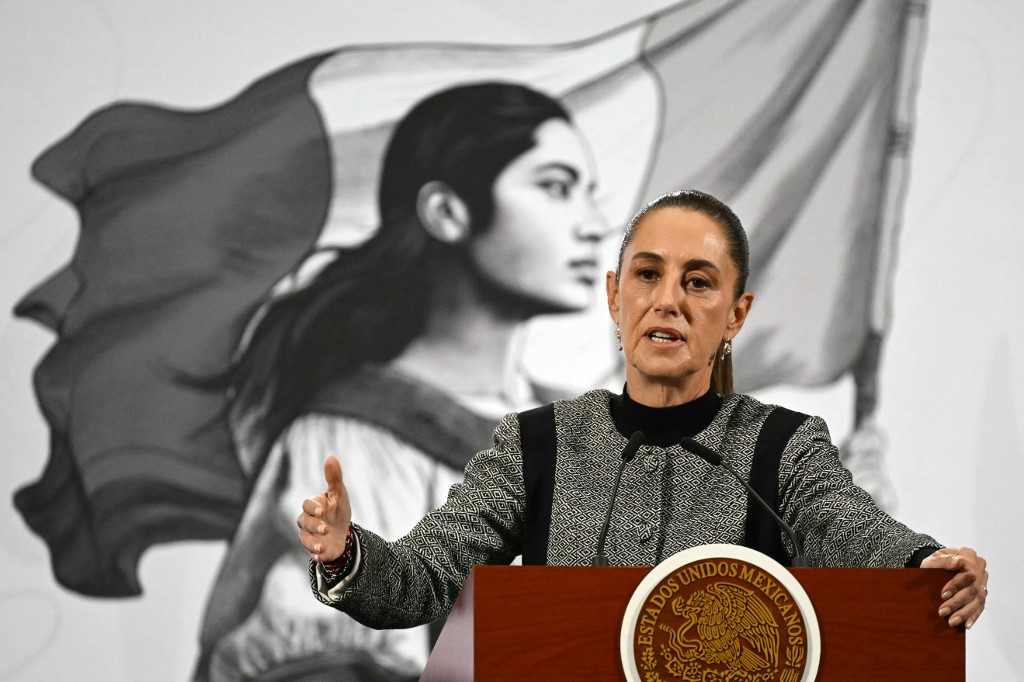
The National Regeneration Movement (Morena) celebrates 15 years of its constitution as a civil association this Friday (2), after bringing two presidents to the government of Mexico and forming a majority in state governments, the Senate and the Chamber of Deputies, consolidating itself as the main Mexican political force today.
Morena has 254 of the 499 occupied seats in the Chamber of Deputies. With 60 from the Green Ecological Party of Mexico (PVEM) and 49 from the Workers’ Party (PT), the three-party coalition has 363 deputies, almost three-quarters of the House. In the Senate the situation is similar, with Morena occupying 66 of the 128 seats and 86 with the coalition.
In an interview with Brazil in factOscar Lemus, internationalist and general coordinator of the National Institute of Political Training (INFP) of Morena, points to the ideological formation of the militants and unity as the main internal challenges of the movement that elected Andrés Manuel López Obrador (AMLO), in 2018, and Claudia Sheinbaum, in 2024. “We are a great progressive front”, he states.
Growth brought together different ideological positions, and the conquest of positions brought disputes over who should occupy them. For Lemus, the continuity of the project depends on a militancy capable of understanding why it is fighting, in addition to knowing who to support in an election.
The ambition of the current party is summarized in the expression “revolution of consciences”. The leader associates it with the construction of a vision of society in which the fight against poverty, the defense of sovereignty and social rights are assumed by the population as its main horizons. “Not so that a political party like Morena remains in government, but so that the cultural process that implies a change in outlook on life can remain in this country”, he explains.
For the leader, transforming government achievements into popular convictions is what will allow them to be defended. The training work seeks to make the principle of putting the poor first come out of party speeches. The task, he states, is for the population to “understand it and take it on as their own”.
Advances
The balance of López Obrador’s period finds expression in the indicators. Between 2018 and 2024, the proportion of Mexicans in multidimensional poverty fell from 41.9% to 29.6%, a reduction of 13.4 million people, according to the National Institute of Statistics and Geography (Inegi). The salary recovery also marks a change in orientation. The general minimum wage went from 88.36 pesos a day in 2018 to 315.04 pesos in 2026. According to the National Minimum Wage Commission (Conasami), the minimum wage set for this year represents an accumulated recovery of 154.2% in purchasing power during the Fourth Transformation governments.
Another area of government success is in affordable housing. The program Housing for Wellbeing aims to guarantee 667 thousand homes, establishing decent housing as a right during Sheinbaum’s mandate, representing 1.2% of the annual GDP invested, with the expectation that they can generate 2.4 million jobs in the 766 projects underway across the country, in addition to generous renegotiations on financing acquired for the purchase of houses in an abusive manner.
Advances in mobility were also a government commitment. The recovery of the railways became one of the hallmarks of the two Moreno administrations. Conceived under López Obrador’s administration and completed under Sheinbaum, the Maia Train runs 1,554 kilometers across five southeastern states, connecting cities in a region historically far from the country’s main investment centers. On the Isthmus of Tehuantepec, the rehabilitation of 308 kilometers of track between Salina Cruz and Coatzacoalcos restored passenger transport and reinforced a freight connection between the Pacific and the Gulf of Mexico.
Challenges
These results, however, do not conclude the balance sheet. Lemus identifies health and safety as two of the most difficult areas to transform. When dealing with health, he attributes the obstacles to the long neoliberal dismantling and the impact of the pandemic on the resources and plans of the López Obrador government. The data shows the extent of the problem that still exists: in 2024, Inegi recorded a lack of access to health services for 34.2% of the population, or 44.5 million people. The indicator has improved compared to 2022, but social protection remains a task beyond increasing income.
For the second issue, security, Oscar identifies the war against drug trafficking, launched by Felipe Calderón in 2006 and maintained under Enrique Peña Nieto, as one of the roots of the security crisis they inherited. “The militarization of the fight against drugs has deepened violence without eliminating organized crime structures”, he assesses. This legacy intersects with new external pressure.
In February 2025, Donald Trump’s government classified six Mexican cartels as foreign terrorist organizations, placing drug trafficking within the counter-terrorism agenda. The measure increased pressure on Mexico and accompanied proposals for US military action in its territory, rejected by Claudia Sheinbaum. For the president, cooperation in confronting cartels must respect Mexican sovereignty, imposing a limit on Washington’s attempt to transform a security problem into a justification for intervening in the neighboring country.
An organization for those who did not fit into the parties
On October 2, 2011, when Morena was established as a civil association in the National Auditorium, in Mexico City, López Obrador was still a member of the Party of the Democratic Revolution (PRD). The creation of his own organization responded to a disconnect, as sectors that supported his presidential candidacy no longer recognized themselves in the party, surrounded by allegations of corruption and political betrayal.
“There was a very broad sector of social movements that did not think well of the PRD, but supported Andrés Manuel López Obrador”, recalls Lemus. According to him, the association offered a space to people who were not necessarily interested in candidacies or party life, but wanted to participate in the political project proposed by AMLO. For Lemus, this experience was prior to the creation of Morena, but it also exposed limits that the new organization sought to overcome. The leader describes a party that was crossed by internal groups, known as “tribes”, who negotiated candidacies according to their strength and differed on alliances with the center and the right.
:: Do you want to receive news from Brasil de Fato RJ on your WhatsApp? ::
The dispute became more evident after the 2012 presidential election. While López Obrador contested the result that gave victory to Enrique Peña Nieto, the PRD leadership decided to distance itself from Obrador, while signaling openness to negotiations with the National Action Party (PAN) and Peña Nieto’s Institutional Revolutionary Party (PRI), which returned to power after two PAN administrations. In December, the country’s three main parties signed the “Pact for Mexico”, an agreement that supported an agenda of support for the new government’s reforms, including the opening of the energy sector to private capital, considered a milestone in the country’s loss of energy sovereignty, with consequences that continue to this day.
López Obrador had announced his departure from the PRD in September. The divergence over the direction of the opposition deepened the separation. Lemus places the decision to transform Morena into a party in this process, after consultations with activists in assemblies across the country. The registration was approved by the National Electoral Institute (INE) on July 9, 2014.
The Fourth Transformation
By calling his project the “Fourth Transformation”, López Obrador presents it as a new rupture in Mexican history, which must face the corruption generated by questionable relations between the State and the big bourgeoisie, along with combating the concentration of political and economic power, recovering the State’s role in favor of the majority. In his formulation, overcoming the neoliberal period, which began in 1982 under the government of Miguel de la Madrid, requires recovering State action in favor of the majority of the population, combating corruption, privileges and placing the poor at the center of the debate.
Unlike the previous ones, marked by armed conflicts, AMLO proposes change through peaceful and democratic means, competing for popular consciousness. The fight against neoliberalism appears as part of this task: reorganizing a State that began to serve minorities, placing the poor at the center of government decisions.
The first transformation was the struggle for Independence, which began in 1810 and concluded in 1821, which broke with Spanish colonial rule. In AMLO’s reading, the movement brought together the search for national sovereignty and the fight against slavery.
The second was the Reformation, led by liberals under the figure of Benito Juárez, in the mid-19th century, which faced the privileges of the Catholic Church, established the separation between religious power and State and defended the Republic against French intervention.
The third was the Mexican Revolution, started in 1910 against the dictatorship of Porfirio Díaz. The struggle incorporated demands for land, democracy and labor rights, which gained expression in the advanced Constitution of 1917. For López Obrador, social justice and popular participation are the legacies that link this process to the Morena project.
Source: www.brasildefato.com.br