In 1915, a Muslim cook hui called Ma Baozi started selling handmade noodles on the streets of Lanzhou, capital of the Chinese province of Gansu, carrying baskets with the ingredients on a stick over his shoulders, in the traditional way of Chinese street vendors. The dish he created is now China’s national intangible heritage: a noodle with a transparent broth made from beef bones and handmade noodle threads (without cutting the dough), which has become the city’s typical breakfast.
How the community hui is Muslim, her cuisine follows the norms halalfrom the Arabic “permitted” by Islamic law. The consumption of pork is prohibited, and the animals must be slaughtered following religious precepts, which involves who slaughters it, with what instrument, where the cuts can be made, among other determinations.
Already in Ma Baozi’s time, noodle restaurants began to multiply throughout Lanzhou until the dish became the most emblematic of local cuisine.
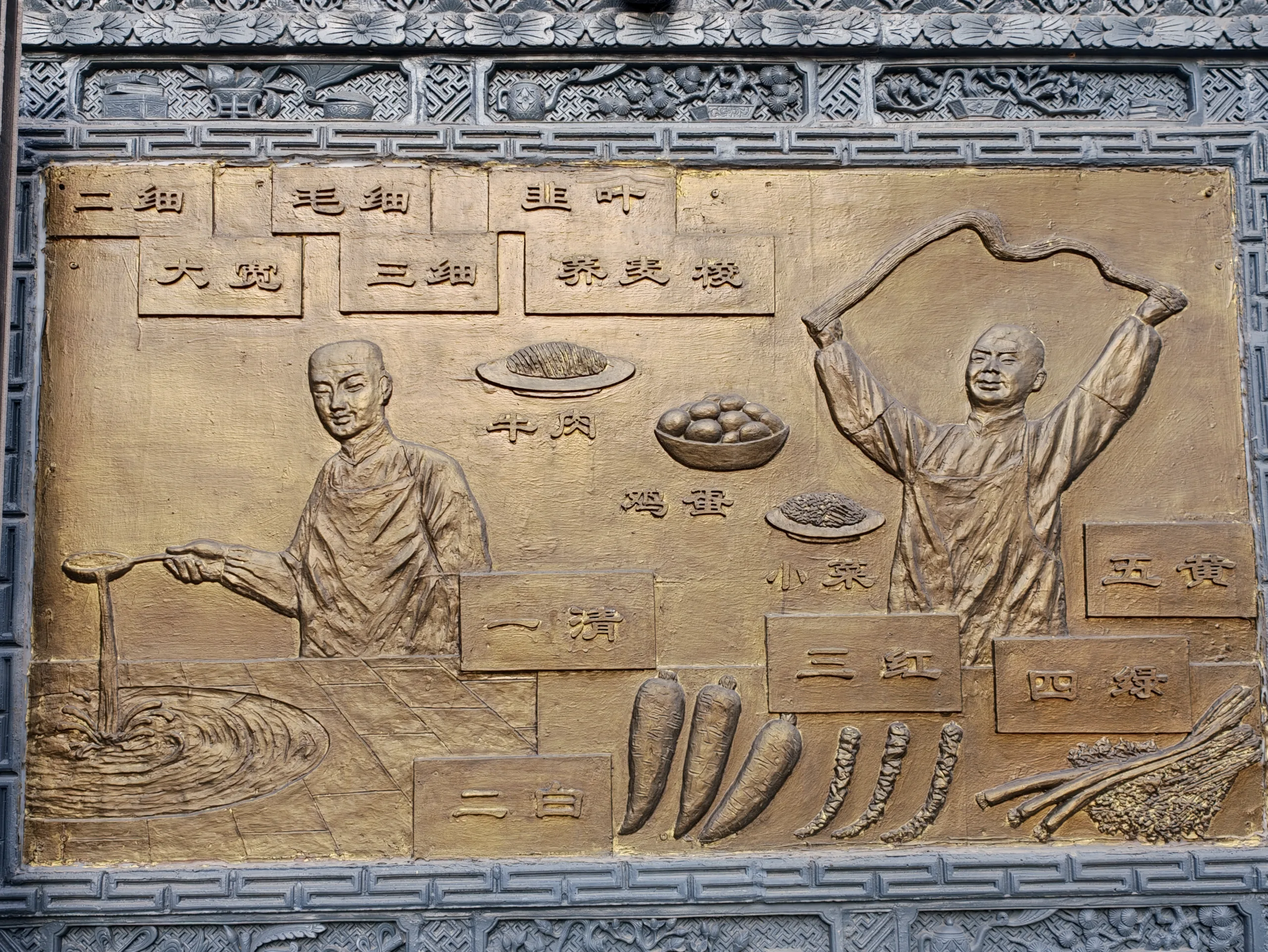
The recipe has five features: translucent broth, sliced white turnip, red chili oil, chopped green herbs and bright yellow noodles. In China, the delicious It is the technique of stretching the dough with your hands until it forms threads. It is used in different types of noodles in the country. The name gave rise to Japanese ramen. The specific technique for preparing Lanzhou beef noodles was recognized as a national intangible cultural heritage in 2021.
The craft
Zhou Zhenxian is a chef at Lanzhou Beef Noodle Museum. He started learning the craft in 2020 and it took him two years to master all the techniques. “To master it well, you need to have a solid foundation and practice constantly until you create muscle memory,” he told Brazil in fact. “Only with prolonged repetition can you stretch the hair evenly and quickly.”
The noodles can have 12 different shapes, ranging from very thin strands to wide ribbon-like strips, including a triangular shape and a hollow shape.
The dough has a not very common ingredient: ash obtained from burning plants native to Gansu, which helps to give the necessary elasticity so that the dough does not break when stretched. The broth begins to be prepared in the early hours of the morning, with beef meat and bones and a base of around 20 seasonings prepared freshly, without frozen foods or additives, the recipe for which varies, but generally contains Sichuan pepper, cumin, black cardamom, star anise, cinnamon, cloves and ginger.
In general, the dish comes out right away. “Lanzhou beef noodles work as a quick food,” says Zhou. “It is very popular across the country as it is fresh and served immediately.”
Lanzhou Noodle Museum
Ma Youlin was born in Linxia, an ethnic autonomous prefecture hui in the interior of Gansu. A few years ago, he attended a national Muslim forum in Beijing, where Lanzhou noodles received recognition. There he had the idea of creating a museum dedicated to the dish on the banks of the Yellow River, one of the two rivers (next to the Yangtze), known for being the cradle of Chinese civilization, and which runs through the city of Lanzhou.
“My goal is to perfect Lanzhou beef noodles,” Ma Youlin told Brazil in fact. “I hope that all tourists who come to Lanzhou will visit the museum, learn about the history, culture and production techniques of this dish, and taste authentic Lanzhou noodles.”
The museum received more than 86 thousand visitors in 2024. For Ma Youlin, the dish’s difference lies in its artisanal form. “Traditionally, the kneading and stretching of the dough is done entirely by hand, which creates an unparalleled flavor that machine noodles cannot reproduce,” he said. “To expand and strengthen the industry, it is necessary to maintain artisanal practices.”
According to Ma Youlin, the seasoning formula is another pillar of the recipe: all the spices used are natural herbs abundant in Gansu.
“In Lanzhou, no resident starts the day without a bowl of these noodles in the morning,” said Zhou Zhenxian. “This habit is deeply rooted in the mind of every Lanzhounian.”
The dish that Ma Baozi sold on the streets more than a century ago, with baskets on a pole over his shoulders, is now found in more than 70,000 restaurants across the country.
Source: www.brasildefato.com.br